
CURRENT AFFAIRS | 14 APRIL 2026
CLAT GK + ELECTION LAW & CONSTITUTIONAL RIGHTS
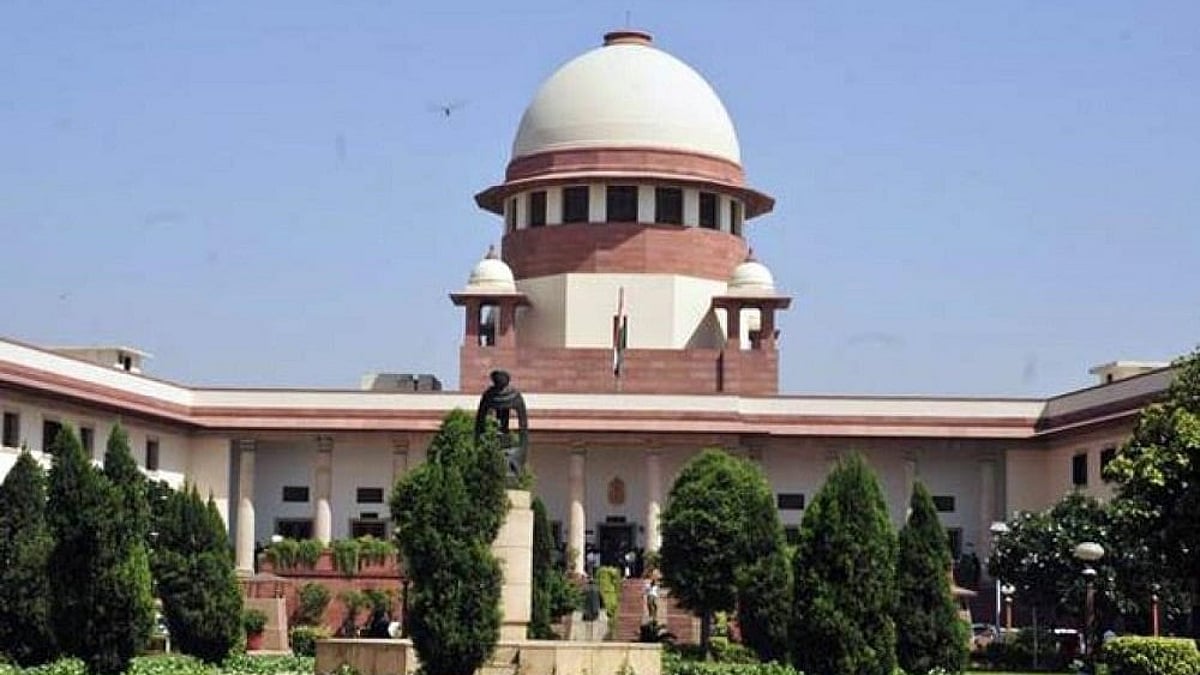
The Supreme Court on Monday raised serious questions about the exclusion of nearly 91 lakh voters during West Bengal’s Special Intensive Revision (SIR) of electoral rolls, flagging grave concerns about democratic integrity ahead of the 2026 Assembly elections. The court observed that if the winning margin in elections is merely 2% and deletions run as high as 15%, it could fundamentally alter electoral outcomes and undermine the very foundation of representative democracy.
Justice Joymalya Bagchi, hearing appeals from 19 tribunals before the final voting list is finalized, questioned the Election Commission of India’s (ECI) approach, noting “logical discrepancies” in how the voter roll management was conducted. The court highlighted that 34 lakh appeals against exclusion remain pending — a staggering number that reflects the scale of contested deletions.
The Human Cost of Bureaucratic Deletion
Among those “deleted” from the voter rolls was 87-year-old Manmatha Nath Bhowmik, who possesses citizenship papers dating back to 1959. His case became a symbol of the crisis — a lifelong citizen stripped of his democratic right through an administrative exercise. The Supreme Court, calling the right to vote the “biggest expression of nationality and patriotism in a democratic government,” described it as a “sentimental right” that touches the core of citizenship.
What is the SIR Process?
A Special Intensive Revision (SIR) is a targeted exercise conducted by the Election Commission to comprehensively revise electoral rolls in specific areas. Unlike routine annual revisions, an SIR involves house-to-house verification, deletion of duplicate entries, removal of deceased voters, and addition of eligible new voters. However, the West Bengal SIR introduced a controversial “logical discrepancy” category that led to mass deletions, raising questions about whether the process was politically motivated.
Article 326: Elections to Lok Sabha and State Assemblies shall be on the basis of adult suffrage — every citizen 18+ has the right to be registered as a voter.
Article 324: Vests superintendence, direction, and control of elections in the Election Commission of India.
Article 14: Right to equality before law — arbitrary deletion of voters violates equal protection.
Article 21: Right to life and personal liberty — the Supreme Court in PUCL v Union of India (2013) recognized voting as integral to democratic freedoms.
Representation of the People Act, 1950: Governs preparation and revision of electoral rolls.
Representation of the People Act, 1951: Governs the conduct of elections and election disputes.
Political and Social Dimensions
The mass deletions have triggered intense political debate. Opposition parties allege the SIR was weaponized to disenfranchise specific communities, drawing parallels with the National Register of Citizens (NRC) exercise in Assam. The scale — 91 lakh names out of approximately 7.3 crore voters — means roughly 12.5% of West Bengal’s electorate was affected.
The crisis also connects to broader debates about the Citizenship Amendment Act (CAA) and its intersection with electoral rolls. Civil society organizations have demanded transparent criteria for voter deletion and adequate appellate mechanisms to protect citizens’ rights.
This topic is highly relevant for CLAT 2027 across multiple sections:
Legal Reasoning: Principle-application questions on Art. 326 (right to vote), Art. 14 (arbitrary state action), and Art. 21 (right to life includes democratic participation).
Current Affairs/GK: SIR process, Election Commission powers, NRC-CAA debates, democratic governance.
Logical Reasoning: The court’s own reasoning — “if winning margin is 2% and deletions are 15%, what happens?” — is a classic CR passage.
Key Cases: PUCL v Union of India (2013) — NOTA; Kuldip Nayar v Union of India (2006) — secret ballot.
Landmark Judicial Precedents
The Supreme Court’s concern echoes principles established in several landmark cases. In PUCL v Union of India (2013), the court directed the introduction of NOTA on EVMs, recognizing the right to vote as a fundamental expression of democratic freedom. In Kuldip Nayar v Union of India (2006), the court upheld the importance of secret ballot as essential to free and fair elections. These cases collectively establish that the right to participate in elections is not merely statutory but constitutional in nature.
| Voters Deleted | ~91 lakh (12.5% of electorate) |
| Pending Appeals | 34 lakh across 19 tribunals |
| Total WB Electorate | ~7.3 crore voters |
| Key Constitutional Articles | Art. 14, 21, 324, 326 |
| Key Statutes | RPA 1950 & 1951 |
| Oldest Deleted Voter | Manmatha Nath Bhowmik, 87, with 1959 papers |
V — Voter rolls under Article 326
O — Oversight by Election Commission (Art. 324)
T — Tribunals hearing 34 lakh appeals
E — Equality clause (Art. 14) violated
R — RPA 1950 governs electoral rolls
D — Democratic integrity at stake
E — Eighty-seven-year-old citizen deleted
L — Life and liberty (Art. 21) includes voting
E — ECI’s “logical discrepancy” category questioned
T — Two percent margin vs fifteen percent deletions
E — Electoral outcome could be altered
The Road Ahead
The Supreme Court’s intervention signals that mass voter deletions cannot proceed without adequate safeguards. With 34 lakh appeals still pending and elections approaching, the resolution of this crisis will test both the judiciary’s commitment to democratic rights and the Election Commission’s institutional credibility. For CLAT aspirants, this case represents the intersection of constitutional law, election law, and fundamental rights — a perfect storm for exam questions.
Practice Quiz — 10 CLAT-Style Questions
Click an option to reveal the answer and explanation.