
CURRENT AFFAIRS | 26 APRIL 2026
CLAT GK + CONSTITUTIONAL LAW & RELEVANT AREA
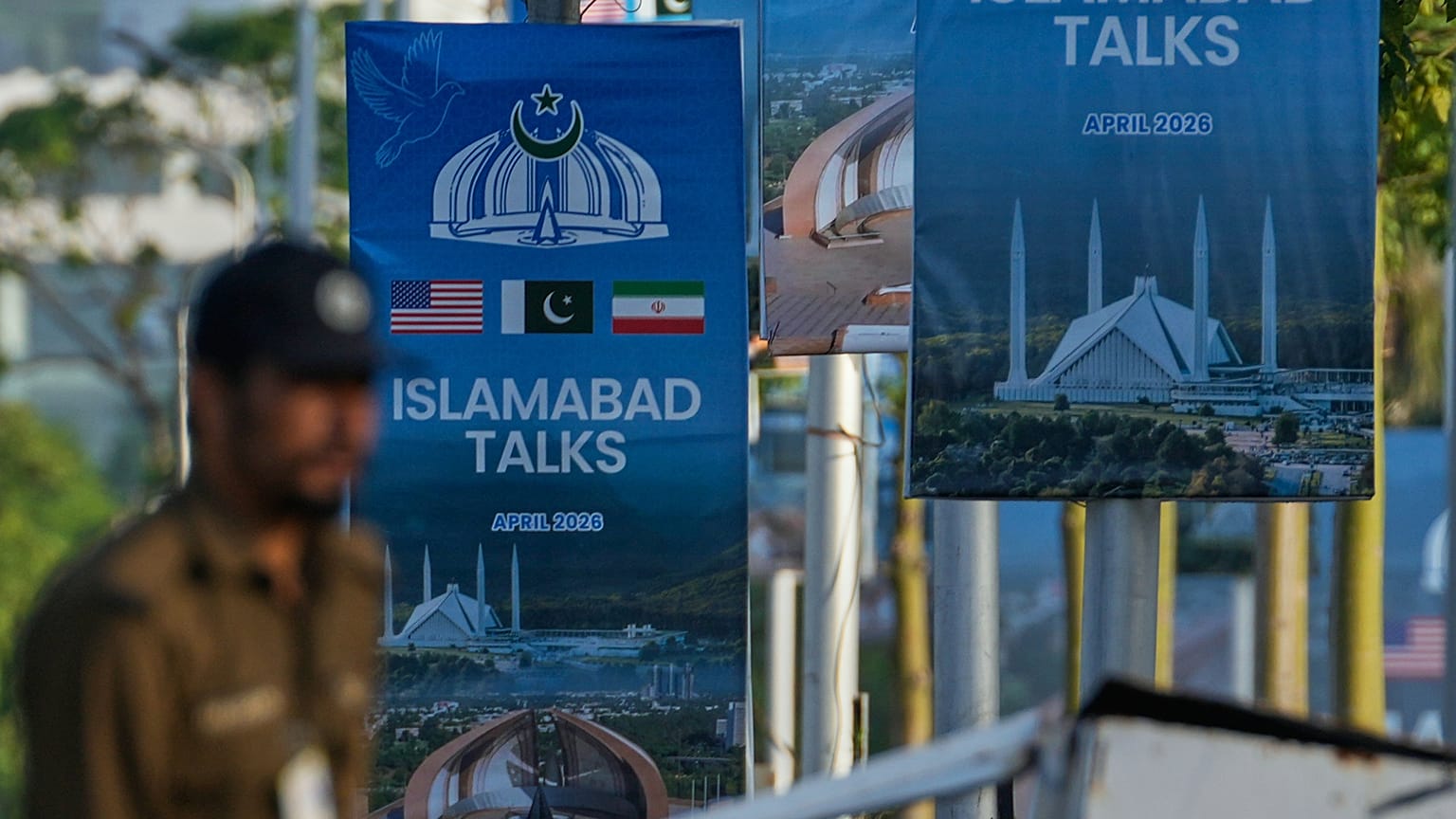
Diplomacy on the Iran file took a sharp turn on April 25, 2026. Iran’s Foreign Minister Abbas Araghchi left Islamabad after meetings with Pakistan PM Shehbaz Sharif, Army chief Asim Munir and FM Ishaq Dar — and within hours President Donald Trump cancelled the planned trip of envoys Steve Witkoff and Jared Kushner for parallel US-Iran talks, citing ‘tremendous confusion within Iranian leadership’. Iran has ruled out new direct talks with Washington, rejecting what it calls the US’s ‘maximalist’ demand for zero enrichment. Araghchi is now bound for Oman (the long-time intermediary) and Russia (a P5+1 signatory).
Why it matters for CLAT: the standoff puts UNCLOS 1982 Article 38 — the right of transit passage through the Strait of Hormuz — on every aspirant’s radar. Hormuz carries roughly one-fifth of global seaborne oil and a comparable share of LNG. India imports ~80-85% of its crude, much of it via this single chokepoint. The legal hook for the General Knowledge + Legal Reasoning crossover: even Iran, as a coastal state, cannot suspend transit passage under Art. 38(2), unlike innocent passage which can be suspended under Art. 25(3). India’s stake is also institutional — the Chabahar Port 10-year agreement signed in 2024 makes Tehran a strategic partner for connectivity to Afghanistan and Central Asia.
Constitutional, Statutory & International Framework
- UNCLOS 1982, Article 38 — right of transit passage through international straits used for navigation; cannot be suspended by the coastal state
- UNCLOS 1982, Article 25(3) — innocent passage through territorial seas can be temporarily suspended for security
- UNCLOS 1982, Article 87 — freedom of the high seas (navigation, overflight)
- JCPOA, 2015 — Joint Comprehensive Plan of Action between Iran and P5+1 (US, UK, France, Russia, China + Germany); endorsed by UNSC Resolution 2231
- NPT 1968 — Treaty on the Non-Proliferation of Nuclear Weapons; Iran is a signatory but has restricted IAEA Additional Protocol access
- IAEA — International Atomic Energy Agency, Vienna; the UN’s nuclear watchdog; safeguards under INFCIRC/153
- India-Iran Chabahar Port Agreement, 2024 — 10-year operational MoU between India Ports Global Ltd and Iran’s Port & Maritime Organization for Shahid Beheshti terminal
- India’s MEA stance — diplomacy + dialogue; India does not endorse unilateral US sanctions; commitment to Hormuz freedom of navigation
- UNCLOS 1982, Article 121 — definition of islands; relevant to Iran’s contested claim over Abu Musa & Tunbs (UAE dispute)
CLAT Angle — How This Gets Tested
- Hormuz arithmetic: ~20% of global oil + LNG transit · Iran’s coastline forms the northern shore · Oman’s Musandam exclave the southern shore — width at narrowest ~21 nautical miles, well within combined territorial seas → triggers the ‘strait used for international navigation’ rule.
- Doctrine question: contrast Art. 38 transit passage (non-suspendable) with Art. 25(3) innocent passage (suspendable). This is a high-yield CLAT distinction.
- India angle: Chabahar (Iran) vs Gwadar (Pakistan-China) — the two ports that mirror India’s and China’s competing connectivity strategies in the western Indian Ocean.
- Trap: Iran is an NPT signatory; the JCPOA is a separate executive agreement, not a treaty. The US 2018 withdrawal under Trump did not automatically end the JCPOA — the EU continues to attempt to preserve it.
- Sanctions law: US ‘secondary sanctions’ on Iran apply extraterritorially; India has historically used sanctions waivers to keep imports flowing — a current-affairs hook for a Legal Reasoning passage on jurisdiction.
Key Facts at a Glance
| Hormuz width at narrowest | ~21 nautical miles (~39 km) |
| Share of global seaborne oil through Hormuz | ~20% |
| India’s crude import dependence | ~80-85% |
| Coastal states bordering Hormuz | Iran (north) · Oman + UAE (south) |
| UNCLOS Article on transit passage | Article 38 — non-suspendable |
| Chabahar agreement signed | 13 May 2024 (10-year terminal-operation MoU) |
| JCPOA P5+1 signatories | US, UK, France, Russia, China + Germany; EU coordinator |
| US JCPOA withdrawal | May 2018 (Trump administration) |
The geo-strategic heart. Iran’s playbook is to convert the bilateral standoff with the US into a multilateral pressure campaign — Pakistan as Sunni-power partner, Oman as long-standing back-channel, Russia as P5 cover. The cancellation of Witkoff-Kushner is Trump signalling that talks happen on US terms or not at all. India’s interest is narrowly anchored: keep Hormuz open, keep Chabahar operational, hedge between US sanctions and Iranian energy. UNCLOS Art. 38’s bar on suspension of transit passage is India’s strongest legal shield — and a near-certain CLAT trap for students who confuse it with innocent passage.
Mnemonic — H-3-8-2-0
Hormuz · UNCLOS Art. 38 (transit passage, non-suspendable) · ~20% of global oil · ~80% India’s crude dependence · JCPOA = P5+1 (2015) · IAEA Vienna · Chabahar 2024 (India’s bypass-Pakistan port). Innocent passage = suspendable (Art. 25(3)); Transit passage = NOT suspendable (Art. 38).
Likely exam questions. (1) Right of transit passage through international straits is in which UNCLOS article? (2) Hormuz separates Iran from which country? (3) JCPOA is a deal between Iran and which group? (4) Chabahar port is in which Iranian province? (5) Legal reasoning passage — can Iran lawfully close Hormuz to retaliate against US sanctions? Apply Art. 38(2).
Test Yourself — 10 MCQs
Click each option to reveal the answer and explanation.
Practice Quiz — 10 CLAT-Style Questions
Click an option to reveal the answer and explanation.