
CURRENT AFFAIRS | MARCH 30, 2026
CLAT GK + INTERNATIONAL LAW & DIPLOMATIC RELATIONS
In a significant escalation of geopolitical tensions in West Asia, Iran’s parliament speaker Mohammad Bagher Qalibaf has warned the United States against launching ground operations on Iranian soil, while Islamabad simultaneously hosted a four-nation diplomatic summit seeking to de-escalate the ongoing conflict. These developments carry major implications for international law, maritime security, and the global energy order.
What Happened?
On 29 March 2026, Iran’s parliament speaker Qalibaf issued a direct warning to Washington, stating that Iranian forces were “waiting for the arrival of American troops on the ground to set them on fire.” This came after reports by The Washington Post that the Pentagon was preparing for limited ground operations in Iran, potentially including raids on Kharg Island and coastal sites near the Strait of Hormuz.
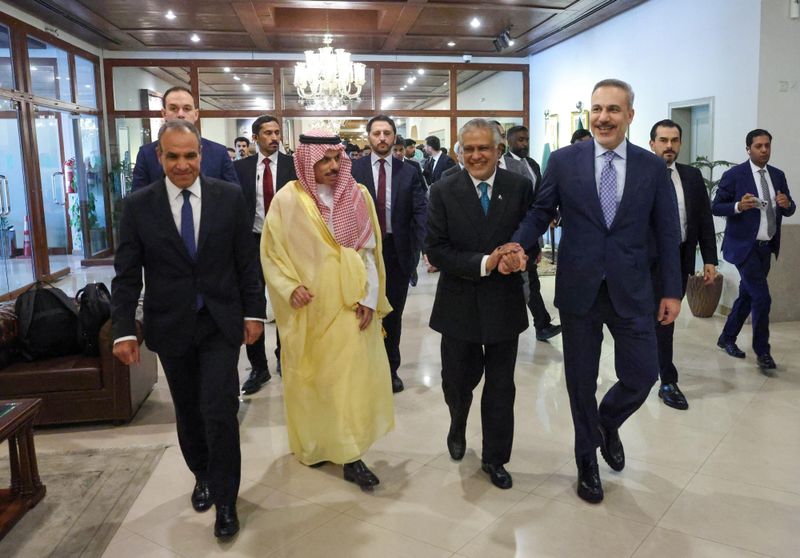
Simultaneously, foreign ministers of Pakistan, Saudi Arabia, Turkey, and Egypt convened in Islamabad for consultations on the West Asia conflict. Notably, neither the US nor Israel participated in these talks. Pakistan offered to host and facilitate US-Iran talks, a proposal that received a nod from President Trump.
In a further escalation, Iran’s Revolutionary Guard threatened to target Israeli universities and branches of US universities in the region unless assurances were provided for the safety of Iranian educational institutions that had been bombed.
The Strait of Hormuz: A Global Chokepoint
The Strait of Hormuz, connecting the Persian Gulf to the Gulf of Oman, is the world’s most critical oil transit chokepoint. Approximately 20% of global oil supply passes through this narrow waterway. Any closure or disruption could send oil prices spiralling, affecting global economies including India’s. During the current tensions, Iran eased some restrictions by allowing 20 Pakistani-flagged vessels to transit the strait.
Constitutional & International Law Framework
- Article 51 (DPSP): Directs the Indian State to promote international peace and security, maintain just relations between nations, and foster respect for international law and treaty obligations.
- UN Charter Article 2(4): Prohibits the threat or use of force against the territorial integrity or political independence of any state — the cornerstone of modern international law.
- UN Charter Article 51: Preserves the inherent right of individual or collective self-defence if an armed attack occurs against a UN Member State.
- UNCLOS (1982): Defines rights of transit passage through international straits like the Strait of Hormuz, ensuring freedom of navigation.
- Vienna Convention on Diplomatic Relations (1961): Governs diplomatic immunity and the conduct of diplomatic missions, relevant to the ongoing Pakistan-mediated talks.
CLAT Exam Angle
This topic is a goldmine for CLAT 2027 GK and Legal Reasoning sections. Expect questions on:
- The prohibition on use of force under the UN Charter and exceptions (self-defence, UNSC authorization)
- India’s constitutional commitment to international peace under Article 51 DPSP
- The legal status of the Strait of Hormuz under UNCLOS — right of transit passage vs. innocent passage
- The role of regional diplomacy and multilateral negotiations in conflict resolution
- Targeting of educational institutions and the applicability of International Humanitarian Law (IHL)
Pakistan’s Emerging Mediation Role
Pakistan’s Foreign Minister Ishaq Dar stated that both Iran and the US had expressed confidence in Pakistan to facilitate talks. This is significant for several reasons:
- Pakistan shares a border with Iran and has historically maintained relations with both Tehran and Washington
- The four-nation meeting (Pakistan, Saudi Arabia, Turkey, Egypt) represents a regional diplomatic initiative independent of Western-led frameworks
- The US had previously offered Iran a 15-point “action list” as a framework for a possible peace deal
Iran’s Dismissal of Diplomatic Efforts
Despite the diplomatic push, Iran’s parliament speaker dismissed the weekend talks as a “cover” while the US dispatched additional troops to the Middle East. This dual-track approach — military buildup alongside diplomatic overtures — raises fundamental questions about the good faith principle in international negotiations.
Key Facts at a Glance
| Strait of Hormuz | Connects Persian Gulf to Gulf of Oman; ~20% of global oil transits |
| Islamabad Talks Participants | Pakistan, Saudi Arabia, Turkey, Egypt |
| Iran’s Warning | Qalibaf warned US ground troops would be “set on fire” |
| US Peace Proposal | 15-point “action list” offered to Iran |
| Threat to Universities | Iran’s Revolutionary Guard threatened Israeli & US educational facilities |
| Key UN Charter Provisions | Art 2(4) — prohibition on force; Art 51 — self-defence |
Mnemonic: “SUPER” for Key International Law Concepts
S — Strait of Hormuz (UNCLOS transit passage)
U — UN Charter Art 2(4) (prohibition on use of force)
P — Pakistan mediation (Vienna Convention on Diplomatic Relations)
E — Exceptions to force prohibition (Art 51 self-defence)
R — Regional diplomacy (4-nation Islamabad talks)
Implications for India
India imports a significant portion of its crude oil through the Strait of Hormuz. Any disruption could lead to energy price spikes, affecting inflation and economic growth. India’s DPSP under Article 51 commits the nation to promoting international peace — making India a natural stakeholder in de-escalation efforts. India has maintained a balanced approach, engaging with both Iran (Chabahar Port) and the US (strategic partnership).
For CLAT aspirants, understanding the intersection of international law, energy security, and India’s constitutional foreign policy principles is essential. This topic tests both current affairs knowledge and the ability to apply legal frameworks to real-world geopolitical scenarios.
Practice Quiz — 10 CLAT-Style Questions
Click an option to reveal the answer and explanation.