CURRENT AFFAIRS | MARCH 30, 2026
CLAT GK + CONSTITUTIONAL LAW & PERSONAL LAW REFORM
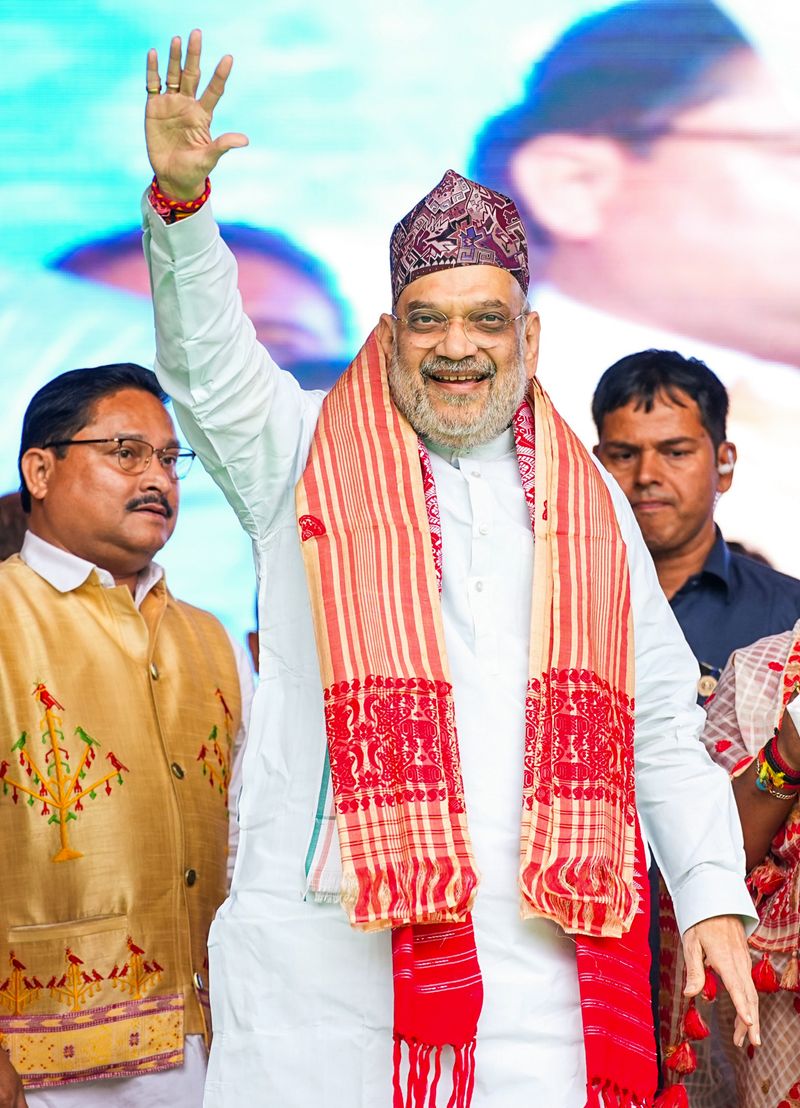
Union Home Minister Amit Shah has pledged to implement the Uniform Civil Code (UCC) in Assam if the BJP secures a third consecutive term in the upcoming state assembly elections. Speaking at a rally in Tihu, Nalbari district, Shah declared that the UCC would be brought in to ensure equality and ban multiple marriages, including among tribal communities governed under the Sixth Schedule. This announcement comes against the backdrop of Assam going to polls on April 9, 2026, and Gujarat recently becoming the second state after Uttarakhand to pass a UCC Bill.
What is the Uniform Civil Code?
The Uniform Civil Code refers to a common set of laws governing personal matters such as marriage, divorce, inheritance, and adoption for all citizens, regardless of their religion. Currently, different communities in India are governed by distinct personal laws — Hindu Marriage Act, Muslim Personal Law (Shariat) Application Act, Indian Christian Marriage Act, and Parsi Marriage and Divorce Act, among others.
The idea of UCC has been one of the most debated constitutional provisions in India, straddling the intersection of fundamental rights (Part III) and Directive Principles of State Policy (Part IV).
Constitutional Framework
Article 44 (DPSP): “The State shall endeavour to secure for the citizens a uniform civil code throughout the territory of India.” This is a non-justiciable directive, meaning courts cannot enforce it directly, but it serves as a guiding principle for governance.
Article 25-26 (Fundamental Rights): Guarantee freedom of conscience and the right to freely profess, practise, and propagate religion, and freedom to manage religious affairs. The tension between Article 44 and Articles 25-26 is at the heart of the UCC debate.
Article 14: Guarantees equality before law and equal protection of laws — the philosophical backbone of UCC arguments.
Sixth Schedule: Provides for autonomous governance of tribal areas in Assam, Meghalaya, Tripura, and Mizoram through Autonomous District Councils, raising questions about the applicability of UCC in these regions.
Assam’s Anti-Polygamy Law and the UCC Push
Assam has already taken steps toward personal law reform. In 2024, the state passed a law prohibiting polygamy with up to 7 years imprisonment. The BJP government under Chief Minister Himanta Biswa Sarma has positioned this as a precursor to full UCC implementation.
Shah’s announcement at the Tihu rally specifically mentioned banning “four tribal marriages” — a reference to polygamous practices in certain tribal communities in Assam. This raises important constitutional questions about the balance between tribal autonomy under the Sixth Schedule and the uniformity sought by the UCC.
Gujarat Becomes Second State with UCC
The Assam announcement gains significance in light of Gujarat’s passage of the UCC Bill 2026, making it the second state after Uttarakhand to legislate a Uniform Civil Code. Shah hailed Gujarat’s move as a “historic step,” saying the country should run on equal laws for all citizens. This reflects the BJP’s broader strategy of implementing UCC state by state.
Key Landmark Cases on UCC
The judiciary has repeatedly urged Parliament to implement UCC:
- Shah Bano case (1985): The Supreme Court ruled in favour of a Muslim woman’s right to maintenance under Section 125 CrPC, sparking a nationwide debate on UCC. The subsequent passage of the Muslim Women (Protection of Rights on Divorce) Act, 1986 by the Rajiv Gandhi government to override the verdict became a politically defining moment.
- Sarla Mudgal v Union of India (1995): The Supreme Court strongly recommended Parliament to implement UCC under Article 44, calling it imperative for national integration.
- John Vallamattom v Union of India (2003): The Court reiterated the need for UCC while striking down Section 118 of the Indian Succession Act.
- Shayara Bano v Union of India (2017): The landmark triple talaq judgment, while not directly about UCC, reinforced the idea of personal law reform and gender justice.
CLAT Angle
UCC questions frequently appear in CLAT under both Legal Reasoning and GK/Current Affairs. Key areas to focus on:
- DPSP vs Fundamental Rights: Can Article 44 override Articles 25-26? The Supreme Court has held that DPSPs and Fundamental Rights are complementary, not contradictory (Minerva Mills, 1980).
- Federalism: Is personal law in the Concurrent List (Entry 5, List III)? Can states implement UCC independently? Uttarakhand and Gujarat have shown this is possible.
- Goa Model: Goa has had a UCC since Portuguese colonial times — the only Indian state where it applies to all residents regardless of religion.
- Tribal Rights: How does the Sixth Schedule interact with UCC? Can tribal customary law be overridden?
Key Facts at a Glance
| Article 44 | DPSP directing State to secure UCC |
| Goa | Only state with existing UCC (since Portuguese era) |
| Uttarakhand | First state to pass UCC Bill (2024) |
| Gujarat | Second state to pass UCC Bill (2026) |
| Assam Polls | April 9, 2026 (single-phase, 126 seats) |
| Assam Anti-Polygamy Law | Up to 7 years imprisonment |
| Personal Law | Concurrent List, Entry 5, List III |
Mnemonic: “SUGAR” for UCC Landmarks
S — Shah Bano (1985) — Maintenance rights
U — Uttarakhand (first state UCC Bill)
G — Goa (existing UCC since Portuguese era)
A — Article 44 (DPSP directive)
R — Reform cases (Sarla Mudgal, Shayara Bano)
The Road Ahead
With Assam elections on April 9 and counting on May 4, the UCC promise will be a key electoral issue. If BJP secures a third term, Assam could become the third state to implement UCC. However, the application of UCC in tribal areas governed by the Sixth Schedule remains a complex constitutional question that may eventually require judicial interpretation.
For CLAT 2027 aspirants, this development brings together multiple constitutional themes — DPSPs, fundamental rights, federalism, personal law reform, and tribal governance — making it an ideal topic for both GK and Legal Reasoning preparation.
Practice Quiz — 10 CLAT-Style Questions
Click an option to reveal the answer and explanation.