

CURRENT AFFAIRS | 6 APRIL 2026
CLAT GK + INTERNATIONAL RELATIONS & DIPLOMACY
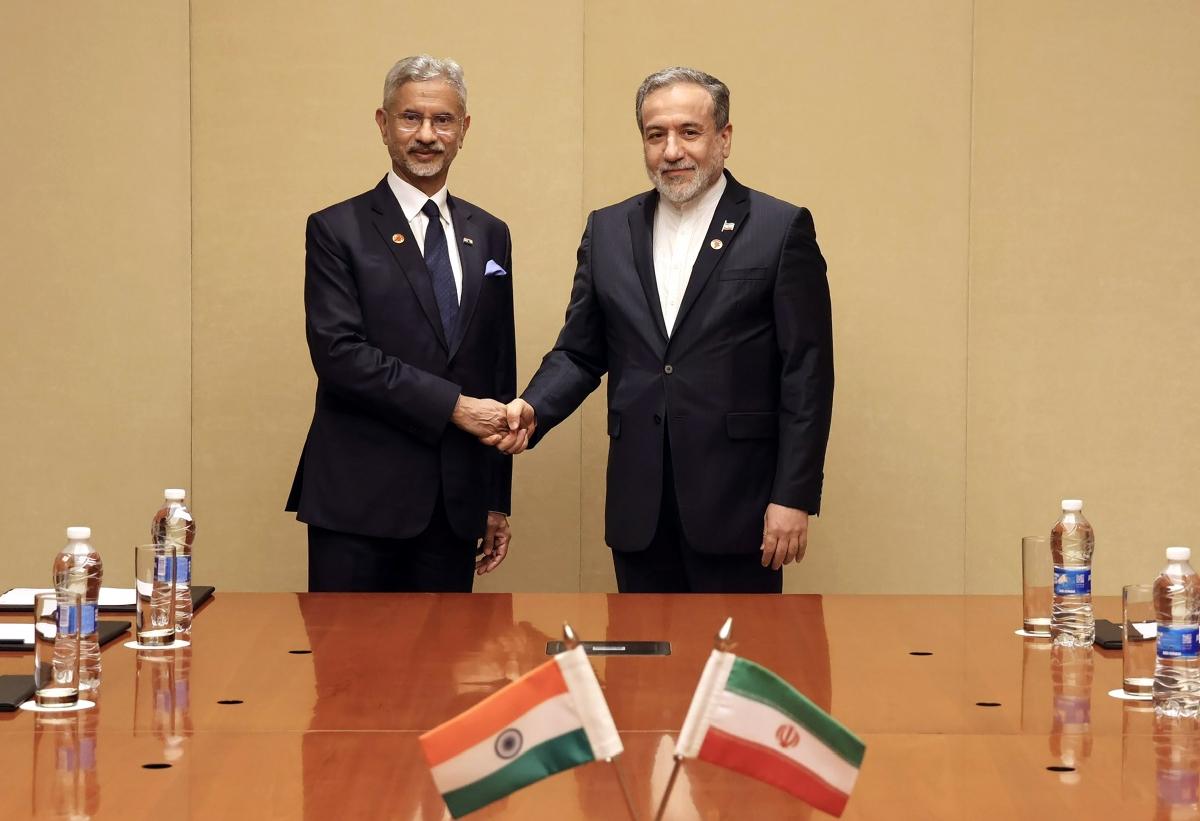
As the April 6 deadline set by President Trump for Iran to reopen the Strait of Hormuz looms, India’s External Affairs Minister S. Jaishankar held crucial talks with his Iranian counterpart Abbas Araghchi. The conversation underscores India’s delicate diplomatic balancing act — maintaining strategic ties with both the United States and Iran while safeguarding its core energy and maritime interests.
Jaishankar stated that they “discussed the present situation” without elaborating on specifics, while the Iranian Embassy in New Delhi confirmed that the two ministers discussed bilateral relations as well as regional and international developments. India has secured safe passage for its vessels through the strait, with Iran allowing ships of “friendly countries” including India to transit the waterway.
India’s Strategic Autonomy in Action
India’s response to the Hormuz crisis exemplifies its evolving foreign policy doctrine of strategic autonomy — a modern evolution of the Non-Alignment Movement. India simultaneously maintains:
- US Partnership: Quad member, defence agreements (LEMOA, COMCASA, BECA), and growing trade
- Iran Engagement: Chabahar Port (10-year agreement signed 2024), traditional oil supplier, gateway to Afghanistan and Central Asia
- Gulf Relationships: 9 million Indian diaspora in Gulf states, massive remittance inflows
Constitutional & Legal Framework
- Article 51 (DPSP): The State shall endeavour to (a) promote international peace and security, (b) maintain just and honourable relations between nations, (c) foster respect for international law and treaty obligations, (d) encourage settlement of international disputes by arbitration
- Article 253: Parliament has power to make any law for implementing any treaty, agreement or convention — even if the subject matter falls in the State List (List II)
- UNCLOS Articles 17-19: Right of innocent passage through territorial seas — passage must be continuous, expeditious, and not prejudicial to peace, good order, or security of the coastal state
- Article 73: Enforcement of laws relating to the Exclusive Economic Zone (EEZ)
The Chabahar Port: India’s Strategic Asset
India’s interest in Iran extends far beyond oil. The Chabahar Port, located in Iran’s Sistan-Baluchestan province, is India’s most important strategic infrastructure project in the region. The port provides India an alternative trade route to Afghanistan and Central Asia, bypassing Pakistan entirely.
India signed the landmark Chabahar agreement in May 2016, and a 10-year bilateral contract for its long-term operation was signed in 2024. The port is critical for India’s connectivity to the International North-South Transport Corridor (INSTC), linking Mumbai to Moscow via Iran and Central Asia.
CLAT Exam Angle
This topic perfectly blends constitutional law, international law, and current affairs — the three pillars of CLAT GK. Key exam-worthy concepts:
- Art 51 vs Art 253: DPSP guides foreign policy principles while Art 253 gives Parliament teeth to implement treaties — understand the difference
- UNCLOS Passage Rights: Innocent passage (Art 17-19) vs Transit passage (Art 38) vs Archipelagic sea lanes passage — know the distinctions
- Strategic Autonomy vs Non-Alignment: India’s modern foreign policy doctrine has evolved from Cold War NAM to multi-alignment
- Chabahar vs Gwadar: India’s Chabahar Port (Iran) vs China’s Gwadar Port (Pakistan) — strategic competition
- ITLOS: International Tribunal for the Law of the Sea (Hamburg) adjudicates UNCLOS disputes
India’s Diplomatic Track Record in the Crisis
India’s diplomatic engagement has been proactive and multi-directional:
- EAM Jaishankar’s multiple calls with Iranian FM Araghchi — securing safe passage for Indian vessels
- India joining UK-led Hormuz multilateral talks to find a peaceful resolution
- 22 Indian ships with 611 seafarers were in the Gulf at the height of the crisis
- India debunked claims that Iran denied safe passage to Indian vessels
- Quiet back-channel diplomacy with both Washington and Tehran
Key Facts Table
| Chabahar Port Location | Sistan-Baluchestan, Iran |
| Agreement Signed | May 2016 (10-year contract: 2024) |
| Indian Diaspora in Gulf | ~9 million |
| UNCLOS Adopted | 1982, Montego Bay, Jamaica |
| ITLOS Headquarters | Hamburg, Germany |
| Indian Ships in Gulf | 22 ships, 611 seafarers (peak) |
| Article 51 Category | DPSP (Part IV) |
| Article 253 Scope | Treaty implementation (overrides State List) |
UNCLOS: The Legal Backbone
The United Nations Convention on the Law of the Sea (1982) is the cornerstone of maritime law governing this crisis. Key provisions:
- Innocent Passage (Art 17-19): All ships enjoy the right of innocent passage through territorial seas. The passage must not be prejudicial to peace, good order, or security.
- Transit Passage (Art 38): Ships and aircraft enjoy the right of transit passage through straits used for international navigation — this right cannot be suspended by the coastal state.
- Article 19(2): Passage is NOT innocent if the vessel engages in propaganda, weapons exercises, intelligence gathering, pollution, or fishing.
Mnemonic: CHABAHAR — India’s Iran Strategy
C — Connectivity to Central Asia via INSTC
H — Hormuz safe passage secured by diplomacy
A — Article 51 DPSP guides peaceful relations
B — Bypass Pakistan for Afghanistan trade
A — Article 253 enables treaty implementation
H — Humanitarian concern for 9M Gulf diaspora
A — Autonomy maintained — no US-Iran binary choice
R — Regional stability as India’s core interest
Conclusion
India’s diplomatic engagement with Iran amid the Hormuz crisis showcases a mature, interest-driven foreign policy that refuses to pick sides. For CLAT aspirants, this story is a rich source of questions spanning international law (UNCLOS), constitutional provisions (Art 51, 253), and India’s strategic foreign policy evolution from non-alignment to strategic autonomy.
Practice Quiz — 10 CLAT-Style Questions
Click an option to reveal the answer and explanation.






