
CURRENT AFFAIRS | 11 APRIL 2026
CLAT GK + CONSTITUTIONAL LAW & JUDICIAL ACCOUNTABILITY
A Resignation That Ends India’s Closest Brush with Judicial Impeachment
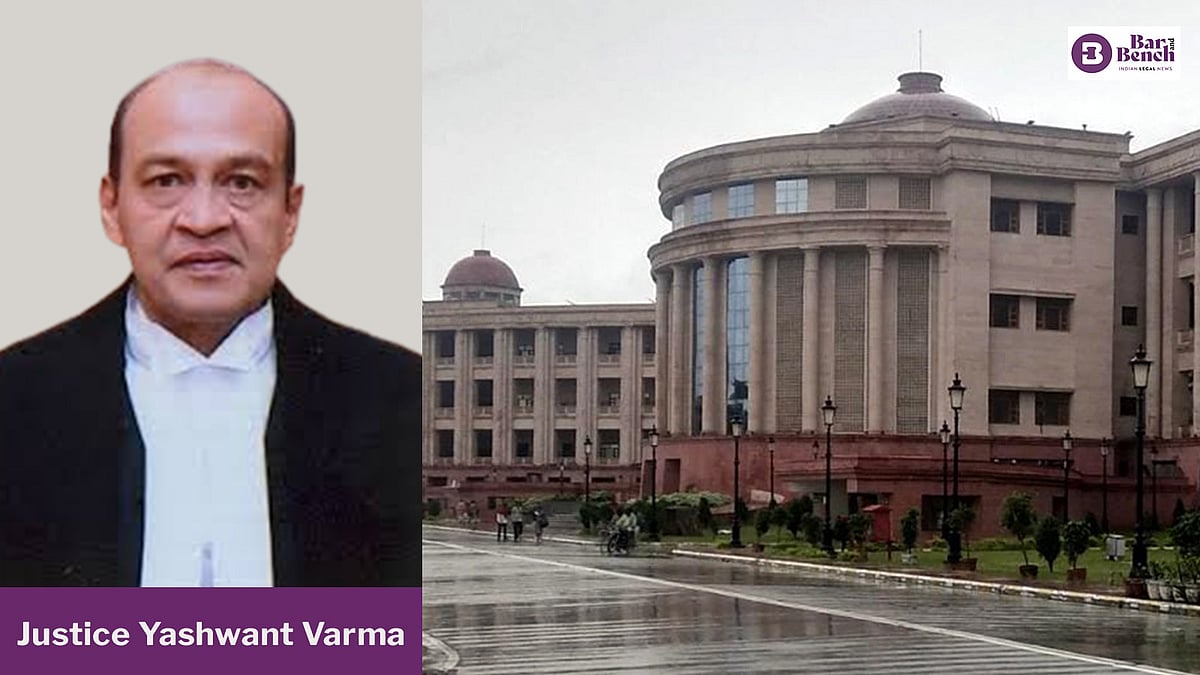
In a development that will be studied in constitutional law classrooms for years to come, Justice Yashwant Varma of the Allahabad High Court has resigned from his position, submitting his letter to President Droupadi Murmu. The resignation brings to a close what would have been India’s first successful impeachment of a constitutional court judge — a process that had already advanced further than any previous attempt.
In his resignation letter, Justice Varma wrote with evident anguish: “I do not propose to burden your august office with the reasons which have constrained me to submit this missive”, adding that it was “with deep anguish” that he was stepping down.
The Cash-at-Home Scandal: How It Unfolded
The controversy traces back to March 14, 2025, when a fire broke out at Justice Varma’s official residence in Delhi during his tenure as a Delhi High Court judge. During firefighting operations, stacks of burnt cash — some reportedly over 1.5 feet high — were discovered in an outhouse at the residence. The discovery sent shockwaves through the judiciary and reignited debates about judicial accountability.
Then-CJI Sanjiv Khanna immediately ordered an in-house inquiry and transferred Justice Varma from the Delhi High Court to the Allahabad High Court. When Justice Varma declined to resign voluntarily, CJI Khanna forwarded the inquiry report and the judge’s response to the President and the Prime Minister, triggering formal removal proceedings.
The Impeachment Process That Almost Was
In August 2025, Lok Sabha Speaker Om Birla constituted a three-member committee under the Judges (Inquiry) Act, 1968:
- Justice Aravind Kumar (Supreme Court)
- Justice Maninder Mohan (Chief Justice, Madras High Court)
- Senior Advocate B.V. Acharya
More than 140 Lok Sabha members backed a motion seeking Justice Varma’s removal. The investigation was ongoing when the resignation letter arrived, effectively halting the process. Under current constitutional practice, once a judge resigns, the impeachment proceedings become infructuous.
Historical Precedents: Why No Judge Has Been Impeached in India
India has never successfully impeached a judge of the higher judiciary, despite several attempts:
Justice V. Ramaswami (1993): The first judge against whom an impeachment motion reached Lok Sabha. Despite the inquiry committee finding him guilty of misbehaviour, the motion failed because it did not receive the required two-thirds majority — the Congress party controversially abstained from voting.
Justice Soumitra Sen (2011): The closest India came to a successful impeachment. The Lok Sabha passed the motion, but Justice Sen resigned just before the Rajya Sabha was scheduled to vote, rendering the process moot.
Justice Varma’s case follows the Soumitra Sen pattern — resignation as an escape hatch from the impeachment process.
Constitutional & Legal Framework
- Article 124(4) — A judge of the Supreme Court can be removed by the President upon an address by each House of Parliament, supported by a special majority, on grounds of proved misbehaviour or incapacity.
- Article 217(1)(b) — Extends the removal procedure of Article 124(4) to High Court judges. A HC judge can be removed in the same manner as an SC judge.
- Judges (Inquiry) Act, 1968 — Provides the procedure for investigation and proof of misbehaviour or incapacity. Requires 100 Lok Sabha or 50 Rajya Sabha members to sign the motion.
- Special Majority Required — Majority of total membership of the House AND not less than two-thirds of members present and voting, in each House separately.
- In-house Procedure — Established following C. Ravichandran Iyer v Justice A.M. Bhattacharjee (1995) for internal disciplinary mechanisms before formal impeachment.
CLAT Angle: Why This Matters for Your Exam
This is one of the most exam-relevant constitutional law stories of the year. Key areas:
- Impeachment procedure — Article 124(4) and 217 are high-frequency polity questions
- Judges Inquiry Act 1968 — Procedure, composition of inquiry committee, threshold signatures
- Judicial independence vs accountability — Classic legal reasoning passage topic
- Historical precedents — Ramaswami (1993) and Soumitra Sen (2011) are must-know cases
- Resignation as an escape — Whether resignation should be barred once impeachment begins is a live constitutional debate
- Collegium system — Second Judges Case and judicial appointments vs removal
Key Facts at a Glance
| Judge | Justice Yashwant Varma, Allahabad HC |
| Incident Date | March 14, 2025 (fire & cash discovery) |
| Resignation Date | April 10, 2026 |
| Resignation To | President Droupadi Murmu |
| MPs Supporting Motion | 140+ Lok Sabha members |
| Inquiry Committee | 3 members under Judges Inquiry Act 1968 |
| Transfer | Delhi HC to Allahabad HC |
| Key Precedents | Ramaswami (1993), Soumitra Sen (2011) |
Mnemonic: JUDGE
J — Judges Inquiry Act, 1968 (procedure for removal)
U — Under Article 124(4) read with Article 217 (removal mechanism)
D — Double majority needed (total membership + two-thirds present)
G — Grounds: proved misbehaviour OR incapacity only
E — Escape by resignation (Soumitra Sen 2011, Varma 2026)
Practice Quiz — 10 CLAT-Style Questions
Click an option to reveal the answer and explanation.