
CURRENT AFFAIRS | 11 APRIL 2026
CLAT GK + INTERNATIONAL LAW
Retired Navy Chief Admiral Arun Prakash has written a penetrating analysis of the Strait of Hormuz crisis through the lens of international maritime law. Following the US-Israeli attack and Iran’s subsequent closure of the Strait, the world’s most critical oil chokepoint has become the site of a collision between geopolitical leverage and legal principles that govern the freedom of the seas.
The Strategic Importance of Hormuz
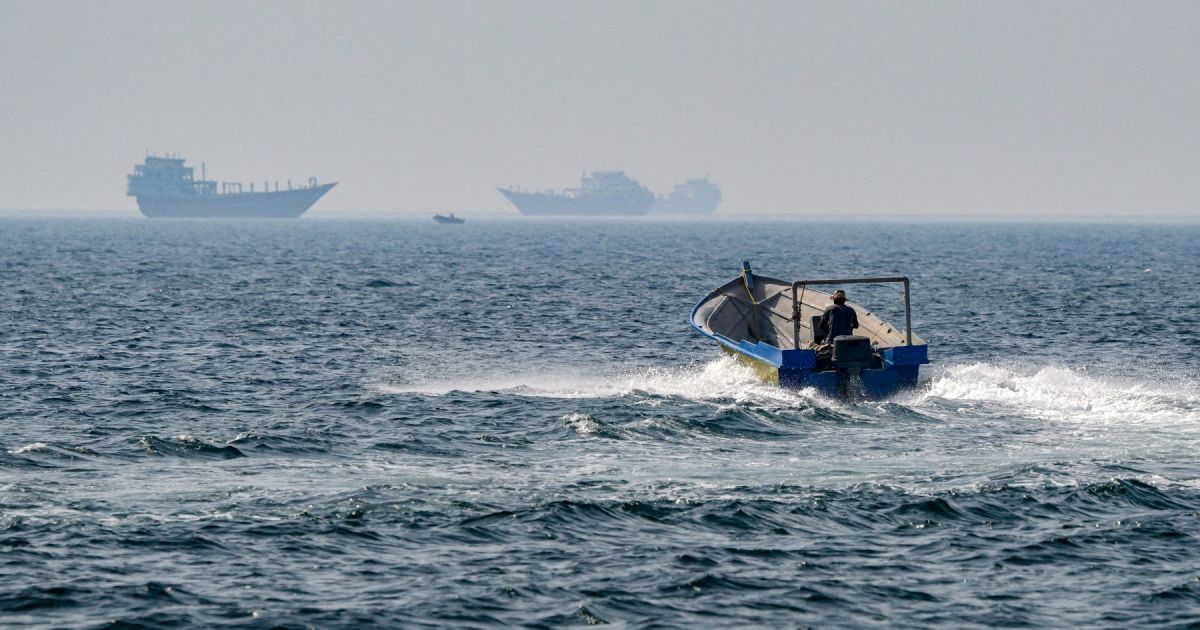
The Strait of Hormuz, connecting the Persian Gulf to the Gulf of Oman, is barely 33 kilometres wide at its narrowest point. Yet roughly one-fifth of global oil supply passes through it daily. For India, the stakes are particularly high: the country depends on the Strait for approximately 40% of its oil imports, making any disruption a direct threat to national energy security.
The economic impact has been immediate and devastating. Maritime insurance rates have jumped from $0.40 to $6.00 per cent of cargo value — a fifteen-fold increase that translates directly into higher costs for imported goods, particularly petroleum products. This insurance spike alone adds billions to India’s import bill.
UNCLOS: The Constitution of the Oceans
The United Nations Convention on the Law of the Sea (UNCLOS, 1982) — often called the “Constitution of the Oceans” — establishes the legal framework governing maritime spaces. Two concepts are central to the Hormuz crisis:
Transit Passage (Article 38): This right applies to straits used for international navigation. Ships and aircraft enjoy the right of transit passage, which means continuous and expeditious passage through the strait. Crucially, transit passage cannot be suspended by the strait state — unlike innocent passage, which can be temporarily suspended. The strait state may adopt laws relating to safety, pollution prevention, and fishing, but cannot impede transit passage.
Innocent Passage (Articles 17-19): This is a more limited right applying to territorial seas. Passage must be continuous, expeditious, and not prejudicial to the peace, good order, or security of the coastal state. Unlike transit passage, innocent passage can be temporarily suspended by the coastal state for security reasons.
The Corfu Channel Precedent
The Corfu Channel Case (ICJ, 1949) — one of the first cases decided by the International Court of Justice — is directly relevant. The ICJ held that Albania could not prevent British warships from passing through the Corfu Channel (an international strait) during peacetime. The Court established that states bordering international straits cannot deny passage to ships of other nations, even in situations of political tension.
Iran’s position challenges this precedent by arguing that closure is justified as self-defence under Article 51 of the UN Charter following armed attack. This creates a direct conflict between the right of passage under UNCLOS and the right of self-defence under the UN Charter — a conflict that international law has not definitively resolved.
India’s Maritime Zones Act 1976
India’s own maritime legislation — the Territorial Waters, Continental Shelf, Exclusive Economic Zone and Other Maritime Zones Act, 1976 — defines India’s maritime zones consistent with UNCLOS. The Act establishes India’s territorial waters (12 nautical miles), contiguous zone (24 nautical miles), and EEZ (200 nautical miles). India has consistently supported freedom of navigation in international straits, a position that aligns with its dependence on Hormuz.
International Legal Framework
- UNCLOS 1982: “Constitution of the Oceans” — defines maritime zones, navigation rights, EEZ, continental shelf
- Article 38 (Transit Passage): Right of continuous, expeditious passage through international straits — cannot be suspended
- Articles 17-19 (Innocent Passage): Right of passage through territorial seas — can be temporarily suspended
- EEZ (Art 56-57): 200 nautical miles from baseline — sovereign rights over resources, not sovereignty itself
- Corfu Channel Case (ICJ 1949): States cannot deny passage through international straits
- Indian Maritime Zones Act 1976: India’s domestic implementation of maritime zone concepts
CLAT Angle — Why This Matters for You
- GK + Legal Knowledge: UNCLOS provisions are a CLAT favourite — expect questions on the difference between Transit Passage and Innocent Passage
- Reading Comprehension: Admiral Prakash’s editorial-style analysis could appear as a passage testing factual recall and analytical reasoning
- Legal Reasoning: The conflict between UNCLOS passage rights and UN Charter self-defence is a classic principle-application problem
- Current Affairs: India’s 40% oil dependence on Hormuz connects international law to domestic economic impact
Key Facts at a Glance
| Strait Width | ~33 km at narrowest point |
| Connects | Persian Gulf to Gulf of Oman |
| India’s Oil Dependence | ~40% of oil imports transit through Hormuz |
| Insurance Spike | $0.40 to $6.00 per cent of cargo value (15x increase) |
| UNCLOS Adopted | 1982 (entered into force 1994) |
| Transit Passage | Art 38 — cannot be suspended by strait state |
| ICJ Precedent | Corfu Channel Case (1949) |
Mnemonic: “HORMUZ” — Maritime Law Essentials
High seas freedom — foundational UNCLOS principle
Oil — 40% of India’s imports through the Strait
Right of Transit Passage — Art 38, cannot be suspended
Maritime Zones Act 1976 — India’s domestic law
UNCLOS 1982 — Constitution of the Oceans
Zone (EEZ) — 200 nautical miles, sovereign rights over resources
Practice Quiz — 10 CLAT-Style Questions
Click an option to reveal the answer and explanation.