
CURRENT AFFAIRS | 2 MAY 2026
CLAT GK + HISTORY + CONSTITUTIONAL LAW (CITIZENSHIP, ART. 5-11)
When pop superstar Diljit Dosanjh referenced the Komagata Maru at his recent Vancouver BC Place stadium concert — and again on The Tonight Show with Jimmy Fallon — the casual mention sent a generation of Indian and Canadian listeners scrambling for the historical context. The story he was nodding to is one of the most disturbing episodes in the long arc of Empire-era racism, and a foundational moment in the Indian freedom struggle.
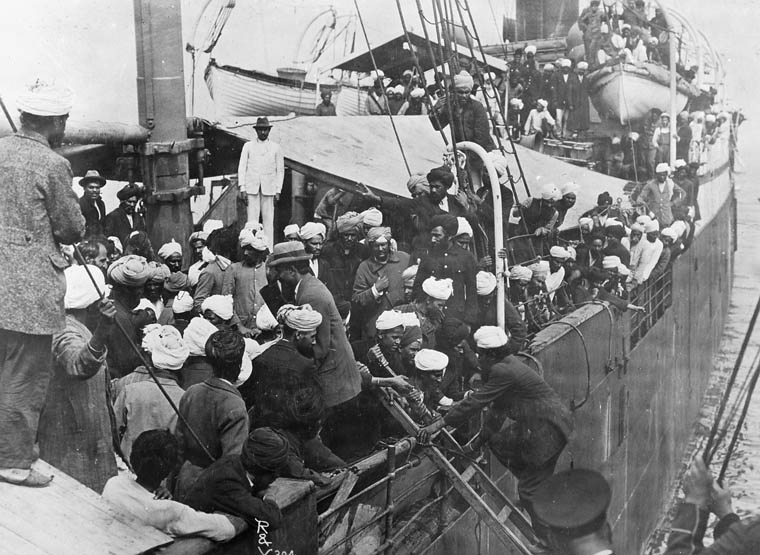
The Komagata Maru was a Japanese-flagged steamship chartered in Hong Kong by a Punjabi Sikh entrepreneur named Gurdit Singh. He set out to test — and break — the racial wall built into Canadian immigration law. The ship sailed on 4 April 1914 with 376 Indian passengers on board: 340 Sikhs, 24 Muslims and 12 Hindus, all British subjects entitled, on paper, to free movement within the Empire. After stopping at Shanghai, Yokohama and Moji, the vessel reached Vancouver on 23 May 1914.
It was met not with welcome but with armed gunboats. Canadian authorities, under the Continuous Journey Regulation of 1908 — engineered by the Asiatic Exclusion League and Vancouver politicians — barred entry to anyone who had not travelled directly from country of origin. There were no direct steamer routes from India to Canada. The regulation was deliberately designed to keep South Asians out without using explicitly racial language. Of the 376 passengers, only 24 were allowed to disembark; the rest spent two months stranded on board in Vancouver harbour, food and water dwindling, while a legal challenge mounted by Vancouver’s nascent Khalsa Diwan Society failed before the British Columbia Court of Appeal.
On 23 July 1914, the ship was forced to leave under naval escort. After a long return voyage, it docked at Budge Budge, near Calcutta, on 27 September 1914. British Indian police, viewing the returnees as politically dangerous, attempted to arrest the leaders. A scuffle escalated into firing. Twenty passengers were killed, many more wounded; Gurdit Singh escaped, was tracked for years, and finally surrendered in 1922 — serving a five-year imprisonment.
The political fallout was historic. The Komagata Maru became a recruiting catalyst for the Ghadar Movement, founded in San Francisco in 1913 by Lala Hardayal, Sohan Singh Bhakna and others. Ghadar publications, smuggled into Punjab, drew an unbroken line from Vancouver harbour to Jallianwala Bagh, hardening Sikh, Punjabi-immigrant and Indian-revolutionary opposition to the Crown. The constitutional context: governance of India had passed from the East India Company to the Crown via the Government of India Act, 1858; Indians were “British subjects” but unequal subjects, a contradiction the Komagata Maru ruthlessly exposed. Canadian Prime Minister Justin Trudeau issued a formal apology in the House of Commons on 18 May 2016.
Modern Indian citizenship law is shaped, in part, by the experience of overseas Indians like the Komagata Maru passengers. Articles 5 to 11 of the Constitution govern citizenship at commencement; the Citizenship Act, 1955 sets out modes of acquisition (birth, descent, registration, naturalisation) and termination (renunciation, deprivation, termination). The OCI/PIO frameworks, and the contemporary debates around CAA 2019 and NRC, are downstream of this same diasporic question — who counts as belonging?
Constitutional & Legal Framework
- Government of India Act, 1858 — Crown direct rule begins
- Continuous Journey Regulation, 1908 (Canada) — racial barrier in disguise
- Articles 5-11, Constitution of India — citizenship at commencement
- Citizenship Act, 1955 — birth, descent, registration, naturalisation, termination
- Foreigners Act, 1946 — regulation of non-citizens
- Ghadar Party (1913, San Francisco) — Lala Hardayal, Sohan Singh Bhakna
- Komagata Maru Memorial, Budge Budge (West Bengal) — installed 1952
- Trudeau apology in Canadian House of Commons, 18 May 2016
Why This Matters for CLAT 2027
The Komagata Maru is a perfect Explained-page passage — moral weight, factual density, and direct legal hooks. Expect (a) factual recall on dates, numbers (376, 340 Sikhs, 20 killed), (b) Ghadar Party origin and founders, (c) Articles 5-11 vs Citizenship Act 1955 distinction, and (d) cross-cutting questions on diaspora, racism, and the doctrine of “British subjecthood”. Bonus: Trudeau’s 2016 apology often appears in international-relations static GK.
Key Facts at a Glance
| Item | Detail |
|---|---|
| Ship | Komagata Maru (Japanese steamship) |
| Charterer | Gurdit Singh (Punjab → Hong Kong) |
| Passengers | 376 (340 Sikhs, 24 Muslims, 12 Hindus) |
| Sailed | 4 April 1914 (HK) |
| Reached Vancouver | 23 May 1914 |
| Forced back | 23 July 1914 |
| Budge Budge firing | 27 Sept 1914 — 20 killed |
| Trudeau apology | 18 May 2016 |
Mnemonic — “GBV-376” (Gurdit-Budge-Vancouver, 376 souls)
Gurdit Singh chartered · Budge Budge firing · Vancouver denial — 376 passengers, 20 killed. Catalyst for the Ghadar Movement.
Practice Quiz — 10 CLAT-Style Questions
Click an option to reveal the answer and explanation.