
CURRENT AFFAIRS | 23 APRIL 2026
The News Trigger
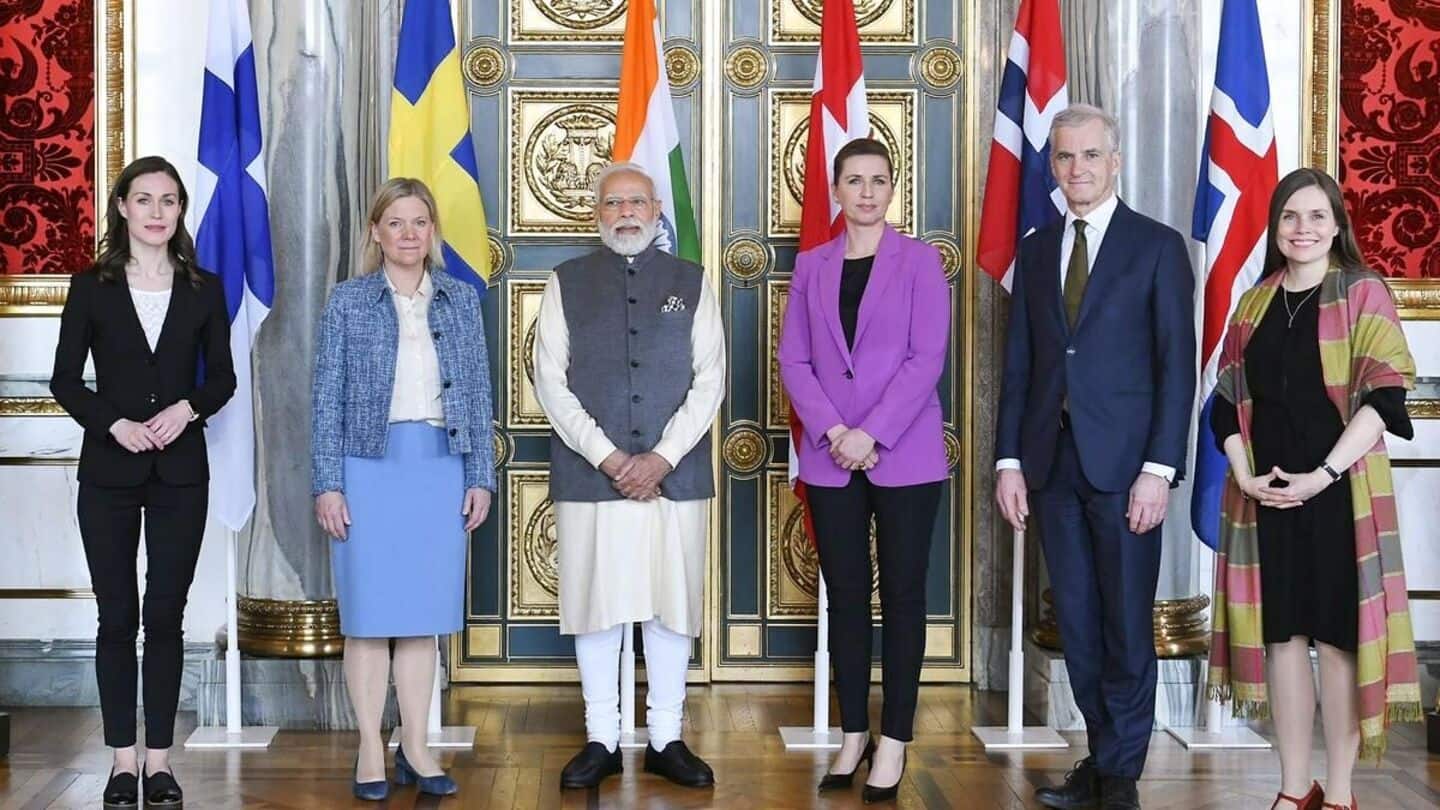
PM Narendra Modi will travel to Oslo, Norway, on 15–16 May 2026 to attend the 3rd India-Nordic Summit, with leaders of all five Nordic countries — Norway, Sweden, Finland, Denmark and Iceland — expected to join. After Stockholm (2018) and Copenhagen (2022), Oslo marks a decade of institutionalised India-Nordic engagement. The PM will combine this with a wider European tour — Netherlands (15–20 May), likely Sweden and Italy — setting up formal conclusion of India–EU FTA negotiations pushed forward at the January 2026 Summit.
What Will Dominate the Agenda
- Energy security & Strait of Hormuz — ongoing Iran war and choke-point disruption threatening one-fifth of global oil trade.
- Russia-Ukraine war — now in its 4th+ year; India’s neutral-but-nudging diplomacy remains of interest to Nordic states.
- Green and Blue Economy — Nordic expertise in offshore wind, hydrogen, and sustainable fisheries dovetails with India’s Sagarmala and PM Gati Shakti.
- Digitalisation & innovation — startups, AI governance, semiconductor supply chain, especially relevant for Finland and Sweden.
- Arctic cooperation — India has been Observer at the Arctic Council since 2013 and launched its Arctic Policy in 2022.
Constitutional & Policy Framework
- Article 51 (DPSP) — directs the State to promote international peace and respect for treaty obligations.
- Article 253 — Parliament’s power to implement treaties.
- India’s Arctic Policy 2022 — “India and the Arctic: Building a Partnership for Sustainable Development” — 6 pillars including S&T, climate, economic and national security.
- Sagarmala Programme (2015) — port-led development + Blue Economy along 7,500 km coastline.
- UNCLOS Article 38 — right of transit passage through international straits (directly relevant to Hormuz).
Why Nordic Matters Disproportionately
Five small-population countries, combined GDP of over $1.9 trillion, and a sovereign wealth fund (Norway’s Government Pension Fund Global) of ~$1.8 trillion — the largest on earth. Nordic countries lead on climate technology, ethical governance indices and social trust. For India, they are a model for high-income welfare economies and a gateway to EU investment — particularly crucial after the January 2026 India-EU Summit outcomes.
CLAT Angle
Expect questions on: (a) Arctic Council membership — India is an Observer, not a Member; (b) UNCLOS transit passage vs innocent passage vs archipelagic sea-lanes; (c) treaty-making power in India (Art 73 + Art 253); (d) Blue Economy definition (World Bank); (e) Sagarmala pillars; (f) difference between sovereign wealth fund and forex reserve.
Key Facts at a Glance
| Summit | Year & Host |
|---|---|
| 1st India-Nordic Summit | 2018 — Stockholm (Sweden) |
| 2nd India-Nordic Summit | 2022 — Copenhagen (Denmark) |
| 3rd India-Nordic Summit | 15–16 May 2026 — Oslo (Norway) |
| Nordic 5 | Norway, Sweden, Finland, Denmark, Iceland |
| Norway SWF size | ~$1.8 trillion (world’s largest) |
| India Arctic Council status | Observer since 2013; Policy 2022 |
Mnemonic: “NSFDI → Nordic 5”
Norway — Sweden — Finland — Denmark — Iceland. Read as “No Such Frail Democratic Islands.” Add autonomous territories: Faroe, Greenland, Åland.
India’s Arctic Stakes — Rising
Arctic ice melt is opening the Northern Sea Route — potentially cutting shipping time from Asia to Europe by ~40%. India’s 2022 Arctic Policy is built on six pillars: science & research, climate and environment protection, economic & human development, transportation & connectivity, governance & international cooperation, and national capacity-building. Oslo 2026 will concretise the “governance & international cooperation” pillar.
Practice Quiz — 10 CLAT-Style Questions
Click an option to reveal the answer and explanation.