
CURRENT AFFAIRS | 2 MAY 2026
CLAT GK + CONSTITUTIONAL LAW & RELEVANT AREA
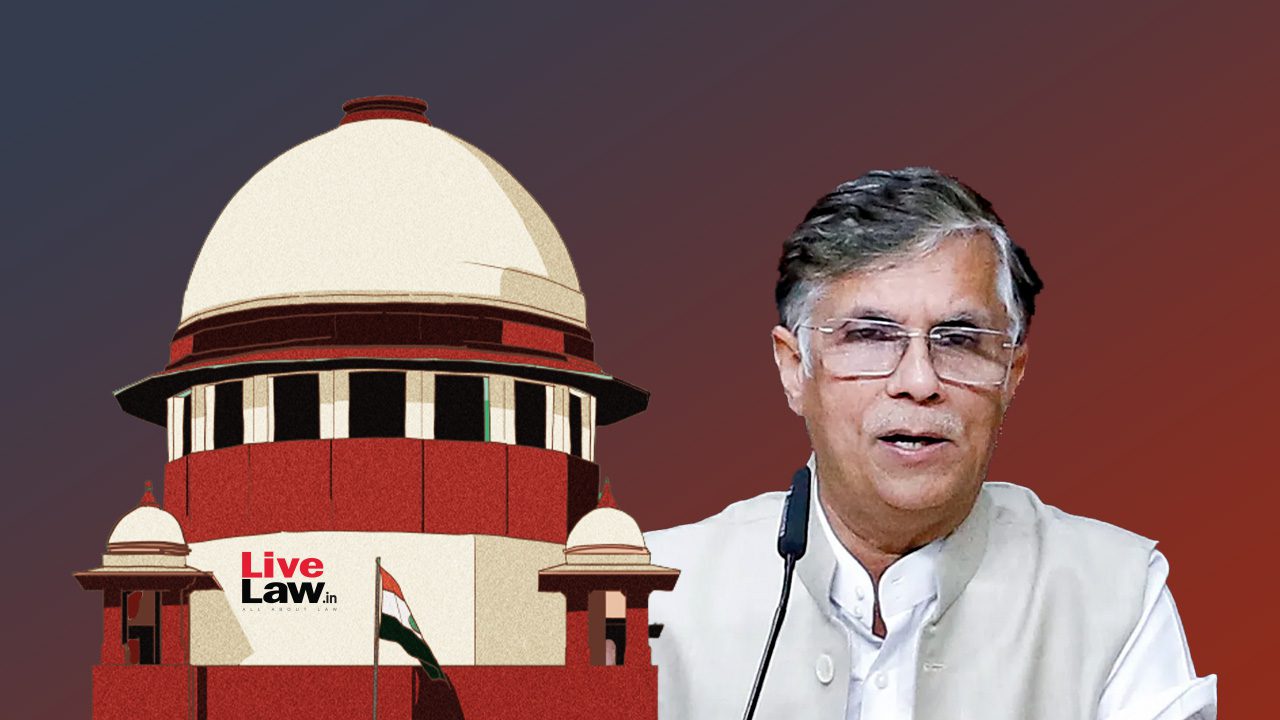
The Supreme Court on May 1, 2026 granted Congress leader Pawan Khera anticipatory bail in the defamation case filed against him over remarks concerning Riniki Bhuyan Sharma, wife of Assam Chief Minister Himanta Biswa Sarma. Setting aside the Gauhati High Court order that had refused him pre-arrest protection, a Bench observed that the High Court’s reasoning “appears erroneous, in particular shifting the burden on the accused” — a phrase that turns the judgment into a textbook reaffirmation of how anticipatory bail jurisprudence is supposed to work.
The Court emphasised that criminal process must be applied with objectivity, neither lending itself to political weaponisation nor allowing the State to act, in its memorable phrase, like a “constitutional cowboy or Rambo.” It was a sharp reminder that personal liberty under Article 21 is the rule and curtailment the carefully reasoned exception. Significantly, the FIR did not invoke Section 339 of the Bharatiya Nyaya Sanhita (BNS) — which deals with forgery for purpose of cheating — yet the High Court had relied on it to deny bail. The Supreme Court found this leap impermissible: a court cannot expand the scope of the FIR by importing offences the prosecution itself has not pleaded.
This judgment sits squarely in the lineage of Joginder Kumar v State of UP (1994), DK Basu v West Bengal (1997), Arnesh Kumar v Bihar (2014), and Siddharam Mhetre v Maharashtra (2011) — all cases in which the apex court has progressively built guard-rails around arrest and detention. For CLAT 2027 aspirants, the value of this order lies precisely in how cleanly it stitches together those cases with Section 438 of the CrPC (anticipatory bail), Article 21 (personal liberty), Article 19(1)(a) (freedom of speech, including for political comment) and the constitutional balance between individual liberty and the State’s legitimate interest in fair investigation.
Constitutional & Legal Framework
- Article 21 — Right to life and personal liberty; the bedrock for anticipatory bail jurisprudence.
- Article 19(1)(a) — Freedom of speech subject to reasonable restrictions under Art. 19(2), including defamation.
- Section 438 CrPC / Section 482 BNSS — Anticipatory bail; available even to non-residents of the state where FIR is filed.
- BNS Section 339 — Forgery for purpose of cheating; not invoked in original FIR.
- Landmark cases: Joginder Kumar (1994), DK Basu (1997), Arnesh Kumar (2014), Siddharam Mhetre (2011).
CLAT Angle — Why This Matters
- Legal Reasoning passages often pivot on burden of proof — note the SC’s line that “shifting the burden on the accused” is constitutionally suspect.
- Anticipatory bail is regularly tested with hypotheticals on political vendetta and inter-state FIRs.
- The “constitutional cowboy or Rambo” phrase is a quotable judicial soundbite — examiners love memorable dicta.
- Tests cross-link: arrest safeguards (Joginder Kumar / Arnesh Kumar / DK Basu) plus Article 21 due process plus Section 41A CrPC notice.
Key Facts at a Glance
| Element | Detail |
|---|---|
| Court | Supreme Court of India |
| Petitioner | Pawan Khera (INC) |
| Relief | Anticipatory bail u/s 438 CrPC |
| Key phrase | “Constitutional cowboy or Rambo” |
| HC error | Shifted burden onto accused |
| Date | May 1, 2026 |
Mnemonic
JADS — Joginder Kumar (arrest must be justified), Arnesh Kumar (Section 41A notice), DK Basu (custody safeguards), Siddharam Mhetre (broad scope of anticipatory bail). Four bail giants in one mnemonic.
Practice Quiz — 10 CLAT-Style Questions
Click an option to reveal the answer and explanation.