
CURRENT AFFAIRS | 14 APRIL 2026
CLAT GK + CONSTITUTIONAL LAW & POLITICAL REPRESENTATION
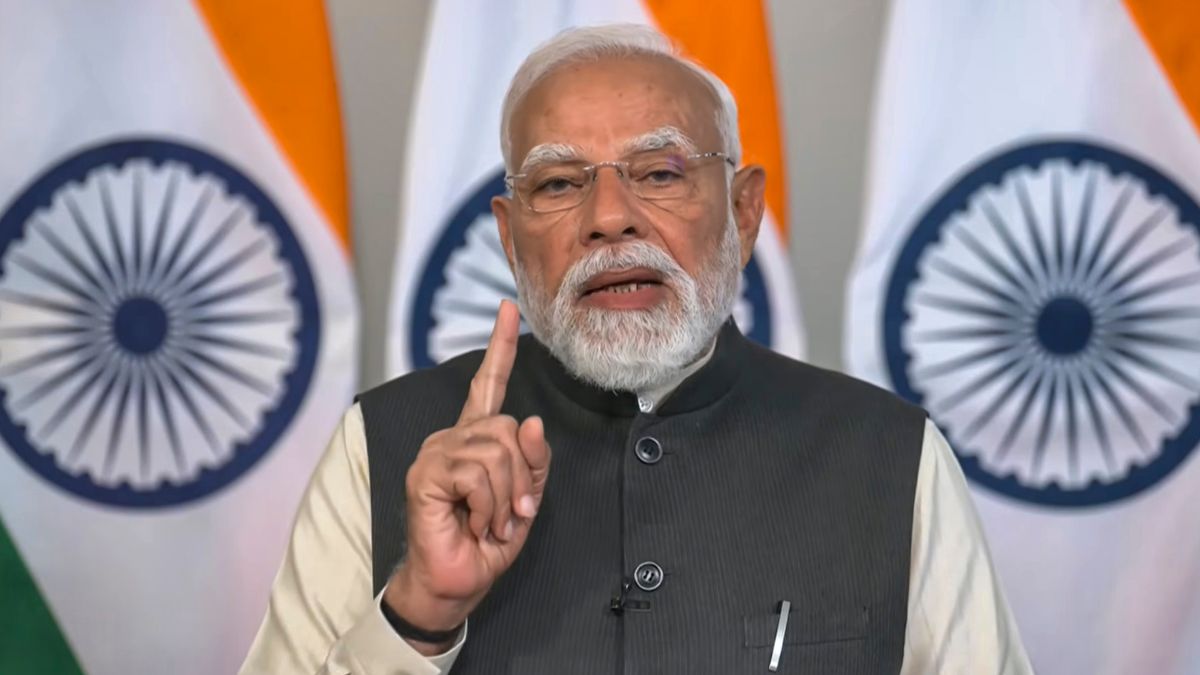
Prime Minister Narendra Modi declared that Parliament is on the verge of “making one of the biggest decisions of the 21st century” as a special three-day session from April 16-18 is scheduled to discuss critical amendments to the Nari Shakti Vandan Adhiniyam (Women’s Reservation Act) and a companion Delimitation Bill. The session aims to operationalize the 128th Constitutional Amendment passed unanimously in 2023, which reserves one-third (33%) of seats in the Lok Sabha and State Legislative Assemblies for women.
The Act’s implementation has been stuck in a constitutional catch-22: it requires delimitation of constituencies based on a Census conducted after the Act’s commencement. With the post-2026 Census now on the horizon, the government is moving to amend the Act and introduce a Delimitation Bill that could reshape India’s political landscape. Through this delimitation process, Lok Sabha seats may increase from 543 to 816 — a transformative expansion of the lower house.
What is the Nari Shakti Vandan Adhiniyam?
Passed as the 128th Constitutional Amendment Act in 2023, the Nari Shakti Vandan Adhiniyam inserted Article 334A into the Constitution, providing for the reservation of one-third of seats for women in the Lok Sabha and State Legislative Assemblies. The reservation is to be implemented after delimitation based on the first Census conducted after the Act’s commencement, and will remain in effect for 15 years, with the possibility of extension by Parliament.
The Act built on the foundation laid by the 73rd and 74th Constitutional Amendments (1992), which provided for one-third reservation for women in Panchayats (Article 243D) and Municipalities (Article 243T) respectively. Those amendments transformed grassroots democracy — India now has over 14 lakh elected women representatives in local governance.
The Political Chessboard
While the Act was passed unanimously, its implementation has become politically contentious. The BJP has issued a three-line whip to all its MPs for the special session, signaling its intent to push the amendments through. Congress has also issued a whip but has raised concerns about the delimitation criteria, fearing that a rushed process could disadvantage certain states and communities.
CPP Chairperson Sonia Gandhi expressed displeasure over being “pushed” under what she called a “hurried” process. INDIA bloc parties have flagged concerns about caste census and OBC sub-categorization, arguing that women’s reservation must intersect with social justice. Telangana CM Revanth Reddy accused the government of using the Act as “bait” for electoral gains without genuine commitment to implementation.
128th Constitutional Amendment Act, 2023: The Nari Shakti Vandan Adhiniyam — reserves 33% seats for women in Lok Sabha and State Assemblies.
Article 334A(1): Inserted by the 128th Amendment — provides for reservation of seats for women in the House of the People and State Legislative Assemblies.
Article 15(3): Empowers the State to make special provisions for women and children.
Article 243D: Reservation of not less than 1/3 seats for women in Panchayats (73rd Amendment, 1992).
Article 243T: Reservation of not less than 1/3 seats for women in Municipalities (74th Amendment, 1992).
Delimitation Act, 2002: Provides for constitution of Delimitation Commission to readjust constituencies based on Census data.
The Delimitation Challenge
Delimitation — the redrawing of constituency boundaries based on population data — is the key that unlocks women’s reservation. The last delimitation was done in 2008 based on the 2001 Census. Southern states, which have achieved lower population growth, fear that fresh delimitation based on the post-2026 Census would reduce their parliamentary seats relative to northern states with higher populations. This north-south tension adds another layer of complexity to the special session’s agenda.
Women in Indian Democracy: The Numbers
Despite constituting nearly 49% of India’s population, women hold only about 15% of seats in the current Lok Sabha. In State Assemblies, the figure is even lower — around 9%. In contrast, countries like Rwanda (61%), Sweden (47%), and South Africa (46%) have achieved significantly higher women’s representation. The 33% reservation, once implemented, would make India one of the largest democracies with constitutionally mandated gender representation.
Legal Reasoning: Questions on constitutional amendment procedure (Art. 368), DPSP vs. Fundamental Rights, affirmative action under Art. 15(3), and the difference between 73rd/74th Amendments and the 128th Amendment.
Current Affairs/GK: Timeline of women’s reservation bill (first introduced in 1996), delimitation process, Census-delimitation link, Lok Sabha seat expansion from 543 to 816.
Logical Reasoning: Arguments for and against women’s reservation — merit vs. representation, urban vs. rural women, intersection with caste reservation.
Key Case: Vishaka v State of Rajasthan (1997) — workplace sexual harassment guidelines, part of the broader women’s rights jurisprudence.
| Amendment | 128th Constitutional Amendment Act, 2023 |
| Reservation | 33% (one-third) seats for women |
| Special Session | April 16-18, 2026 |
| Lok Sabha Expansion | 543 to potentially 816 seats |
| Current Women in LS | ~15% of total seats |
| Key Article Inserted | Article 334A |
N — Nari Shakti Vandan Adhiniyam (128th Amendment)
A — Article 334A inserted for women’s reservation
R — Reservation of 33% seats in Lok Sabha & Assemblies
I — Implementation linked to Census + Delimitation
S — Special Session April 16-18, 2026
H — Historical precedent: 73rd/74th Amendments for local bodies
A — Article 15(3) enables special provisions for women
K — Key expansion: 543 to 816 Lok Sabha seats
T — Tenure: 15 years with option to extend
I — INDIA bloc demands caste census linkage
Looking Ahead: 2029 as the Deadline
PM Modi has set 2029 as the target for implementing women’s reservation in elections. If the special session successfully passes the amendment and delimitation bills, the Delimitation Commission would need to redraw all constituencies based on the new Census data — a massive administrative exercise. The 2029 general election could thus become the first in India’s history where one-third of parliamentary constituencies are reserved for women candidates, fundamentally transforming the character of Indian democracy.
Practice Quiz — 10 CLAT-Style Questions
Click an option to reveal the answer and explanation.