
CURRENT AFFAIRS | 14 APRIL 2026
CLAT GK + INTERNATIONAL LAW & GEOPOLITICS
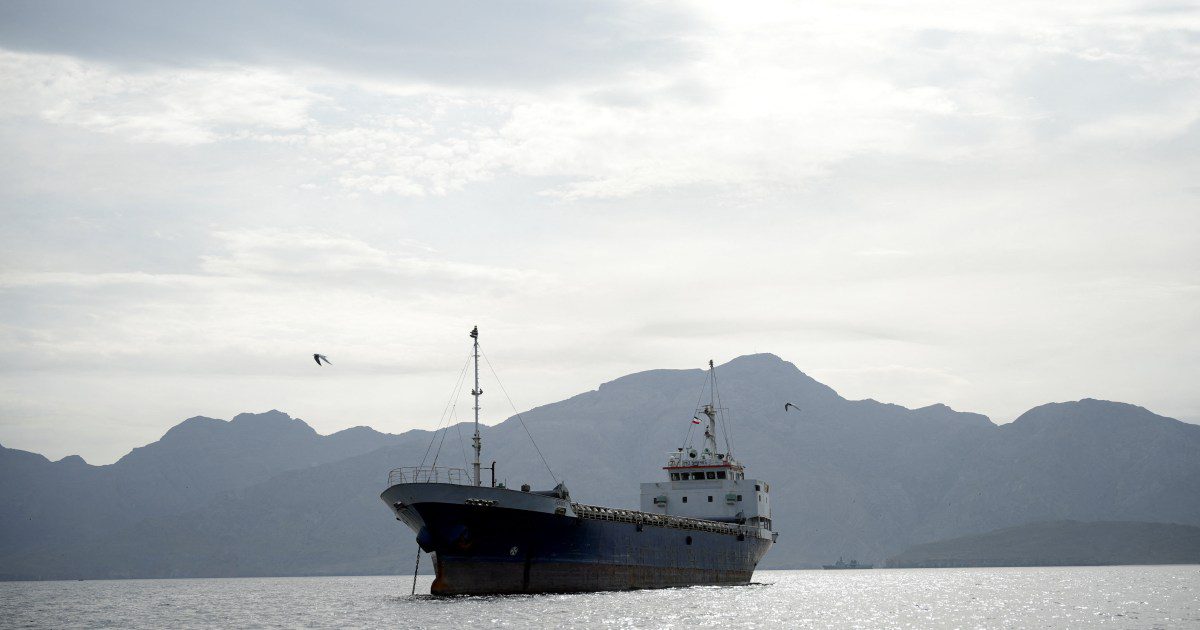
The United States launched a naval blockade targeting ships entering or leaving Iranian ports through the Strait of Hormuz on April 13, 2026, following the collapse of peace talks in Pakistan. This is the first US naval blockade since the Cuban Missile Crisis of 1962, raising profound questions about international law, freedom of navigation, and the global economic order. An Explained page analysis unpacks the many legal and strategic uncertainties surrounding this unprecedented move.
What Is a Blockade Under International Law?
A blockade is an act by a belligerent state using naval force to prevent vessels from entering or leaving specified coastal areas or ports. Under international law, a blockade is classified as an act of war falling under International Armed Conflict (IAC) law. It involves stopping, inspecting, and potentially seizing vessels attempting to breach the cordon. The legal framework governing blockades derives from customary international law, the San Remo Manual on International Law Applicable to Armed Conflicts at Sea (1994), and the UN Charter.
The Strait of Hormuz carries approximately 20% of global oil supply. The blockade comes after 21 hours of negotiations led by Vice President JD Vance failed to produce agreement on Iran’s nuclear programme and its partial closure of the strait since late February.
The Kennedy “Quarantine” Precedent
The 1962 Cuban Missile Crisis set the most significant precedent. President Kennedy deliberately used the term “quarantine” instead of “blockade” to avoid the legal classification as an act of war. The distinction was deliberate: a “quarantine” was presented as a defensive measure targeting specific weapons shipments, while a “blockade” would have constituted an act of war under international law, potentially triggering Article 5 of the NATO treaty and Soviet retaliation. The Trump administration has made no such distinction, explicitly calling this a “blockade”.
Key Uncertainties
Scope Confusion: Conflicting signals from the US side create dangerous ambiguity. President Trump stated the blockade would target “any and all ships” in the Strait, while CENTCOM clarified it would only target vessels going to or from Iranian ports. This distinction has enormous implications for neutral shipping and global trade.
International Participation: The UK has explicitly stated it will not participate in the blockade. It remains unclear which nations will join the US operation, raising questions about collective security frameworks.
Iranian Countermeasures: Iran’s proxy networks and its capacity to deploy naval mines in the Strait pose significant risks. Iran has previously threatened to close the Strait entirely, and its asymmetric warfare capabilities present unpredictable escalation pathways.
Oil Market Impact: With a shortage of approximately 7 million barrels per day in global crude supply, prices have surged past $100 per barrel. Analysts warn prices may not decline even after hostilities end, given the time needed to repair damaged oil facilities and reopen shipping lanes.
International Legal Framework
- UNCLOS Article 87 — Freedom of the high seas (navigation, overflight, cable-laying)
- UNCLOS Article 38 — Right of transit passage through straits used for international navigation
- UN Charter Article 2(4) — Prohibition on use of force or threat of force against territorial integrity
- UN Charter Articles 41 & 42 — Security Council authority to decide non-forceful and forceful measures
- UN Charter Article 51 — Inherent right of individual or collective self-defence
- San Remo Manual (1994) — Codifies rules on blockades, neutral shipping, and armed conflicts at sea
- Customary International Law — Blockade must be declared, notified, effective, and applied impartially
India’s Position and Impact
India, which imports significant quantities of Iranian oil, faces a direct strategic dilemma. Ships carrying Iranian crude have reportedly anchored off the Indian coast awaiting clarity on the blockade’s scope. India’s response will test its balancing act between the US strategic partnership and energy security needs. The impact on India’s already stressed rupee and current account deficit adds an economic dimension to this geopolitical crisis.
CLAT Angle: Why This Matters
- International Law — UNCLOS, blockade legality, act of war classification tested in CLAT
- UN Charter Provisions — Art. 2(4), 41, 42, 51 are core international law concepts
- Historical Precedent — Cuban Missile Crisis “quarantine” vs “blockade” distinction
- India’s Foreign Policy — Strategic autonomy, energy security, Act East vs Act West
- Economic Impact — Oil prices, trade disruption, BoP implications for India
Key Facts at a Glance
| Event | US naval blockade of Strait of Hormuz (13 April 2026) |
| Target | Ships to/from Iranian ports |
| Legal Classification | Act of war under International Armed Conflict law |
| Last US Blockade | Cuban Missile Crisis, 1962 (called “quarantine”) |
| Oil Impact | ~7 million barrels/day shortage, crude $100+ |
| Strait of Hormuz | ~20% of global oil supply transits through it |
| UK Position | Will not participate in blockade |
Mnemonic: BLOCKADE
B — Belligerent act of war (international law classification)
L — Legal framework: UNCLOS Art. 38, 87 + UN Charter Art. 51
O — Oil crisis: 7M barrels shortage, $100+ crude
C — Cuban Missile Crisis 1962 precedent (Kennedy’s “quarantine”)
K — Key strait: Hormuz carries 20% global oil
A — Article 2(4) UN Charter: prohibition on use of force
D — Diplomatic failure: 21-hour Pakistan talks collapsed
E — Escalation risks: Iranian mines, proxies, scope confusion
Practice Quiz — 10 CLAT-Style Questions
Click an option to reveal the answer and explanation.