
CURRENT AFFAIRS | 18 APRIL 2026
CLAT GK + CONSTITUTIONAL LAW & RELEVANT AREA
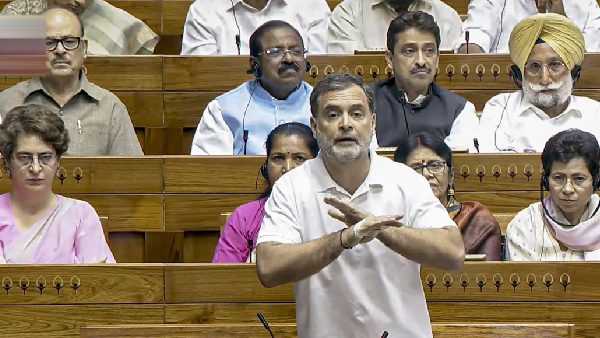
In an order that has reopened one of India’s most politically charged citizenship disputes, Justice Subhash Vidyarthi of the Allahabad High Court’s Lucknow Bench on 18 April 2026 set aside the Lucknow MP/MLA Court’s 28 January 2026 dismissal and directed the registration of an FIR against Congress MP Rahul Gandhi, allowing a probe into allegations that he holds UK citizenship and thereby violated Indian passport and nationality law. The court held that the allegations disclosed prima facie cognisable offences requiring investigation; the State may transfer the probe to a central agency after FIR registration.
The petitioner, BJP worker S. Vignesh Shishir, alleged that Gandhi incorporated a UK company — M/s Backops Ltd in August 2003 — declaring British nationality with London and Hampshire addresses. A similar plea was dismissed in 2019 by a Supreme Court bench led by then-CJI Ranjan Gogoi on maintainability grounds. The Allahabad HC has now impleaded the Union Home Ministry, directing production of records on Gandhi’s citizenship status. The order squarely engages Article 9, Citizenship Act 1955 Section 9, Passport Act 1967 and RPA 1951 Section 3.
Constitutional & Legal Framework
Article 9 — No dual citizenship: “No person shall be a citizen of India by virtue of Article 5, or be deemed to be a citizen of India by virtue of Article 6 or Article 8, if he has voluntarily acquired the citizenship of any foreign State.” The Constitution itself refuses to treat dual citizens as Indian citizens. Art 11 empowers Parliament to legislate further.
Citizenship Act 1955, Section 9: (1) Any Indian citizen who voluntarily acquires the citizenship of another country ceases to be a citizen of India. (2) The Central Government is the exclusive authority to determine the question under Rule 30 of the Citizenship Rules 1956 — not a court. The Overseas Citizen of India (OCI) card created by the 2003/2005 amendments is NOT dual citizenship.
Passport Act 1967: Regulates issuance, impounding and revocation of Indian passports. Sec 12 penalises false statements, forgery and holding of multiple passports (including a foreign passport without disclosure) — up to 5 years + Rs 50,000 fine.
Representation of People Act 1951 Sec 3-5: Indian citizenship is the foundational qualification for all Parliamentary and Assembly membership — echoed in Articles 84 (Parliament) and 173 (State Legislature). Sec 8 deals with disqualifications on conviction.
Landmark cases: Lily Thomas v UoI (2013) — struck down Sec 8(4) RPA 1951, held that MPs/MLAs stand disqualified from the date of conviction. People’s Union for Civil Liberties v UoI (2003) — voter’s right to know candidate’s criminal, financial and educational antecedents. Union of India v Pranav Srinivasan (2025) — interpretation of Sec 9(2) determination procedure.
CLAT Angle — Why This Matters
Expect CLAT passages combining Article 9 + Citizenship Act Sec 9 with the question of who decides — the courts or the Central Government? The combined operation of Art 9 and Sec 9(1) is declaratory: if a person voluntarily acquires foreign citizenship, they automatically cease to be an Indian citizen. The determination by the Central Government under Sec 9(2) is evidentiary, not constitutive. Questions may also test the distinction between OCI (a card granting rights, not nationality) and dual citizenship (impossible under Art 9). On the parliamentary-law side, expect combinations of RPA 1951 Sec 3, Art 84, Lily Thomas and PUCL to test knowledge of MP disqualification processes. The procedural history — Gogoi bench 2019 dismissal, MP/MLA court 2026 dismissal, Allahabad HC 2026 order — is also a good revision loop for judicial hierarchy and the power of high courts under Arts 226/227.
Key Facts at a Glance
| Element | Detail |
|---|---|
| Order date | 18 April 2026, Allahabad HC Lucknow Bench |
| Judge | Justice Subhash Vidyarthi |
| Petitioner | S. Vignesh Shishir (BJP worker) |
| Core allegation | Incorporated Backops Ltd UK (Aug 2003); declared British nationality |
| Earlier orders | 2019 — SC (Gogoi CJI) dismissed similar plea; Jan 2026 — MP/MLA court dismissed |
| Direction | FIR registration; probe may be transferred to central agency; MHA impleaded |
| Key articles/sections | Art 9, 84, 102 · Citizenship Act Sec 9 · Passport Act Sec 12 · RPA 1951 Sec 3 |
| Leading cases | Lily Thomas 2013 · PUCL v UoI 2003 |
Mnemonic — “DUAL-9”
Remember dual-citizenship law in 5 beats:
Determination by Centre (Sec 9(2)) · United Kingdom → auto-loss (Art 9) · Automatic cessation (Sec 9(1)) · Lily Thomas for disqualification · 9 = Art 9 + Citizenship Act Sec 9.
Who Decides Citizenship — Courts or the MHA?
A common CLAT trap is the belief that a court can “declare” someone to have lost citizenship. The correct position is: Sec 9(2) of the Citizenship Act read with Rule 30 of the Citizenship Rules 1956 vests exclusive determinative authority in the Central Government. Courts can direct the MHA to decide, quash its decision, or order investigation — but the operative finding of “voluntary acquisition of foreign citizenship” has to come from the executive. The Allahabad HC’s order, therefore, directs FIR and investigation — it does not itself strip citizenship.
What This Means for MP Status
If the MHA eventually determines that Rahul Gandhi voluntarily acquired UK citizenship, the consequence under Art 9 + Sec 9(1) is automatic cessation of Indian citizenship — which would, in turn, trigger Art 84 (qualification for MP) and Art 102 (disqualification) and render his Lok Sabha seat untenable. However, under current law, no such determination has been made. The Gogoi bench’s 2019 dismissal remains on record; the current Allahabad HC order only revives the criminal-law angle under Passport Act Sec 12 and analogous BNS provisions — not the constitutional disqualification process.
Sources: Tribune, News Today, Daily Jagran, Verdictum (April 2026).
Practice Quiz — 10 CLAT-Style Questions
Click an option to reveal the answer and explanation.