
CURRENT AFFAIRS | 16 APRIL 2026
ART & CULTURE | CONSTITUTIONAL HERITAGE | DPSP
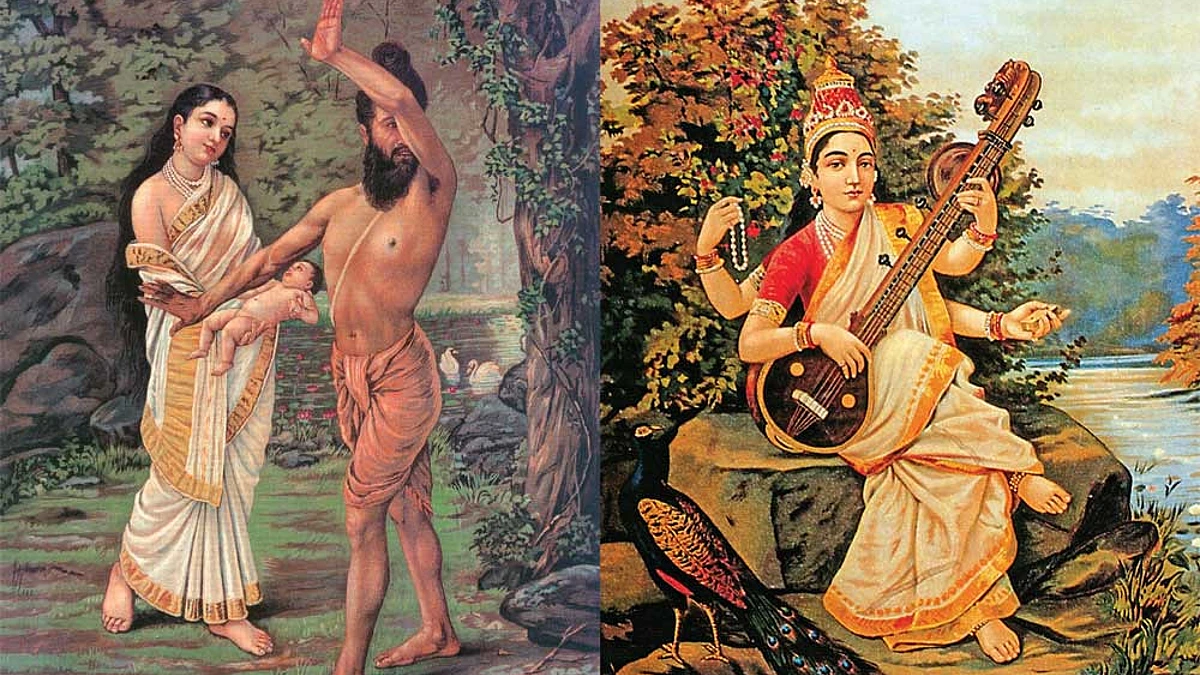
An ideas-page essay revisits Raja Ravi Varma (1848-1906) — the Travancore painter whose fusion of European academic oil technique with Puranic themes gave colonial India its first mass visual vocabulary of gods, queens and nation. His lithographic press near Bombay (c. 1894) mass-produced oleographs that travelled into drawing rooms, temples and calendar art, shaping the Indian imagination of Shakuntala, Damayanti and Saraswati. In April 2026, his painting Yashoda and Krishna set a record auction price of Rs 167.2 crore, marking him as the most expensive modern Indian artist ever sold.
Constitutional & Legal Framework
Article 49 (DPSP): The State shall protect every monument, place or object of artistic or historic interest declared of national importance from spoliation, disfigurement or destruction.
Article 51A(f) — Fundamental Duty: To value and preserve the rich heritage of our composite culture (added by the 42nd Amendment, 1976).
Antiquities and Art Treasures Act, 1972: Regulates export of antiquities (objects 100+ years old) and art treasures; licensing of dealers; documentation. Implemented with the Ancient Monuments and Archaeological Sites and Remains Act, 1958 administered by the Archaeological Survey of India (ASI).
International: UNESCO World Heritage Convention 1972 — India is a state party; Sangeet Natak, Lalit Kala and Sahitya Akademis (1950s) under the Ministry of Culture promote the arts.
CLAT Angle — Why This Matters
Art-and-culture questions rarely feature in isolation — they are usually hooked to the DPSP/Fundamental Duties bloc (Art 49, 51A(f)) or to heritage-protection statutes (Antiquities Act, AMASR Act). Ravi Varma is a gateway to the Bengal School, the swadeshi response led by Abanindranath Tagore, and India’s modern-art identity.
Expect CLAT GK passages linking art + law: the Nataraja bronze repatriation cases, the St. Thiruvaiyaru bronzes, and Article 49 jurisprudence.
Key Facts at a Glance
| Item | Detail |
|---|---|
| Born-died | 1848 Kilimanoor – 1906 (Travancore) |
| Signature medium | Oil on canvas + mass-produced oleographs |
| Famous works | Shakuntala, Damayanti, Saraswati, Galaxy of Musicians, Yashoda and Krishna |
| Counter-movement | Bengal School led by Abanindranath Tagore (swadeshi) |
| Article 49 | DPSP — State to protect monuments of national importance |
| Key statute | Antiquities and Art Treasures Act 1972; AMASR Act 1958 |
Mnemonic — VARMA
Visual vocabulary of a nation · Art democratised via oleographs · Raja of Travancore lineage · Mythological themes in oil · Awakening national imagination.
Test Yourself — 10 Questions
From Article 49 DPSP to the Bengal School — revise India’s art-and-heritage framework.
Practice Quiz — 10 CLAT-Style Questions
Click an option to reveal the answer and explanation.