
CURRENT AFFAIRS | 16 APRIL 2026
CLAT GK + CONSTITUTIONAL LAW & CRIMINAL JURISPRUDENCE
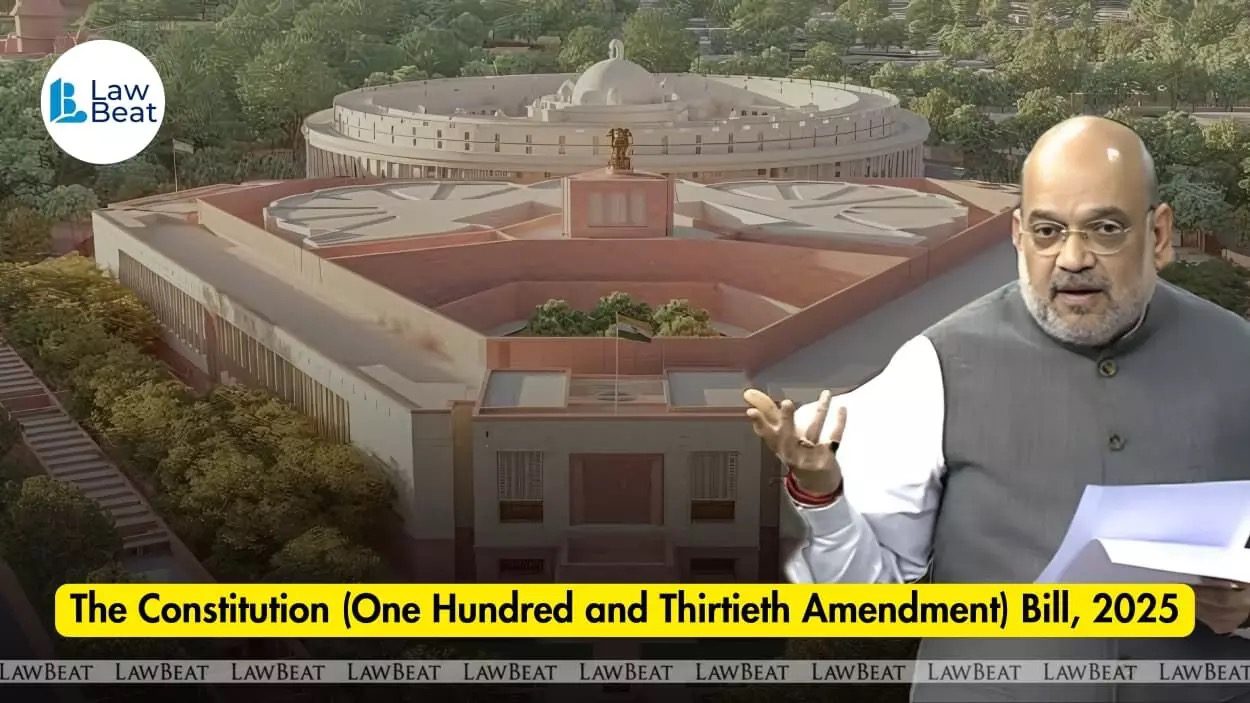
The Union Government is pushing forward the Constitution (130th Amendment) Bill, first introduced by Home Minister Amit Shah in August 2025, which amends seven Articles of the Constitution to automatically remove the Prime Minister, Chief Ministers, Ministers of the Union, States and NCT of Delhi from office if they remain in custody for 30 consecutive days on an offence punishable by five or more years in jail. The Joint Parliamentary Committee examining the Bill has held public hearings in April 2026, and the proposal is expected to return to the floor in the current session.
The Bill is being framed as a rule-of-law measure against ministers who continue to exercise executive power while in prison. Critics — including constitutional lawyers and opposition parties — argue that automatic removal without conviction violates the presumption of innocence, destabilises federal cabinets and could be misused against political opponents.
Constitutional & Legal Framework
- Article 75 — Appointment of the PM and Union Council of Ministers; collective responsibility to Lok Sabha.
- Article 164 — Appointment of CM and State Council of Ministers; collective responsibility to the State Assembly.
- Article 239AA — Special provisions for NCT of Delhi (Legislative Assembly, CM and Council of Ministers).
- Article 361 — Immunity of President and Governors from criminal proceedings (amended to clarify how ministerial immunity interacts with custody).
- Presumption of innocence — Read into Article 21 by the Supreme Court; cornerstone of criminal jurisprudence.
- S.R. Bommai v Union of India (1994) — Federalism and judicial review of President’s rule; often invoked in debates on state government stability.
- B.P. Singhal v Union of India (2010) — Governor’s pleasure doctrine, linked to dismissal of state governments.
CLAT Angle — Why This Matters
A single 130th Amendment passage can anchor a comprehension-cum-legal-reasoning CLAT set. Expect questions on (a) the interplay between Article 75/164 and the doctrine of collective responsibility; (b) whether automatic removal at 30 days violates presumption of innocence under Article 21; (c) whether the provision is “basic structure”-compliant, applying Kesavananda Bharati; and (d) the federalism angle, since the Bill applies equally to CMs and may interact with Governor’s discretion under Article 164. Prepare to argue BOTH sides — pro (probity, rule of law, morality) and con (presumption of innocence, political misuse, destabilisation).
Key Facts at a Glance
| Element | Detail |
|---|---|
| Bill name | Constitution (130th Amendment) Bill 2025 |
| Introduced by | Home Minister Amit Shah, 20 August 2025 |
| Articles amended | 75, 76, 77, 164, 164A, 239AA, 361 (seven) |
| Trigger | 30 consecutive days in custody |
| Offence threshold | Punishable by 5+ years imprisonment |
| Persons covered | PM, Union Ministers, CMs, State Ministers, Delhi Ministers |
| Status | Referred to Joint Parliamentary Committee |
Mnemonic — CUSTODY
Constitutional removal • Union & State • Seven Articles • Thirty days • Office vacated • Democracy • Yes accountability
Test Your Knowledge
Attempt this 10-question CLAT-style quiz on the 130th Amendment, Articles 75, 164, 239AA, 361 and the debate around presumption of innocence.
Practice Quiz — 10 CLAT-Style Questions
Click an option to reveal the answer and explanation.