CURRENT AFFAIRS | 12 APRIL 2026
CLAT GK + LEGAL REASONING + CONSTITUTIONAL LAW
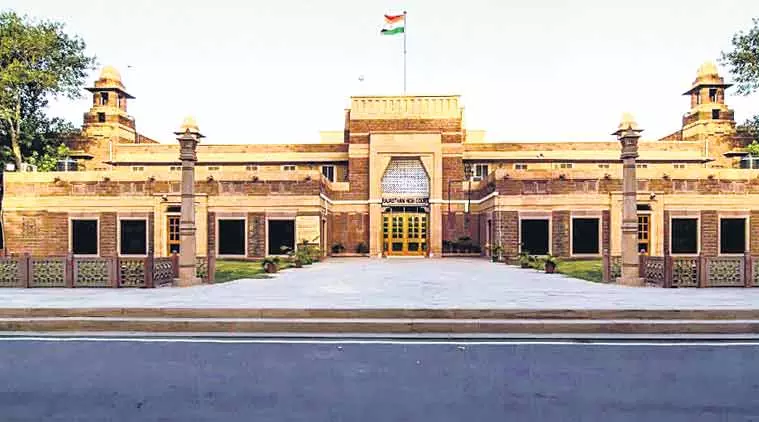
In a landmark ruling on April 11, 2026, the Rajasthan High Court delivered a strong rebuke to caste and community-based bodies (khap panchayats), holding that their diktats — ranging from social boycott to steep monetary penalties — are unconstitutional and undermine the rule of law. Justice Farjand Ali, hearing a batch of 11 petitions from districts including Sirohi, Barmer, Nagaur, Balotra, Jalore, and Jodhpur, found that such practices erode constitutional protections including equality, dignity, and the right to life.
The court noted instances where families were “fined heavily and excluded from community networks” for defying traditional norms. Measures like declaring a person’s boycott, restricting their choice of partners, and imposing monetary penalties were all held to be unconstitutional. The court directed the Rajasthan state government to frame a clear policy backed by a standard operating procedure (SOP), uniformly implemented across districts and adequately publicized to ensure awareness among citizens.
Significantly, the court flagged the absence of a dedicated legal framework in Rajasthan to directly criminalize social boycott. It urged the state to consider enacting a law on the lines of the Maharashtra Protection of People from Social Boycott Act, 2016. The court also instructed the police leadership to designate a senior officer to oversee investigations into all pending cases related to social ostracism within 90 days, and ordered the appointment of nodal officers in each district.
Constitutional & Legal Framework
- Article 14: Equality before law — khap diktats create unequal treatment based on caste and community norms
- Article 15: Prohibition of discrimination on grounds of religion, race, caste, sex, or place of birth
- Article 19(1)(a): Freedom of speech and expression — curtailed by boycott orders
- Article 19(1)(c): Right to form associations — khap boycotts effectively sever community participation
- Article 19(1)(d): Freedom of movement — social boycotts restrict physical and social mobility
- Article 21: Right to life and personal liberty — includes right to dignity (Maneka Gandhi v. Union of India)
- Maharashtra Protection of People from Social Boycott Act, 2016: Model legislation criminalizing social boycott with imprisonment up to 3 years and/or fine up to Rs 1 lakh
- Protection of Civil Rights Act, 1955: Prohibits enforcement of disabilities arising from untouchability
CLAT Angle: Why This Matters for CLAT 2027
- Legal Reasoning: Expect principle-application questions on social boycott vs. fundamental rights — can a community impose rules that override constitutional guarantees?
- GK Section: The Maharashtra Act 2016 as a model for other states, the Rajasthan HC ruling, and khap panchayat-related constitutional issues
- Critical Analysis: CLAT may test whether khap panchayats have any legal standing or constitutional recognition (they do NOT — they are extra-constitutional bodies)
- Previous Year Pattern: CLAT has tested caste discrimination, social boycott, and Article 17 (abolition of untouchability) in past papers
- Landmark Cases to Know: Shakti Vahini v. Union of India (2018) — SC directed states to take preventive measures against honour killings by khap panchayats
Key Facts at a Glance
| Court | Rajasthan High Court |
| Judge | Justice Farjand Ali |
| Petitions Heard | Batch of 11 from 6 districts |
| Ruling | Khap panchayat diktats are unconstitutional |
| Model Law Cited | Maharashtra Social Boycott Act, 2016 |
| Direction to State | Frame clear policy with SOP across all districts |
| Key Articles Violated | Art 14, 15, 19, 21 |
| Timeline for Police | 90 days to investigate pending cases |
Mnemonic: “KHAP ENDS” for Ruling
- K — Khap panchayats declared unconstitutional
- H — High Court of Rajasthan
- A — Articles 14, 15, 19, 21 violated
- P — Policy with SOP directed to state
- E — Eleven petitions heard from 6 districts
- N — Nodal officers in each district ordered
- D — Dignity (Right to) is core constitutional value
- S — Social Boycott Act (Maharashtra 2016) as model
Practice Quiz — 10 CLAT-Style Questions
Click an option to reveal the answer and explanation.