

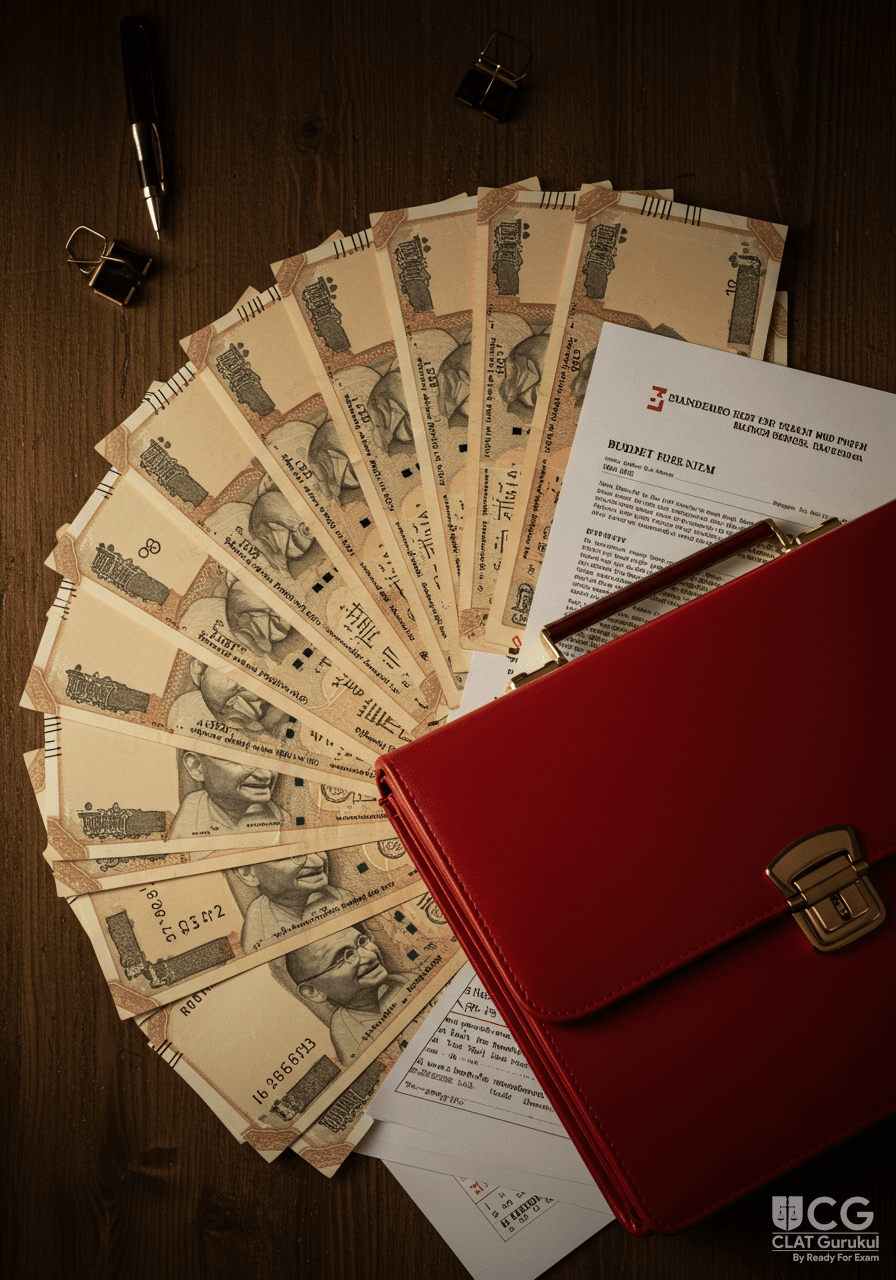
CURRENT AFFAIRS | MARCH 27, 2026
CLAT GK + ECONOMIC LAW & MONETARY POLICY
What Happened?
India’s forex reserves have fallen sharply from an all-time high of $728.5 billion (week ending 27 February 2026) as the RBI aggressively sells dollars to defend the rupee amid the West Asia (Iran) conflict. In the week ending March 6 alone, reserves dropped by $11.68 billion — the sharpest weekly decline in over a year.
The Dual Pressure
The RBI faces a classic central banking dilemma:
- Defend the rupee by selling dollars (depletes reserves)
- Preserve reserves by letting the rupee fall (triggers inflation via costlier imports)
The rupee hit a record low of Rs 93.94/$ on 23 March 2026. Market estimates suggest the RBI sold $26-27 billion in March alone. The overall forward book deficit exposure has reached approximately $100 billion. Analysts warn the rupee may slide to 96-97/$ if the Iran war extends into mid-April.
Why Reserves Are Falling
- Oil price surge: Brent crude above $100/barrel; India imports 85%+ of its oil
- FII outflows: Foreign investors sold Rs 1.07 trillion worth of Indian equities in CY2026
- Balance of Payments deficit: $24.4 billion deficit in Q3 FY26 — BoP expected to stay negative for two consecutive years (first time ever)
1991 Parallel
In the 1991 BoP crisis, reserves fell to just $1.2 billion (two weeks of imports), triggering the historic LPG reforms. Today, reserves at $709.8 billion cover 11.2 months of imports and 95% of external debt — far more comfortable, but the trajectory is concerning.
Constitutional & Legal Framework
- RBI Act 1934 — Establishes the Reserve Bank of India as the central bank; governs monetary policy, forex management, and currency issuance
- FEMA 1999 — Foreign Exchange Management Act replaced FERA; governs all forex transactions, capital account convertibility, and external trade payments
- Article 282 — Union or State may make grants for any public purpose from the Consolidated Fund
- Article 292 — Government of India’s power to borrow upon the security of the Consolidated Fund
- Article 360 — Financial Emergency provisions; can be proclaimed if financial stability of India is threatened
CLAT Angle — Why This Matters
- 1991 Crisis Knowledge: CLAT frequently tests knowledge of the 1991 BoP crisis, LPG reforms, and their constitutional/economic implications
- FEMA vs FERA: Understanding the shift from FERA (regulatory, punitive) to FEMA (management, facilitative) is key for legal reasoning
- Forex Reserve Components: Foreign Currency Assets (FCA), gold, SDRs (Special Drawing Rights), and Reserve Tranche Position with IMF — commonly tested in GK
- Financial Emergency (Art 360): Never invoked in India’s history — but CLAT may test its provisions and triggers
- Current Account vs Capital Account: Understanding BoP structure helps answer CLAT economics questions
Key Facts at a Glance
| Peak Reserves | $728.5 billion (27 Feb 2026) |
| Current Reserves | ~$709.8 billion (mid-March 2026) |
| Sharpest Weekly Drop | $11.68 billion (week ending 6 March) |
| Rupee Record Low | Rs 93.94/$ (23 March 2026) |
| Import Cover | 11.2 months |
| BoP Deficit (Q3 FY26) | $24.4 billion |
| 1991 Crisis Reserves | $1.2 billion (2 weeks of imports) |
Mnemonic — “FOREX FALL”
FEMA 1999 — forex management law
Oil prices surge — 85% import dependency
RBI Act 1934 — central bank establishment
Eleven months import cover (11.2)
X-change rate: Rs 93.94/$ record low
FII outflows — Rs 1.07 trillion in CY2026
Article 360 — Financial Emergency (never used)
LPG reforms 1991 — BoP crisis precedent
Liquidity: SDRs, gold, FCA components
Practice Quiz
Practice Quiz — 10 CLAT-Style Questions
Click an option to reveal the answer and explanation.