

CURRENT AFFAIRS | 2 MAY 2026
CLAT GK + ECONOMY + CONSTITUTIONAL LAW (ARTICLE 110, RBI ACT, FEMA)
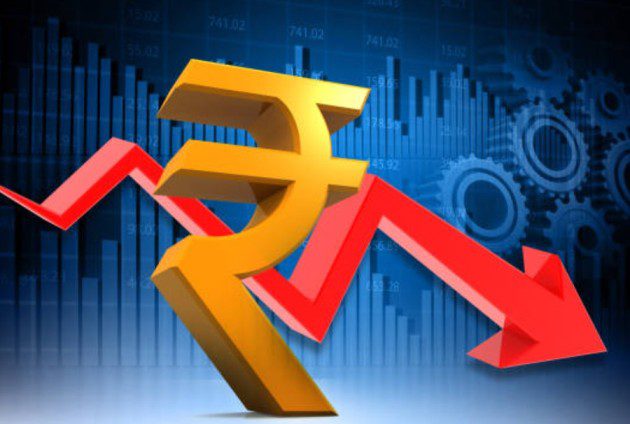
The Indian rupee touched a fresh all-time low of 95.33 per US dollar on Thursday, capping a 12-month slide of nearly 12% — almost four times the typical 3-4% annual depreciation. The last time the rupee fell this fast was in September 2013, when Morgan Stanley analyst James Lord coined the now-infamous phrase “Fragile Five” — a basket of vulnerable emerging-market currencies caught in the slipstream of the US Federal Reserve’s tapering of Quantitative Easing. The original Fragile Five comprised the Indian Rupee, Indonesian Rupiah, Brazilian Real, South African Rand and Turkish Lira.
The 2013 trigger was monetary — Bernanke’s “taper tantrum”. The 2026 trigger is geopolitical and structural — escalation in the Strait of Hormuz, a wider West Asia conflict, sustained FPI outflows of over USD 20 billion in calendar 2026, a widening current account deficit (CAD), and a worrying re-emergence of the twin deficit (current + fiscal). Crude oil topping USD 125 a barrel has bloated the import bill, and the dollar index has stiffened on hawkish Federal Reserve signals.
For a CLAT aspirant, this is more than a markets story. The architecture of India’s exchange rate management sits squarely in the constitutional and statutory domain. The Reserve Bank of India derives its authority from the RBI Act, 1934, with the Monetary Policy Committee (MPC) created via the Finance Act 2016 amendment. Forex transactions are governed by the Foreign Exchange Management Act (FEMA), 1999 — which replaced the more draconian, criminal-law-flavoured FERA 1973 with a civil-penalty regime. Any borrowing decisions of the Union are constrained by the Fiscal Responsibility and Budget Management (FRBM) Act, 2003, and Article 292 on Union borrowing. Money Bills dealing with such fiscal matters can originate only in the Lok Sabha under Article 110.
Internationally, the IMF’s Special Drawing Rights (SDR) framework — used during India’s 1991 BoP crisis when 67 tonnes of gold were pledged — remains a backstop. The current episode has not yet required SDR drawdown; RBI’s forex reserves of approximately USD 580 billion provide a cushion of around 10 months of imports. But the warning signs are unmistakable: forward dollar selling, tightening of banks’ net open position limits, and curbs on parts of the non-deliverable forward (NDF) market are all in play.
The doctrinal question for legal reasoning passages: Can RBI defend a currency level indefinitely? The answer, drawn from the IMF’s “impossible trinity” and India’s post-1991 managed-float regime, is no — RBI smooths volatility, it does not target a level. That distinction is examiner-bait.
Constitutional & Legal Framework
- Article 110 — Money Bills can only originate in Lok Sabha
- Article 112 — Annual Financial Statement (Budget)
- Article 292 — Union’s borrowing power, subject to Parliament-imposed limits
- RBI Act, 1934 — establishes RBI; MPC added via Finance Act 2016
- FEMA, 1999 — civil regime governing forex; replaced FERA 1973
- FRBM Act, 2003 — caps fiscal deficit (target 4.5% of GDP by FY26)
- BoP framework — IMF Articles of Agreement; SDR allocations under Article XV
Why This Matters for CLAT 2027
The “Fragile Five” frame is a CLAT-Economics passage waiting to happen. Expect questions on (a) cause-effect (Fed taper → EM outflows → rupee fall), (b) institutional architecture (who signs forex policy — RBI, MoF, MPC?), (c) constitutional hooks (Money Bill, FRBM limits), and (d) international law (IMF SDR, Article VIII obligations). Legal-Reasoning passages may quote a hypothetical “RBI Governor’s statement” and test whether RBI’s capital control measures are intra vires FEMA Section 6/7.
Key Facts at a Glance
| Parameter | 2013 Episode | 2026 Episode |
|---|---|---|
| Rupee fall (% in 9m) | ~12% | ~12% |
| Trigger | Fed QE rollback | Hormuz crisis + Fed hawkishness |
| FPI outflow | USD 14 bn (debt) | USD 20+ bn (equity+debt) |
| CAD as % of GDP | 4.8% | ~2.8% (rising) |
| Forex reserves | USD 275 bn | USD 580 bn |
Mnemonic — “I-BIS-T” (the Fragile Five)
INR (India) · BRL (Brazil) · IDR (Indonesia) · South African Rand · TRY (Turkey) — remember “India-BIS-Turkey” as the five Morgan Stanley flagged in 2013.
Practice Quiz — 10 CLAT-Style Questions
Click an option to reveal the answer and explanation.






