

CURRENT AFFAIRS | 13 APRIL 2026
CLAT GK + LEGAL REASONING + CONSTITUTIONAL LAW
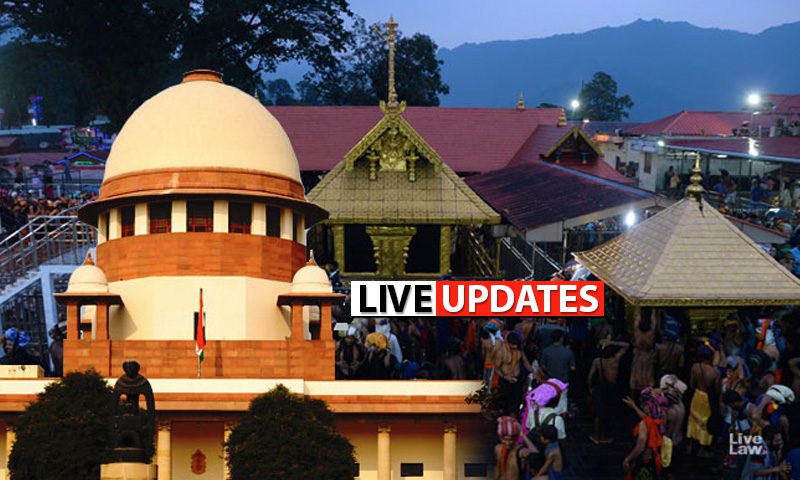
The Supreme Court’s 9-judge Constitution Bench, led by Chief Justice of India Surya Kant, has resumed hearings on the landmark Sabarimala reference — a case that goes far beyond the question of women’s entry into the Sabarimala temple. The reference, which originated from the 2018 decision in Indian Young Lawyers Association v State of Kerala, now tests the very foundations of the relationship between religion, religious denominations, and the state under the Indian Constitution.
The hearings, which commenced on April 7, 2026, have brought to the forefront submissions from the BJP-led Centre and various Hindu religious organisations challenging the scope of the Essential Religious Practices (ERP) doctrine. The 9-judge bench — comprising CJI Surya Kant, Justices B.V. Nagarathna, M.M. Sundresh, Ahsanuddin Amanullah, Aravind Kumar, A.G. Masih, R. Mahadevan, Prasanna B. Varale, and Joymalya Bagchi — is examining 7 constitutional questions that probe the interplay between Article 25 (freedom of religion) and Article 26 (rights of religious denominations).
At the heart of this reference lies a fundamental constitutional tension: Can the state regulate temple practices? Can religious denominations define what constitutes an “essential religious practice”? How do the rights of individual worshippers under Article 25 interact with the collective rights of religious denominations under Article 26? The bench is also examining the broader question of state control over Hindu temples — a contentious issue in Tamil Nadu and Kerala — and whether Article 25(2)(a), which empowers the state to regulate “economic, financial, political or secular activity” associated with religious practice, can extend to regulating entry into temples.
The Constitutional Framework: Art. 25 vs Art. 26
The Sabarimala reference fundamentally tests the boundary between two closely related but distinct constitutional provisions. Article 25 guarantees individual freedom of conscience and the right to freely profess, practise, and propagate religion, subject to public order, morality, and health. Article 26, on the other hand, protects the collective rights of religious denominations to manage their own affairs in matters of religion, establish and maintain institutions, and own and administer property.
The tension arises because what an individual claims as a right under Article 25 may conflict with what a denomination claims as its right under Article 26. In the original 2018 Sabarimala judgment, the 4:1 majority held that the temple’s custom of excluding women aged 10-50 violated Articles 14 (equality), 15 (non-discrimination), and 25 (freedom of religion). However, Justice Indu Malhotra’s dissent argued that the court should not interfere with the essential religious practices of a denomination.
Constitutional & Legal Framework
- Article 25: Freedom of conscience and right to freely profess, practise, and propagate religion (subject to public order, morality, health)
- Article 25(2)(a): State can regulate/restrict economic, financial, political, or secular activity associated with religious practice
- Article 26: Freedom to manage religious affairs — every religious denomination has the right to manage its own affairs, establish institutions, own property
- Article 14: Right to equality before law and equal protection of laws
- Article 15: Prohibition of discrimination on grounds of religion, race, caste, sex, or place of birth
- Essential Religious Practices (ERP) Doctrine: First laid down in Commissioner, Hindu Religious Endowments v Sri Lakshmindra Thirtha Swamiar (Shirur Mutt case, 1954) — courts determine what practices are integral/essential to a religion
- Indian Young Lawyers Association v State of Kerala (2018): 4:1 majority struck down the ban on women’s entry at Sabarimala as unconstitutional
- S.R. Bommai v Union of India (1994): Declared secularism as a basic feature of the Constitution
The Essential Religious Practices Test Under Scrutiny
The ERP test, established in the 1954 Shirur Mutt case, has been one of the most controversial doctrines in Indian constitutional law. Under this test, the Supreme Court determines whether a particular practice is “essential” or “integral” to a religion. If a practice is deemed essential, it receives constitutional protection under Articles 25 and 26; if not, the state can regulate or even prohibit it.
The Centre, in its submissions before the 9-judge bench, has challenged the very foundations of the ERP test, arguing that it is not for courts to determine what is essential to a religion — that power belongs to the religious denomination itself. This position, if accepted, would significantly expand the autonomy of religious denominations under Article 26 while potentially limiting the state’s regulatory power under Article 25(2).
The implications of this reference extend far beyond Sabarimala. If the bench reconsiders the ERP doctrine, it could affect the constitutional validity of several state laws regulating temple administration, entry rights, and management of religious endowments across India — particularly in Tamil Nadu and Kerala, where state boards control thousands of Hindu temples.
CLAT Angle — Why This Matters
- Legal Reasoning: Art. 25-26 interplay is a high-frequency CLAT topic — expect passage-based questions testing whether a practice falls under individual freedom (Art. 25) or denominational rights (Art. 26)
- Principle-Application: The ERP doctrine is perfect for CLAT principle-application questions — given a principle about essential practices and facts about a religious custom, students must determine if the state can regulate it
- Constitutional Law: Art. 14 (equality) and Art. 15 (non-discrimination) as overarching principles that limit religious freedom — a recurring CLAT theme
- GK/Current Affairs: 9-judge bench composition, CJI Surya Kant, the 7 constitutional questions, and the 2018 judgment background are all potential factual questions
- Secularism as Basic Structure: S.R. Bommai (1994) — state neutrality toward religion is a basic feature; tested repeatedly in CLAT
State Control of Temples: The Broader Debate
Beyond the specific question of women’s entry, the Sabarimala reference has opened up a wider debate about state control over Hindu temples. In states like Tamil Nadu and Kerala, Hindu Religious and Charitable Endowments (HR&CE) departments control thousands of temples, managing their finances, appointing priests, and administering properties. Hindu organisations have long argued that this amounts to discrimination — since mosques and churches are not subject to similar state control — and violates Article 26’s guarantee of denominational autonomy.
Article 25(2)(b) specifically empowers the state to make laws “providing for social welfare and reform or the throwing open of Hindu religious institutions of a public character to all classes and sections of Hindus.” This provision, unique to Hindu institutions, has been used to justify extensive state regulation of temples. The 9-judge bench must now determine the outer limits of this power.
Key Facts at a Glance
| Bench Size | 9-judge Constitution Bench |
| Headed By | CJI Surya Kant |
| Hearings Began | April 7, 2026 |
| Original Case | Indian Young Lawyers Association v State of Kerala (2018) |
| Original Verdict | 4:1 majority — women of all ages allowed entry |
| Key Articles | Art. 25 (individual religious freedom), Art. 26 (denominational rights), Art. 14, 15 |
| Constitutional Questions | 7 questions framed for the larger bench |
| Key Doctrine | Essential Religious Practices (ERP) test — Shirur Mutt (1954) |
| Secularism Precedent | S.R. Bommai v Union of India (1994) — basic structure |
Mnemonic: “SEEDS” — Sabarimala Reference Framework
- S — Shirur Mutt (1954) — origin of Essential Religious Practices test
- E — Essential Religious Practices doctrine under scrutiny
- E — Equality (Art. 14) and non-discrimination (Art. 15) vs religious freedom
- D — Denominational rights (Art. 26) vs individual freedom (Art. 25)
- S — Secularism as basic structure (S.R. Bommai, 1994)
Remember: “SEEDS of secularism were sown in Shirur Mutt and tested at Sabarimala”
Practice Quiz — 10 CLAT-Style Questions
Click an option to reveal the answer and explanation.