
CURRENT AFFAIRS | MAY 6, 2026
CLAT GK + SPORTS, ARTS & CULTURE
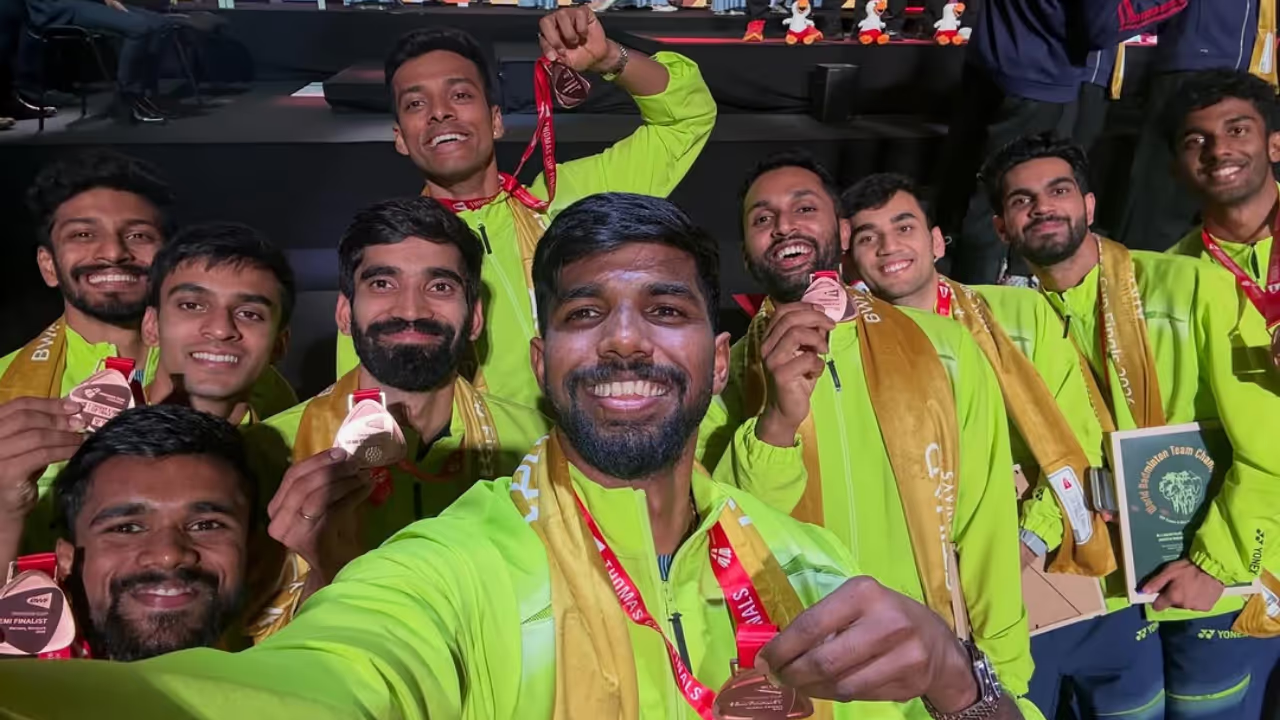
India’s World No. 1 men’s doubles badminton pair — Satwiksairaj Rankireddy and Chirag Shetty — have been vocal about a painful truth: India wins medals at the highest level, but the country hasn’t built a genuine sporting culture to match. After India’s Thomas Cup 2026 bronze medal, Chirag’s viral quote resonated with athletes across the country: “We don’t celebrate our athletes the way we should.” For CLAT 2027, this story connects to Fundamental Duties, state vs central powers over sports, and key sports policy schemes.
Who Are Satwik-Chirag?
Satwiksairaj Rankireddy (born 2000, Amalapuram, Andhra Pradesh) and Chirag Shetty (born 1997, Mumbai, Maharashtra) are India’s greatest ever men’s doubles badminton pair. Their achievements:
- World No. 1 ranking: First Indian men’s doubles pair to be ranked World No. 1 (achieved August 2023)
- Thomas Cup 2022: India won the Thomas Cup — men’s badminton world team championship — for the FIRST TIME in 73 years, defeating 14-time champions Indonesia in the final
- Asian Games 2023: Gold medal — first Indian men’s doubles pair to win Asian Games gold
- Commonwealth Games 2022 (Birmingham): Gold medal
- BWF World Tour Finals 2023: Won the prestigious year-end championship
- Thomas Cup 2026: India won bronze (defeated in semi-finals by France)
- Paris Olympics 2024: Reached quarterfinals; India still waiting for badminton Olympic gold
Constitutional Framework: Sports in India
Article 51A(j) — Fundamental Duty: “It shall be the duty of every citizen of India to strive towards excellence in all spheres of individual and collective activity so that the nation constantly rises to higher levels of endeavour and achievement.” This is the constitutional basis for excellence in sports.
Schedule VII, List II (State List), Entry 33: Physical Education — States have primary jurisdiction over sports and physical education. This is why the Centre cannot directly mandate sports programs; it operates through grants and cooperative federalism.
Article 246: State Legislature has exclusive power to make laws on State List (List II) subjects, including physical education and sports.
National Sports Policy 2011: Framework for sports development, infrastructure, and elite athlete support in India.
The Satwik-Chirag Argument: India’s Sports Crisis
The core argument Satwik and Chirag make is structural: India treats cricket as the only “real” sport. Every other sport — badminton, wrestling, athletics, hockey — gets secondary status in terms of media coverage, fan culture, and corporate sponsorship. The consequences:
- Athletes like Satwik-Chirag achieve World No. 1 ranking, yet arrive at airports to an empty hall
- Government grants (like TOPS) come with bureaucratic deadlines — “use it by so-and-so date” — making it harder for athletes to plan around competition seasons
- Bhutan’s badminton players, many booking cabs for income, competed creditably at the Asian Team Championships — a reflection on the gap between passion and infrastructure in smaller nations vs India’s resource advantages
CLAT Angle: Key Sports Schemes and Bodies
SAI (Sports Authority of India): Established 1984; autonomous body under Ministry of Youth Affairs and Sports; manages national training centres (NTCs), stadia, and athlete hostels across India.
Target Olympic Podium Scheme (TOPS): Launched 2014; provides elite athletes direct funding, foreign coaching, equipment, and competition exposure. Satwik-Chirag are TOPS beneficiaries.
Khelo India Programme (2018): Revives grassroots sports culture; includes Khelo India Youth Games, University Games, Winter Games, and Para Games; identifies and funds approximately 2,500 athletes per year as “Khelo India Athletes.”
IOA (Indian Olympic Association): Was suspended by IOC in December 2012 due to government interference in IOA elections; ban lifted February 2014 after fresh elections. Lesson: Sports governance must be independent of government control per IOC rules.
BWF (Badminton World Federation): HQ Kuala Lumpur, Malaysia; governs Thomas Cup (men’s team), Uber Cup (women’s team), Sudirman Cup (mixed team), and individual BWF World Championships.
Key Facts Table for CLAT Revision
| Fact | Detail |
| India’s Thomas Cup first win | 2022 (73 years since tournament began in 1949) |
| Satwik-Chirag World No. 1 | August 2023 (first Indian men’s doubles pair) |
| Asian Games 2023 gold | First Indian men’s doubles pair to win Asian Games gold |
| SAI established | 1984 |
| Khelo India launched | 2018 |
| TOPS launched | 2014 |
| Sports — Constitutional entry | Entry 33, State List (List II) |
| BWF HQ | Kuala Lumpur, Malaysia |
| India Paris 2024 medals | 6 medals (1 silver + 5 bronze) |
| Neeraj Chopra | First Indian to win Olympic gold in athletics (Tokyo 2020, javelin) |
Memory Mnemonic
“TOPS-Khelo-SAI = India’s sports triangle: Target (elite), Khelo (play), SAI (train)”
Art. 51A(j): “J for Journey to Excellence” — the Fundamental Duty to strive towards excellence in all spheres of activity.
Sports in State List: “States play sports, Centre gives grants” — remember that sports is a State subject (Entry 33, List II) but Centre supports through cooperative federalism schemes like Khelo India and TOPS.
Test Your Knowledge: Sports Policy MCQs
Practice Quiz — 10 CLAT-Style Questions
Click an option to reveal the answer and explanation.