

CURRENT AFFAIRS | 1 MAY 2026
CLAT Legal Reasoning + Constitutional Law
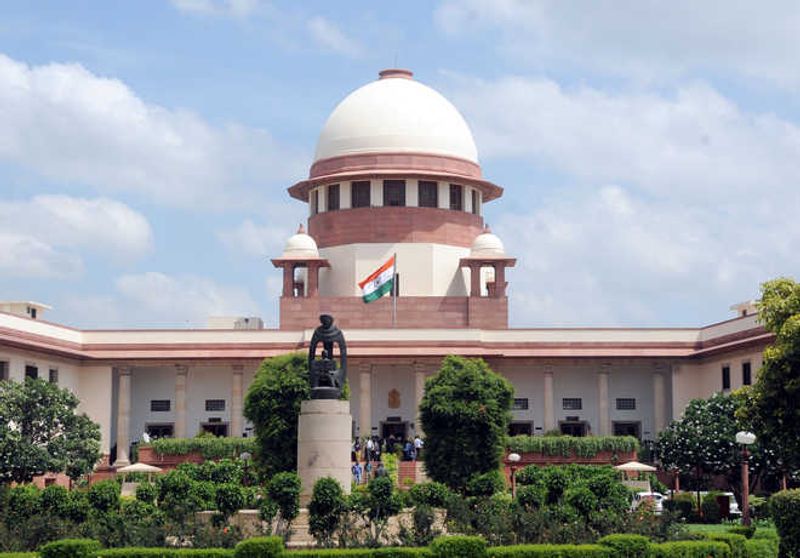
The Supreme Court, on 30 April 2026, refused to entertain a curative petition filed by AIIMS seeking reconsideration of an earlier order permitting termination of the 30-week pregnancy of a 15-year-old rape survivor. A Bench of Chief Justice of India Surya Kant and Justice Joymalya Bagchi held that an unwanted pregnancy “cannot be thrust upon” the minor, and that the doctors of AIIMS “cannot decide for the patient” — the choice belongs to the survivor and her family.
In a striking obiter, the Bench urged the Union to amend the Medical Termination of Pregnancy Act, 1971 to remove the 24-week ceiling when pregnancy results from rape, especially of minors. “The law has to be organic and in sync with evolving time,” the Bench observed.
What Happened
AIIMS approached the Court via a curative plea — the rarest form of post-final review under Rupa Ashok Hurra v Ashok Hurra (2002) — arguing that termination at 30 weeks risked a live birth with severe deformities and posed long-term reproductive risks for the minor mother. AIIMS proposed continuing the pregnancy four more weeks and giving the child up for adoption. The Court refused, but permitted the AIIMS team to counsel the minor and her family so they could take an informed decision themselves.
The Background
The minor was raped, and the pregnancy was discovered late — placing her past the 24-week MTP ceiling. Lower courts directed AIIMS to terminate; AIIMS resisted on medical grounds; an SC bench upheld the termination order. AIIMS’s curative petition was the final attempt to overturn that finding.
Constitutional & Legal Framework
- Article 21 — Right to life and personal liberty includes reproductive autonomy, bodily integrity and dignity.
- Suchita Srivastava v Chandigarh Administration (2009) — reproductive choice is a “dimension of personal liberty” under Article 21.
- X v Principal Secretary, Health & FW, GNCTD (2022) — extended MTP Act’s 24-week limit to unmarried women; struck down marital-status distinction as violative of Article 14.
- MTP Act, 1971 (as amended in 2021): up to 20 weeks — opinion of one RMP; 20–24 weeks — two RMPs (for special categories incl. rape survivors and minors); beyond 24 weeks — State Medical Board only for substantial foetal abnormalities.
- Parens patriae — superior courts as constitutional guardian of those unable to protect themselves (minors, persons with disabilities).
- POCSO Act, 2012 — mandatory reporting and special-court framework for sexual offences against children, intersecting with MTP cases.
Why This Matters
This case spotlights the central doctrinal tension in Indian abortion law: the statutory 24-week ceiling versus the constitutional Article 21 right to reproductive autonomy. By inviting Parliament to remove the ceiling for rape-induced pregnancies of minors, the SC pushes for legislative alignment with the Suchita + X v GNCTD trajectory. The case will be cited for years as the canonical example of parens patriae reasoning in MTP jurisprudence.
CLAT 2027 — Why You Must Know This
This is a guaranteed Legal Reasoning passage. Expect questions on: (a) the 24-week limit and exceptions, (b) Suchita Srivastava and X v GNCTD, (c) parens patriae as applied to minors, (d) Article 21 + reproductive autonomy. Carefully separate statutory rules (MTP Act ceilings) from constitutional rights (Article 21).
Key Facts at a Glance
| DATE OF ORDER | 30 April 2026 |
| BENCH | CJI Surya Kant + J. Joymalya Bagchi |
| SURVIVOR | 15-year-old rape survivor; pregnancy 30 weeks |
| PARENT STATUTE | MTP Act 1971 (am. 2021) |
| UPPER LIMIT | 24 weeks (special categories) |
| CORE RIGHT | Article 21 — reproductive autonomy |
| KEY PRECEDENTS | Suchita Srivastava (2009); X v GNCTD (2022) |
Mnemonic
“SX-21” for the MTP triad = Suchita (2009) + X v GNCTD (2022) + Article 21 — the three legs of reproductive autonomy in Indian law.
Test Your Knowledge — 10 Question Quiz
Take this quick quiz to lock in the concepts:
Practice Quiz — 10 CLAT-Style Questions
Click an option to reveal the answer and explanation.
Source: LiveLaw / The Tribune, 30 April 2026.