

CURRENT AFFAIRS | 25 APRIL 2026
CLAT GK + Constitutional Law & Reproductive Rights
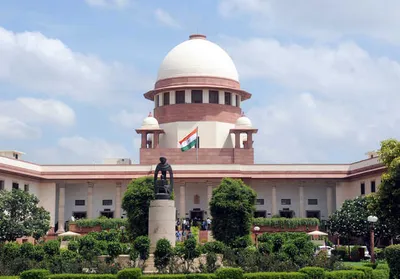
On 24 April 2026, a Supreme Court bench of Justices B V Nagarathna and Ujjal Bhuyan permitted a 15-year-old rape survivor to terminate her over-28-week pregnancy at AIIMS New Delhi, holding that “no court can force a woman, including a minor, to carry a pregnancy against her will.” The Court rejected the Solicitor General’s submission that the State could finance the delivery and arrange adoption, declaring that compelled continuation of an unwanted pregnancy violates Article 21. The judgment is a landmark consolidation of the reproductive-autonomy line beginning at Suchita Srivastava (2009), strengthened by Puttaswamy (2017) and X v. Principal Secretary (2022) — and a near-certain CLAT 2027 passage.
Constitutional / Legal Framework
- Article 21 — right to life and personal liberty; reproductive autonomy, dignity and privacy are facets.
- Medical Termination of Pregnancy Act, 1971 — Section 3 sets gestational windows and conditions; Section 8 grants good-faith immunity to RMPs.
- MTP (Amendment) Act, 2021 + MTP Rules 2003 (Rule 3B) — extended the upper limit from 20 to 24 weeks for specified categories: survivors of rape/incest, minors, mentally ill women, women with substantial foetal abnormalities, women in humanitarian/disaster situations, etc.
- Section 3(2B) read with 3(2C) — beyond 24 weeks, termination only on the opinion of a Medical Board for substantial foetal abnormalities; courts have intervened in exceptional cases under Article 226/32.
- Suchita Srivastava v. Chandigarh Administration (2009) — first explicit recognition of reproductive choice as part of personal liberty under Article 21.
- K S Puttaswamy v. Union of India (2017) — 9-judge Bench: privacy is a fundamental right under Article 21 (with strands in Articles 14 and 19); decisional autonomy includes bodily integrity.
- X v. Principal Secretary, Govt. of NCT of Delhi (2022) — extended the 24-week limit to unmarried women; held that distinction between married and unmarried women was unconstitutional.
Why This Matters for CLAT 2027
CLAT and AILET have repeatedly tested reproductive rights since 2022. Expect a Legal Reasoning passage extracting the “no court can force a minor” principle, asking you to apply it (a) to a hypothetical similar fact pattern, (b) distinguish Suchita Srivastava (which actually upheld a mentally ill woman’s choice not to terminate), and (c) connect it to Puttaswamy’s privacy-bodily-integrity holding. Master also the 24-week rule under MTP Rule 3B and the role of the Medical Board under Section 3(2B).
Key Facts at a Glance
| Date | 24 April 2026 |
| Bench | Justices B V Nagarathna and Ujjal Bhuyan |
| Petitioner | Mother of 15-year-old survivor |
| Gestation | Over 28 weeks (~7 months) |
| Hospital | AIIMS, New Delhi |
| SG argument | Tushar Mehta proposed State financial support + adoption |
| Medical Board | Reported adverse-child-outcome risk |
| Holding | Compelled continuation of unwanted pregnancy violates Article 21 |
| Statute | MTP Act 1971 + MTP Amendment Act 2021 |
| Key precedents | Suchita Srivastava (2009), Puttaswamy (2017), X v. PS Delhi (2022) |
Mnemonic / Memory Hook
“SPX” — the three-case spine of reproductive autonomy: Suchita Srivastava (2009 — choice in Article 21), Puttaswamy (2017 — privacy + bodily integrity), X v. Principal Secretary (2022 — married/unmarried equality up to 24 weeks). For limits remember “20-24-Board”: 20 weeks general, 24 weeks for Rule 3B categories, beyond 24 only with Medical Board (Section 3(2B)/(2C)) or Article 32/226 writ.
Test Yourself — 10 MCQs
Practice Quiz — 10 CLAT-Style Questions
Click an option to reveal the answer and explanation.