
CURRENT AFFAIRS | 6 APRIL 2026
CLAT GK + CRIMINAL LAW & EVIDENCE
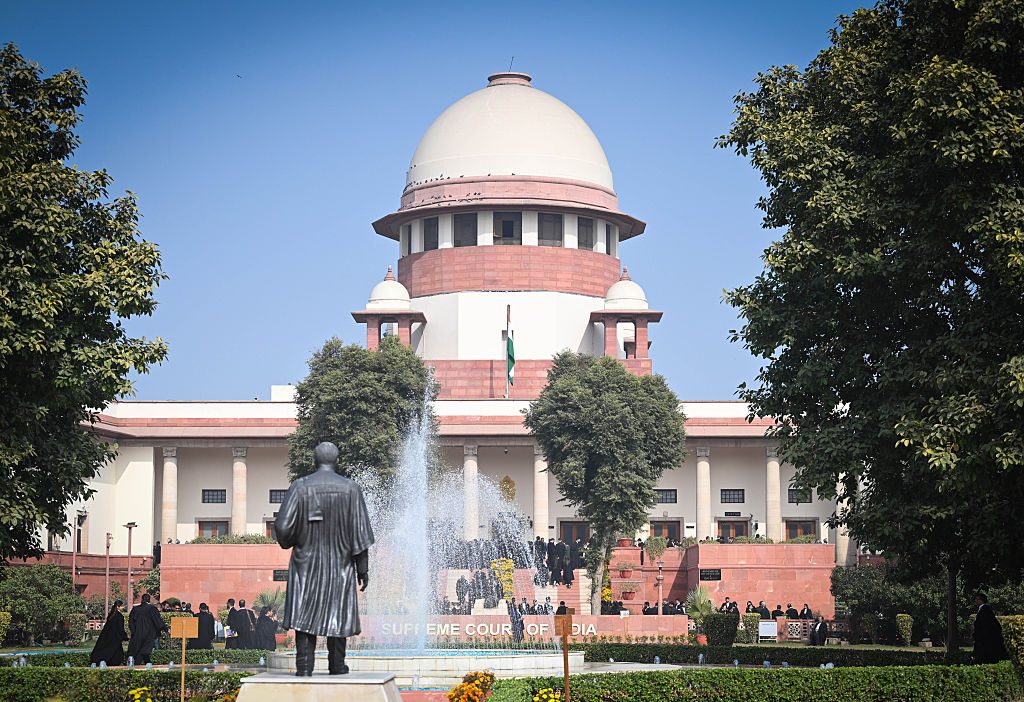
The Supreme Court of India has expressed serious concern over the practice of ‘stock witnesses’ — professional witnesses who are repeatedly used by police across multiple unrelated criminal cases. The Court has expanded a panel to examine this systemic practice that undermines the credibility of prosecution evidence and compromises the accused’s fundamental right to a fair trial.
Stock witnesses, sometimes called ‘professional witnesses’ or ‘pocket witnesses,’ are individuals maintained by police stations who routinely appear as panch witnesses or identification witnesses in cases they have no genuine connection to. This practice is particularly prevalent in drug seizure cases, search and seizure operations, and identification parades.
What Are Stock Witnesses?
In criminal proceedings, the prosecution must produce witnesses to corroborate the police version of events — particularly during search and seizure operations, recovery of evidence, and identification parades. When police repeatedly use the same set of individuals as witnesses across different cases, these individuals are termed ‘stock witnesses.’ Their testimony is inherently suspect because:
- They may not have been present at the scene of the alleged offence
- Their repeated appearance across cases creates a pattern of manufactured evidence
- They undermine the accused’s right to a fair trial under Article 21
- Courts often acquit accused persons when stock witnesses are detected, weakening the prosecution
Constitutional & Legal Framework
- Article 21: Right to life and personal liberty — includes the right to a fair trial (Maneka Gandhi v. Union of India, 1978)
- Article 20(3): Protection against self-incrimination — no person accused of any offence shall be compelled to be a witness against himself
- Article 14: Equality before law — stock witnesses create an unequal playing field against the accused
- Bharatiya Sakshya Adhiniyam 2023 (BSA): Replaced the Indian Evidence Act 1872 — governs competency of witnesses, examination, and cross-examination
- Bharatiya Nagarik Suraksha Sanhita (BNSS): Replaced CrPC 1973 — Section 243 governs examination and cross-examination of witnesses during trial
The New Criminal Law Framework
India’s criminal justice system underwent a historic overhaul in 2023 with three new laws replacing colonial-era legislation, effective from July 1, 2024:
- Bharatiya Nyaya Sanhita (BNS) 2023: Replaced the Indian Penal Code 1860
- Bharatiya Nagarik Suraksha Sanhita (BNSS) 2023: Replaced the Code of Criminal Procedure 1973
- Bharatiya Sakshya Adhiniyam (BSA) 2023: Replaced the Indian Evidence Act 1872
Under the BSA, all persons are competent to testify unless the court considers that they are unable to understand questions or give rational answers. However, the law does not specifically address the menace of stock witnesses — a gap the Supreme Court is now seeking to address.
CLAT Exam Angle
This topic is extremely important for CLAT Legal Reasoning — it tests your understanding of evidence law, fair trial rights, and the new criminal law framework. Key concepts:
- BSA 2023 replacing Indian Evidence Act 1872: Know the three new criminal laws and what they replaced
- Fair trial as part of Article 21: Right to cross-examine, right to confront witnesses, burden of proof on prosecution
- Article 20(3): Self-incrimination protection — stock witnesses indirectly violate this by fabricating prosecution evidence
- DK Basu v. State of West Bengal (1997): 11 guidelines for arrest — relevant to police accountability
- Lalita Kumari v. Govt of UP (2014): Mandatory FIR registration for cognisable offences
- Witness protection: India lacks a comprehensive witness protection law — only SC guidelines exist
Landmark Cases on Fair Trial & Police Accountability
The Supreme Court’s concern about stock witnesses builds on a rich body of jurisprudence protecting fair trial rights:
- DK Basu v. State of West Bengal (1997): 11 mandatory guidelines for arrest and detention to prevent custodial abuse — including maintaining arrest memo, informing relatives, and medical examination
- Lalita Kumari v. Govt of UP (2014): FIR registration is mandatory under Section 154 CrPC (now BNSS) when information discloses commission of a cognisable offence
- Hussainara Khatoon v. State of Bihar (1979): Right to speedy trial under Article 21
- Nandini Satpathy v. PL Dani (1978): Expanded scope of Article 20(3) self-incrimination protection
Key Facts Table
| BSA 2023 Replaced | Indian Evidence Act 1872 |
| BNSS 2023 Replaced | Code of Criminal Procedure 1973 |
| BNS 2023 Replaced | Indian Penal Code 1860 |
| New Laws Effective | July 1, 2024 |
| Fair Trial Right | Article 21 (Fundamental Right) |
| Self-Incrimination | Article 20(3) |
| DK Basu Guidelines | 11 rules for arrest (1997) |
| Lalita Kumari Principle | Mandatory FIR for cognisable offence |
Why Stock Witnesses Are Dangerous
The use of stock witnesses creates a vicious cycle that harms both the accused and the justice system:
- Wrongful convictions: Innocent persons may be convicted based on fabricated testimony
- Acquittals of guilty: When stock witnesses are detected, courts acquit accused persons — allowing genuinely guilty individuals to escape
- Erosion of public trust: Citizens lose faith in the criminal justice system when police manufacture evidence
- Violation of Rule of Law: The entire foundation of fair trial — that evidence must be genuine and witnesses truthful — is undermined
Mnemonic: WITNESS — Fair Trial Protections
W — Witness competency under BSA 2023
I — Innocent until proven guilty (presumption)
T — Trial must be fair under Article 21
N — No self-incrimination (Art 20(3))
E — Evidence must be genuine, not manufactured
S — Stock witnesses undermine prosecution credibility
S — Supreme Court expanding panel to address the menace
Conclusion
The Supreme Court’s proactive stance against stock witnesses signals a commitment to cleaning up criminal prosecution practices. For CLAT aspirants, this topic offers a rich intersection of evidence law (BSA 2023), fundamental rights (Articles 20, 21), landmark cases (DK Basu, Lalita Kumari), and the new criminal law framework — all high-priority areas for CLAT 2027.
Practice Quiz — 10 CLAT-Style Questions
Click an option to reveal the answer and explanation.