
CURRENT AFFAIRS | MAY 6, 2026
CLAT GK + CONSTITUTIONAL LAW
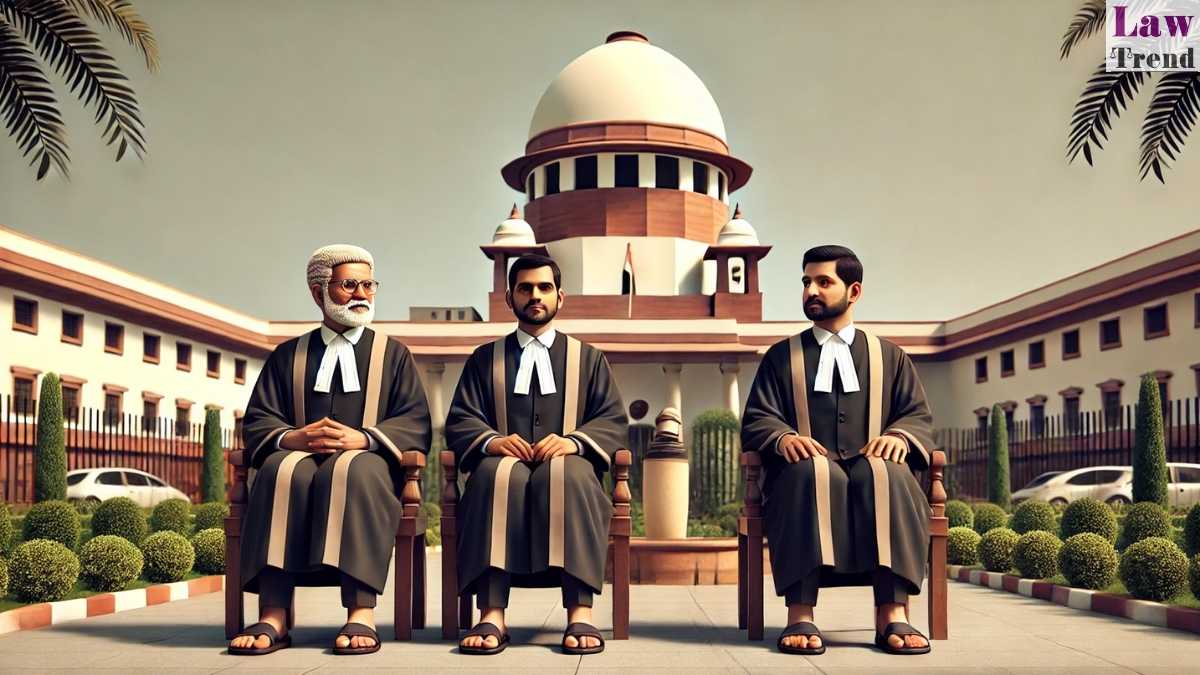
The Union Cabinet on May 5, 2026 approved the Supreme Court (Number of Judges) Amendment Bill, 2026, which proposes to expand the strength of the Supreme Court bench from 34 to 38 judges (excluding the Chief Justice of India). Once passed by Parliament, the total strength including the CJI will rise to 39 judges.
This is a significant step towards addressing the mounting backlog of cases in India’s apex court, which currently has approximately 80,000 pending cases. With CJI Surya Kant set to retire in August 2026 and four existing vacancies, this expansion aims to make the Supreme Court more efficient and accessible.
Constitutional Framework: Article 124
Article 124(1) of the Constitution reads: “There shall be a Supreme Court of India consisting of a Chief Justice of India and, until Parliament by law prescribes a larger number, of not more than seven other Judges.”
This clause is the constitutional anchor for all expansions of the SC bench. Parliament has the power — by ordinary legislation — to increase the number of judges. No constitutional amendment is required; a simple Parliamentary law suffices.
Other key Articles of the Supreme Court cluster:
- Article 124 — Establishment and constitution of Supreme Court
- Article 125 — Salaries of judges (determined by Parliament)
- Article 130 — Seat of Supreme Court (Delhi; CJI may designate other places with Presidential approval)
- Article 143 — Advisory jurisdiction (President may refer questions of law to SC)
- Article 137 — SC’s power to review its own judgments
- Article 145 — SC’s power to make rules of court
Historical Expansion of Supreme Court Bench
The SC bench has been expanded six times since independence, each time by Parliament passing a law under Article 124(1):
| Year | Judges (excl. CJI) | Total (incl. CJI) |
|---|---|---|
| 1950 (Original) | 7 | 8 |
| 1956 | 10 | 11 |
| 1960 | 13 | 14 |
| 1977 | 17 | 18 |
| 1986 | 25 | 26 |
| 2008 | 30 | 31 |
| 2019 | 33 | 34 |
| 2026 (Proposed) | 38 | 39 |
The Collegium System and NJAC: A Critical CLAT Topic
Who appoints the new judges once Parliament approves a larger bench? This brings us to the Collegium system — one of the most tested topics in CLAT Legal Reasoning.
The collegium system evolved through three landmark cases known as the “Three Judges Cases”:
- SP Gupta v Union of India (1981) — First Judges Case: Held that the President had primacy in judicial appointments; CJI’s opinion was only consultative.
- SC Advocates-on-Record Association v Union of India (1993) — Second Judges Case: Overruled SP Gupta. Established that the CJI and two senior-most judges form the Collegium with primacy in appointments.
- In Re Presidential Reference (1998) — Third Judges Case: Expanded the collegium to CJI + four senior-most judges.
In 2014, Parliament passed the 99th Constitutional Amendment and the National Judicial Appointments Commission (NJAC) Act to replace the collegium. However, in 2015, the Supreme Court struck down both in Supreme Court Advocates-on-Record Association v Union of India, holding they violated the independence of the judiciary — a basic structure feature.
CLAT Angle: Why This Matters for Your Exam
- Parliamentary control vs judicial independence: Parliament can increase bench size by ordinary law (no constitutional amendment needed) — but cannot change the appointment process without risking judicial independence challenge.
- Pendency crisis: ~80,000 cases pending in SC; ~50 lakh in High Courts; ~4.5 crore in district courts — CLAT comprehension passages often feature this policy debate.
- Collegium vs NJAC: The 2015 NJAC judgment reaffirmed that judicial appointments must remain insulated from executive/legislative control — a basic structure principle.
- Difference between original, appellate and advisory jurisdiction: Commonly tested — Article 131 (original), Article 132-136 (appellate), Article 143 (advisory).
Key Facts at a Glance
| Current SC strength | 34 (33 judges + CJI) |
| Proposed SC strength | 39 (38 judges + CJI) |
| Pending cases in SC | ~80,000 |
| SC established | January 28, 1950 |
| Constitutional provision | Article 124(1) — Parliament by law may prescribe larger number |
| Collegium established | Second Judges Case, 1993 |
| NJAC struck down | 2015 by 5-judge SC bench |
Memory Mnemonic: SC Bench Expansion History
“8-11-14-18-26-31-34-39 — Parliament Decides Supreme Court’s Size”
Think of it as: Original 8 → Parliament adds every decade → 39 by 2026
For the Three Judges Cases, remember: “SP-SARA-PR”
- SP Gupta (1981) — Executive primacy
- SARA (SC Advocates-on-Record Association, 1993) — Collegium born
- PR = Presidential Reference (1998) — Collegium expanded to 5
For NJAC: “99th Amendment + NJAC Act = Basic Structure Violation (2015)”
Practice Quiz: SC Judges Expansion & Article 124
Practice Quiz — 10 CLAT-Style Questions
Click an option to reveal the answer and explanation.