
CURRENT AFFAIRS | MAY 5, 2026
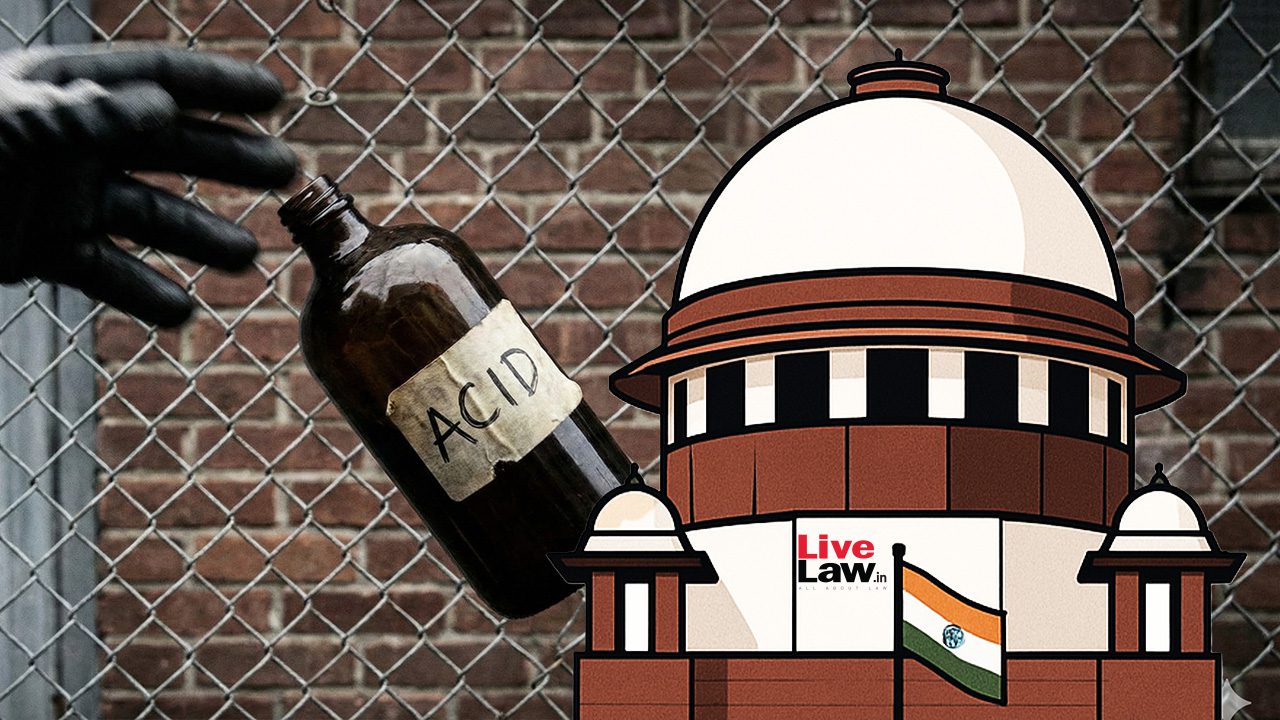
The Supreme Court has held that the Rights of Persons with Disabilities (RPwD) Act, 2016 must be interpreted purposively to extend its protections to acid-ingestion victims even where there is no visible external scarring. The judgment, delivered on 5 May 2026, builds directly on the acid-attack jurisprudence pioneered in Laxmi v Union of India (2014) and reaffirms substantive equality as the constitutional anchor of disability rights in India.
The Court’s Reasoning
The petitioner, who had ingested concentrated acid, suffered severe internal organ damage but presented with no visible scarring. Authorities had earlier denied her recognition as a person with a “specified disability” under Section 2(s) read with the Schedule to the RPwD Act 2016. Reversing that denial, the Court held that internal organ damage qualifying functionally as a specified disability cannot be defeated by the absence of external markers — to hold otherwise would frustrate the Act’s underlying object.
🏛️ Constitutional Framework
The judgment rests on three pillars: (i) Article 14 read as substantive equality — requiring the law to treat unequals unequally — rather than merely formal equality; (ii) Article 21 as the right to life with dignity, encompassing access to medical, educational and social rehabilitation; (iii) the UN Convention on the Rights of Persons with Disabilities (UNCRPD) 2006, which India ratified in 2007 and to which the RPwD Act 2016 gives domestic effect. The Court invoked the doctrine of beneficial construction to read welfare legislation expansively in favour of the protected class.
⚖️ CLAT Angle — Why This Matters for Aspirants
For Legal Reasoning, this ruling is a perfect vehicle for principle-fact questions on (i) purposive vs literal interpretation; (ii) reasonable accommodation under Section 2(y); (iii) the 21 specified disabilities recognised by the 2016 Act (up from 7 under the 1995 Act); (iv) the Laxmi v UoI (2014) line of acid-attack cases regulating over-the-counter acid sale and victim compensation. Watch for cross-over with Article 15(2) (state action against private discrimination) and Article 41 (DPSP — right to assistance in disability).
📊 Key Facts at a Glance
| Item | Detail |
|---|---|
| Statute | Rights of Persons with Disabilities Act, 2016 |
| Holding | Acid-ingestion with internal damage qualifies as specified disability — no external scarring required |
| Categories Recognised | 21 (up from 7 under 1995 Act) |
| Key Provisions | Section 2(s) — specified disability; Section 2(y) — reasonable accommodation |
| Constitutional Anchors | Articles 14, 21; Article 41 (DPSP) |
| International Source | UNCRPD 2006 (India ratified 2007) |
| Precedent Built On | Laxmi v Union of India (2014) |
🧠 Mnemonic — “PURPOSE: Pain Unseen Receives Protection On Substantive Equality”
PURPOSE spells out the rule: Pain Unseen Receives Protection On Substantive Equality. The Act protects function, not photograph. Tag this with “21 / 2016 / 2(s) / 2(y)” — 21 disabilities, 2016 Act, Section 2(s) defines specified disability, Section 2(y) defines reasonable accommodation.
Test Your Understanding
Practice Quiz — 10 CLAT-Style Questions
Click an option to reveal the answer and explanation.