

CURRENT AFFAIRS | 21 APRIL 2026
CLAT GK + CONSTITUTIONAL LAW & RELEVANT AREA
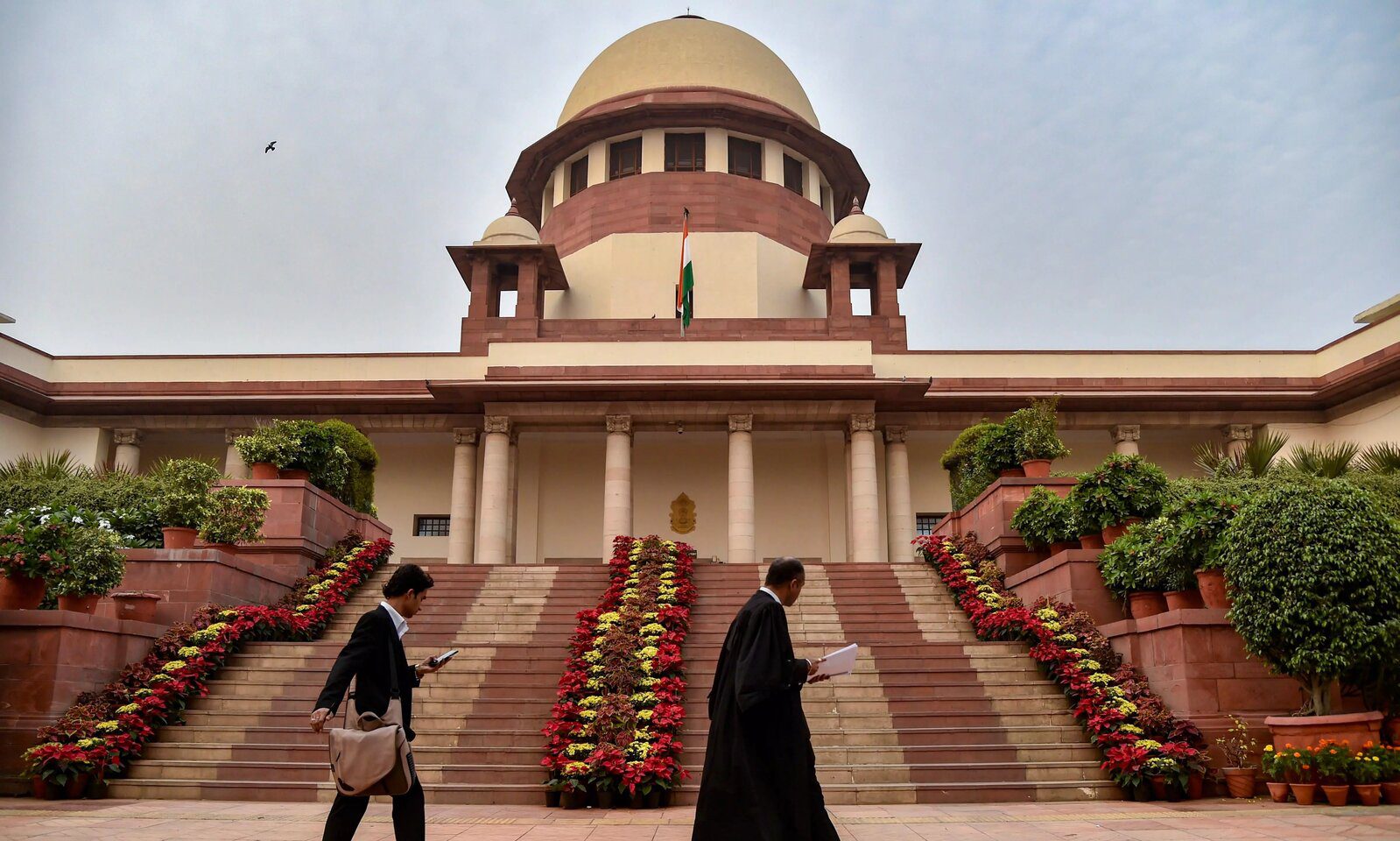
On April 16, 2026 (order made public on April 20), a Supreme Court bench of Justice Aravind Kumar and Justice N V Anjaria dismissed activist Umar Khalid’s petition seeking review of the apex court’s January 5, 2026 order denying him bail in the 2020 North-East Delhi Riots “larger conspiracy” case registered under the Unlawful Activities (Prevention) Act. The court reiterated its earlier finding that “material suggests” Khalid’s involvement extended “beyond localised acts” to the planning, mobilisation and strategic direction of the violence. A companion review filed by co-accused Sharjeel Imam was also rejected. Khalid has been in custody since September 2020.
Why it matters for CLAT: The order is a compact tutorial on UAPA Sec 43D(5), the ‘Watali‘ prima-facie standard, and the Article 137 review jurisdiction. It also crystallises a nascent ‘hierarchy of participation‘ doctrine that differentiates planners/mobilisers from mere participants for bail purposes — directly relevant to Legal Reasoning sets on conspiracy, abetment and the ‘bail is rule, jail is exception’ principle traceable to State of Rajasthan v Balchand (1977).
Statutory & Constitutional Framework
- Article 21 — right to life and personal liberty; procedure must be fair, just and reasonable (Maneka Gandhi v UoI, 1978)
- Article 137 — SC’s power of review of its own judgments
- Unlawful Activities (Prevention) Act 1967, Sec 43D(5) — statutory bar on bail where reasonable grounds exist to believe accusation prima facie true
- UAPA Sec 15 — ‘terrorist act’; Sec 16 — punishment; Sec 18 — conspiracy
- NIA v Zahoor Ahmad Shah Watali (2019) — ‘Watali test’: prima-facie examination at face value, no mini-trial
- Union of India v K A Najeeb (2021) — Art 21 enables bail despite Sec 43D(5) where trial is unduly delayed
- State of Rajasthan v Balchand (1977) — ‘bail is the rule, jail is the exception’
- Order XLVII, SC Rules 2013 — review petitions heard by circulation unless otherwise directed
- Shaheen Welfare Association v UoI (1996) — Art 21 proportionality for pre-trial detention
CLAT Angle — How This Gets Tested
- Watali vs Najeeb — the binary: Watali (2019) enforces Sec 43D(5) rigorously at bail stage; Najeeb (2021) carves out an Art 21 exception for delayed trials. Khalid’s review falls on the Watali side because the court stressed ‘hierarchy of participation’.
- A review petition under Art 137 is not a re-hearing — the test is ‘error apparent on the face of the record’. Rejection here simply means the January 5, 2026 order stands.
- ‘Hierarchy of participation’ is emerging as a doctrinal tool in conspiracy-UAPA cases — planners/mobilisers face stiffer bail standards than mere participants.
- Contrast with the five co-accused who received bail — CLAT questions love this ‘same FIR, different bail outcomes’ fact pattern.
Key Facts at a Glance
| Bench | Justice Aravind Kumar & Justice N V Anjaria |
| Order date | 16 April 2026 (made public 20 April) |
| Original order under review | 5 January 2026 — bail denied to Umar Khalid and Sharjeel Imam |
| Governing provision | UAPA Sec 43D(5) — statutory bail bar |
| Court’s reasoning | Role extended ‘beyond localised acts’ — planning, mobilisation, strategic direction |
| Delhi Riots (Feb 2020) toll | 53 killed, 700+ injured |
| Period of custody (Khalid) | Since September 2020 (5+ years) |
The Watali-Najeeb tension. Sec 43D(5) UAPA bars bail where the court, on perusal of the case diary or charge-sheet, is “of the opinion that there are reasonable grounds for believing that the accusation… is prima facie true.” In NIA v Watali (2019), the SC held that this prima-facie test requires taking the prosecution material at face value — no mini-trial, no probative-value analysis. The statute, read alone, appears to render bail almost impossible. But in Union of India v K A Najeeb (2021), the SC carved out a constitutional exception: where trial is unduly delayed, Art 21’s guarantee of a speedy trial allows bail notwithstanding Sec 43D(5). The Khalid line of orders — both the January 2026 denial and the April 16 review — sits firmly in the Watali quadrant because the court has repeatedly emphasised his “central and formative” role rather than any delay-based constitutional claim.
Mnemonic — UAPA Bail Map
Remember — “W-N-B-S”: Watali (2019 — rigorous Sec 43D(5)) · Najeeb (2021 — Art 21 exception for delay) · Balchand (1977 — bail is rule) · Sec 43D(5) UAPA. Review under Art 137 = ‘error apparent on record’ — not a re-argument.
Likely exam questions. (1) UAPA Sec 43D(5) sets what standard at bail stage? (2) In K A Najeeb (2021), what was the ratio? (3) The Watali test for bail consideration is? (4) A review petition lies under which Article? (5) Article 21 reading with ‘procedure established by law’ was expanded in which landmark case?
Test Yourself — 10 MCQs
Click each option to reveal the answer and explanation.
Practice Quiz — 10 CLAT-Style Questions
Click an option to reveal the answer and explanation.






