
CURRENT AFFAIRS | MARCH 23, 2026 | CLAT LEGAL + GK
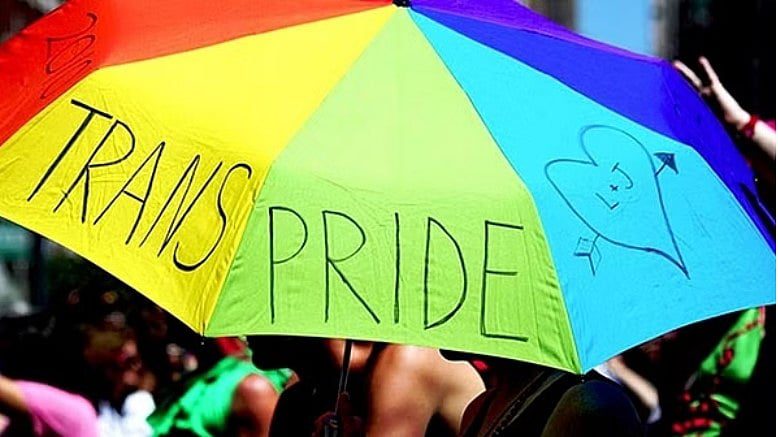
Protests erupted across India against the proposed Transgender Persons (Protection of Rights) Amendment Bill, with demonstrators carrying placards reading “I Am Not a Disease” and “Protect Trans Rights.” Critics argue the amendment further undermines the self-identification rights that the Supreme Court affirmed in the landmark NALSA v Union of India (2014) judgment — a case that every CLAT aspirant must know thoroughly.
Why CLAT 2027 Aspirants Must Know This
This topic is extremely high-probability for CLAT Legal Reasoning. It involves landmark Supreme Court judgments (NALSA, Navtej Johar, Puttaswamy), Articles 14, 15, 19, and 21, the concept of self-identification versus state-mediated identity, and the evolution of equality jurisprudence in India. Expect CLAT passages presenting hypothetical scenarios about gender identity laws.
Key Facts at a Glance
- Protests against the Transgender Persons (Protection of Rights) Amendment Bill across India
- Protesters: “I Am Not a Disease” — demanding self-identification rights without medical gatekeeping
- Original Transgender Persons Act passed in 2019 — already controversial for DM certificate requirement
- NALSA v Union of India (2014): SC recognised transgender persons as “third gender”; directed reservations as OBC-category
- Critics argue amendment further weakens NALSA’s vision of self-determination and dignity
- Key concerns: mandatory medical procedures for recognition, family consent requirements, restrictions on gender expression
- NHRC (National Human Rights Commission) had previously called for stronger protections
- Navtej Singh Johar (2018): SC decriminalised consensual same-sex relations (Section 377 IPC / now Section 377-equivalent BNS)
- K.S. Puttaswamy (2017): 9-judge bench — privacy is a fundamental right under Article 21; includes bodily autonomy
- The 2019 Act’s District Magistrate certificate requirement was its most criticised provision
Key Terms and Definitions
| Term | Definition |
|---|---|
| Transgender Person | As per 2019 Act: “a person whose gender does not match with the gender assigned at birth” — includes trans-man, trans-woman, intersex persons, kinner, hijra, aravani, jogta |
| Self-Identification | Principle that gender identity should be determined by the individual — not by doctors, courts, or District Magistrates |
| NALSA | National Legal Services Authority — petitioner in the landmark 2014 SC case on transgender rights |
| Gender Identity | A person’s internal, deeply held sense of their own gender — may or may not correspond with biological sex assigned at birth |
| Gender Dysphoria | Medical/psychological distress caused by incongruence between one’s gender identity and assigned birth sex |
Constitutional and Legal Framework
- NALSA v Union of India (2014): SC recognised transgender persons as “third gender”; directed OBC-type reservations; directed Parliament to enact a protective law
- Article 14: Right to equality — prohibits arbitrary and discriminatory treatment by the state
- Article 15: Prohibits discrimination on grounds of religion, race, caste, sex or place of birth — courts read “sex” to include gender identity
- Article 19(1)(a): Freedom of expression — includes right to express one’s gender identity
- Article 21: Right to life and personal liberty — includes right to dignity, bodily autonomy, privacy (Puttaswamy 2017)
- Navtej Singh Johar v Union of India (2018): 5-judge bench unanimously decriminalised consensual adult same-sex relations
- K.S. Puttaswamy v Union of India (2017): 9-judge bench — right to privacy is a fundamental right under Article 21
- 44th Constitutional Amendment (1978): Removed right to property from fundamental rights (Art. 300A) — useful contrast question
Quick Takeaways for CLAT 2027
- NALSA (2014) = Third gender recognised; OBC-type reservations directed; self-identification endorsed
- Transgender Act (2019) = First statutory recognition; criticised for District Magistrate certificate requirement
- Articles 14, 15, 21 = Core constitutional protections for transgender rights
- Navtej Johar (2018) = Section 377 IPC decriminalised for consensual adult relations
- Puttaswamy (2017) = Privacy is fundamental right; includes bodily autonomy and gender expression
- Self-identification vs. state-mediated identity = core conflict in the amendment debate
- Right to property is NOT a fundamental right — it is a constitutional right under Article 300A
Practice Quiz — 10 CLAT-Style Questions
Click an option to reveal answer and explanation.