

CURRENT AFFAIRS | 11 APRIL 2026
CLAT GK + POLITY & GOVERNANCE
The Women’s Reservation Battle Heats Up
The political landscape has been set ablaze by the renewed push to implement the 106th Constitutional Amendment Act — popularly known as the Nari Shakti Vandan Adhiniyam — which provides for 33% reservation for women in the Lok Sabha and state legislative assemblies. The Union Cabinet approved a draft amendment bill on April 8, 2026, to expedite implementation, but a major political showdown is brewing over the delimitation precondition.
What Did the Cabinet Approve?
The government’s draft amendment proposes to:
- Increase the total number of Lok Sabha seats from 543 to 816, reserving 273 seats for women
- Use 2011 Census data for the delimitation exercise
- Target implementation for the 2029 general elections
This is significant because the original 106th Amendment (passed in September 2023) linked women’s reservation to a delimitation exercise to be conducted after the next Census — creating what critics call an indefinite delay mechanism.
Congress Opposition: Support the Bill, Oppose the Precondition
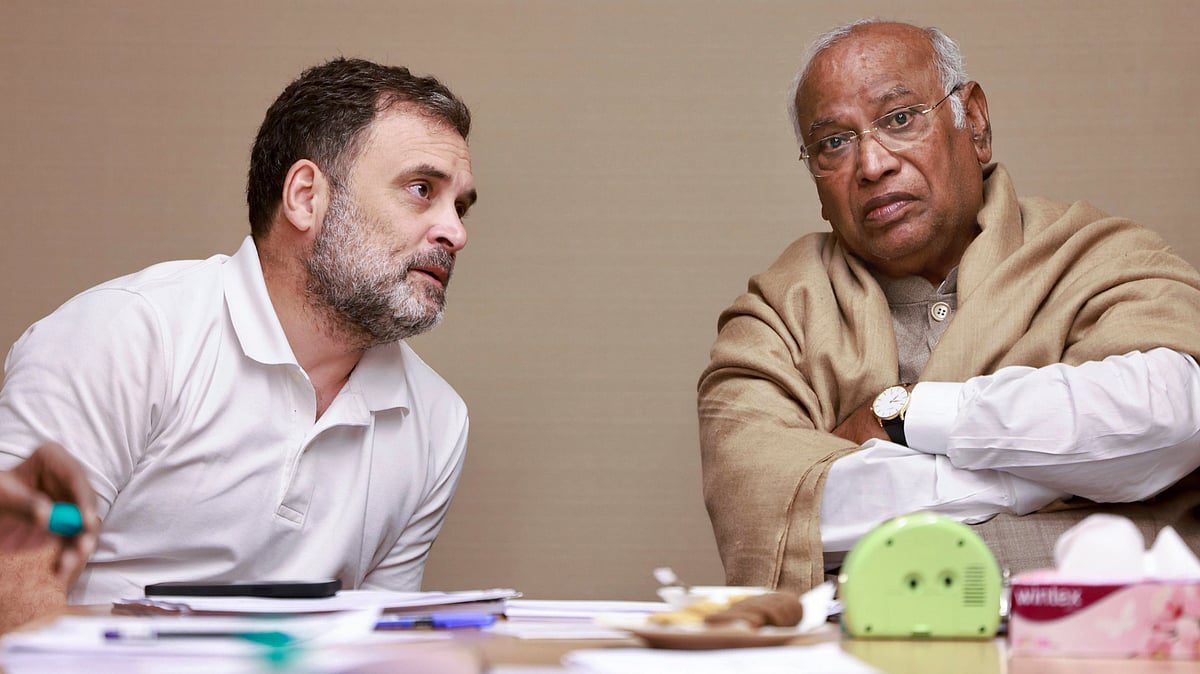
The Congress party, under President Mallikarjun Kharge, held a high-level Congress Working Committee (CWC) meeting on April 10 to formulate its strategy. The party’s position is nuanced:
- Supports 33% women’s reservation in principle — Congress has historically backed this bill since 1996
- Opposes the delimitation precondition — Argues delimitation will change seat distribution across states, potentially reducing southern states’ representation
- Demands all-party meeting — Congress has written three times requesting the government to convene an all-party meeting
Kharge warned that the “delimitation proposal” could carry “serious consequences” and accused the Modi government of wanting to pass the bill in the upcoming special session to “take credit in this year’s assembly elections.”
Congress plans to call all INDIA bloc leaders on April 15 to discuss a unified opposition strategy ahead of the three-day special Parliament session starting April 16.
The Historical Journey of Women’s Reservation
The Women’s Reservation Bill has one of the longest legislative histories in Indian democracy:
- 1996: First introduced in the 11th Lok Sabha by the Deve Gowda government
- 1998, 1999, 2003, 2008: Repeatedly introduced and lapsed
- 2010: Passed by Rajya Sabha but never taken up in Lok Sabha
- 2023: Finally passed as the 106th Amendment (128th Amendment Bill) — but linked to delimitation
- 2026: Cabinet approves draft amendment to expedite implementation using 2011 Census data
The Delimitation Dilemma
The real battle is over delimitation — the redrawing of constituency boundaries based on updated population data. Southern states fear that delimitation based on current population will reduce their Lok Sabha seats (since they achieved lower population growth through better family planning), while northern states with higher population growth will gain seats. This north-south divide makes delimitation one of the most politically sensitive exercises in Indian federalism.
Constitutional & Legal Framework
- Article 330 — Reservation of seats in Lok Sabha for Scheduled Castes and Scheduled Tribes. The 106th Amendment adds a similar mechanism for women.
- Article 332 — Reservation of seats in State Legislative Assemblies for SC/ST. Women’s reservation in assemblies follows the same pattern.
- Article 368 — Power and procedure for amendment of the Constitution. The 106th Amendment was passed under this Article with the required special majority.
- Article 243D — Reservation for women in Panchayats (inserted by 73rd Amendment, 1992). Provides not less than one-third seats for women, including SC/ST women.
- Article 243T — Reservation for women in Municipalities (inserted by 74th Amendment, 1992).
- 73rd & 74th Amendments (1992) — Successfully implemented 33% women’s reservation at the grassroots level in Panchayats and Municipalities. This is the existing model being extended to Parliament.
CLAT Angle: Why This Matters for Your Exam
This topic sits at the intersection of polity, governance, and social justice — three pillars of CLAT GK:
- Constitutional amendments — Article 368 procedure, special majority requirements
- Reservation framework — Articles 330, 332, 243D, 243T form a complete picture
- 73rd/74th Amendments — High-frequency polity questions on local self-governance
- Indra Sawhney v UoI (1992) — 50% ceiling on reservations and whether women’s reservation is subject to it
- Delimitation — Federal implications, north-south divide, Article 82 (readjustment after Census)
- Expect legal reasoning passages on affirmative action, equality vs equity, and representative democracy
Key Facts at a Glance
| Amendment | 106th Constitutional Amendment (Nari Shakti Vandan Adhiniyam) |
| Reservation | 33% for women in Lok Sabha + State Assemblies |
| Cabinet Draft | April 8, 2026 (expedite implementation) |
| Proposed LS Seats | 543 to 816 (273 reserved for women) |
| Census Data | 2011 Census for delimitation |
| Target | 2029 general elections |
| Opposition Meet | April 15, 2026 (INDIA bloc leaders) |
| Special Session | April 16, 2026 (3-day Parliament session) |
Mnemonic: WOMEN
W — Women’s 33% reservation (Nari Shakti Vandan Act)
O — One-hundred-and-sixth Amendment (2023)
M — Municipal & Panchayat success (73rd/74th Amendments, Art 243D/T)
E — Expansion of Lok Sabha (543 to 816 seats proposed)
N — North-South delimitation divide (federal concern)
Practice Quiz — 10 CLAT-Style Questions
Click an option to reveal the answer and explanation.






