

CURRENT AFFAIRS | 11 APRIL 2026
CLAT GK + CONSTITUTIONAL LAW
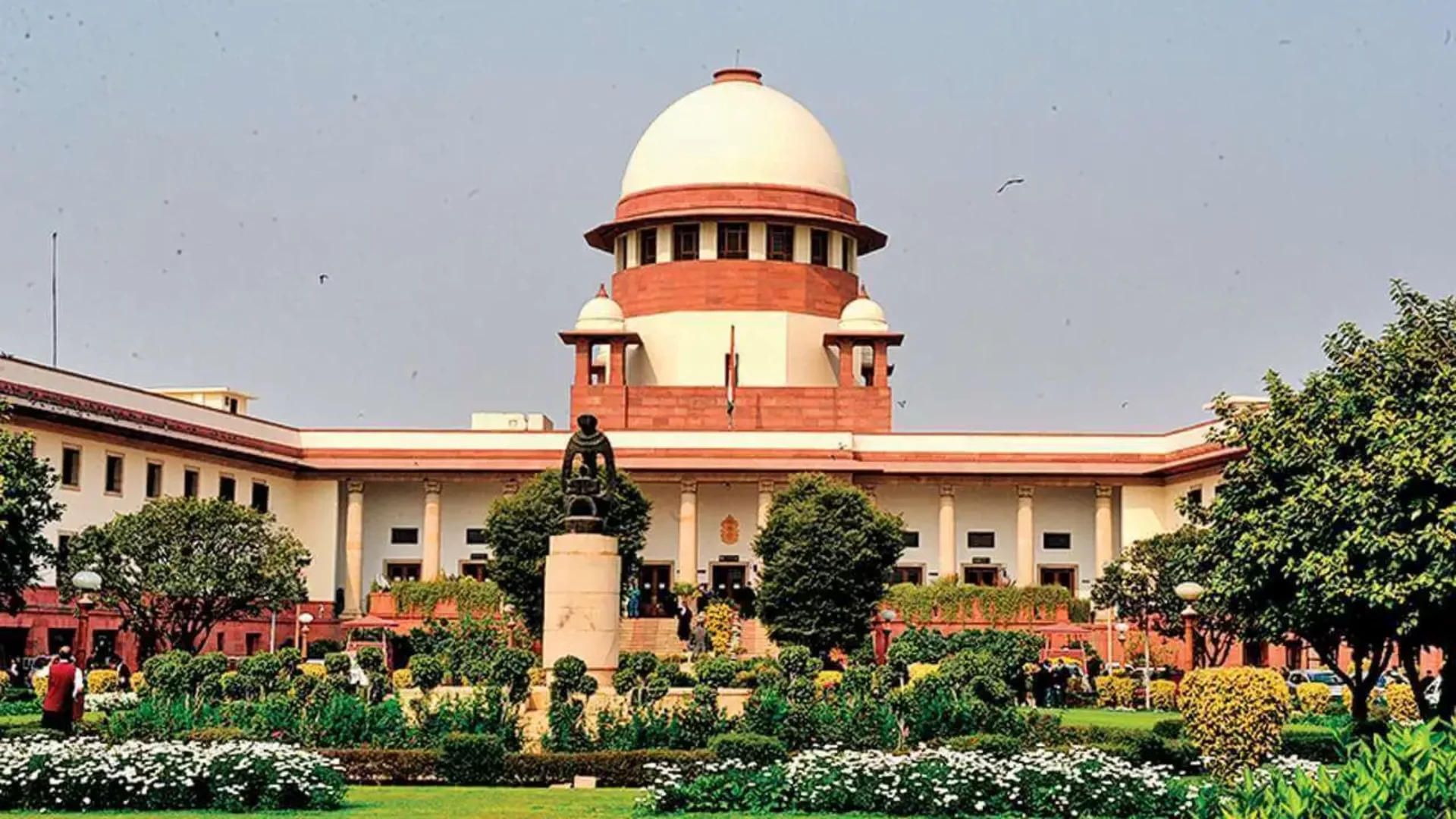
In a thought-provoking editorial, political scientist Pratap Bhanu Mehta examines a concept that has become one of the most frequently invoked yet poorly understood terms in Indian constitutional discourse — constitutional morality. His argument is provocative: while the phrase carries immense rhetorical power, it is inherently indeterminate and cannot, by itself, yield a clear standard of adjudication.
What Is Constitutional Morality?
The concept traces its origins to Dr. B.R. Ambedkar’s speeches in the Constituent Assembly, where he emphasized that constitutional morality — the willingness to resolve disputes through constitutional methods rather than revolutionary means — was not yet a natural sentiment among Indians and needed to be cultivated. Ambedkar borrowed the term from the historian George Grote, who used it in the context of Athenian democracy.
In recent years, the Supreme Court has elevated constitutional morality from a descriptive historical concept to a normative standard for judicial review. But Mehta’s central concern is this: when judges invoke constitutional morality, what exactly are they invoking? Is it the text of the Constitution? Its structure? The values of the framers? Or something more abstract — a set of evolving moral commitments that the judiciary discerns from the constitutional fabric?
The Sabarimala Dilemma
Mehta uses the Sabarimala case (Indian Young Lawyers Association v State of Kerala, 2018) to illustrate the problem. The majority held that the traditional ban on women of menstruating age entering the Sabarimala temple violated Articles 14, 15, 21, and 25, and was contrary to constitutional morality. But the dissenting opinion, by Justice Indu Malhotra, argued that courts should not interfere with the essential practices of a religious denomination under Article 26.
The question Mehta poses is sharp: “How are liberty and equality to be reconciled with the autonomy of religious institutions?” Constitutional morality, he argues, cannot answer this question because both sides can claim constitutional morality in their favour. The majority’s constitutional morality is individual dignity and equality; the dissent’s constitutional morality is institutional autonomy and religious pluralism.
Navtej Johar and the Expansion of the Concept
In Navtej Singh Johar v Union of India (2018), the Supreme Court decriminalized consensual homosexual acts by reading down Section 377 IPC. The judgment extensively invoked constitutional morality as a counter to “popular morality” or “societal morality.” The Court held that the Constitution protects individual autonomy and dignity against majoritarian moral preferences.
While Mehta acknowledges this as a positive outcome, he warns that the reasoning mechanism is fragile. If constitutional morality simply means “what the Constitution, properly interpreted, requires,” then the term adds nothing to conventional constitutional interpretation. If it means something more — a free-standing moral standard — then it risks becoming a vehicle for judicial preferences masquerading as constitutional reasoning.
Manoj Narula and the Political Dimension
In Manoj Narula v Union of India (2014), the Supreme Court invoked constitutional morality while examining whether persons with criminal backgrounds should be appointed as ministers. The Court observed that constitutional morality requires those in power to exercise restraint consistent with constitutional values, even in matters where the Constitution does not explicitly prohibit an action.
This expansive use of the concept troubles Mehta because it allows courts to read obligations into constitutional silences — areas where the Constitution deliberately left discretion to political actors.
The Activism vs. Restraint Tension
At its core, Mehta’s critique engages the perennial tension between judicial activism and judicial restraint. Judicial activism, at its best, protects vulnerable minorities from majoritarian oppression. Judicial restraint, at its best, respects democratic self-governance and the separation of powers. Constitutional morality, Mehta argues, has become a catch-all substitute for the difficult analytical work of balancing competing constitutional values through reasoned legal analysis.
Constitutional & Legal Framework
- Article 14: Right to Equality — equal protection of laws
- Article 21: Right to Life and Personal Liberty — expanded to include dignity, privacy, autonomy
- Article 25: Freedom of conscience; free profession, practice and propagation of religion
- Article 26: Freedom to manage religious affairs — denominational autonomy
- Constituent Assembly Debates: Ambedkar’s vision of cultivating constitutional morality
- Judicial Review: Art 13, 32, 226 — courts as guardians of constitutional values
CLAT Angle — Why This Matters for You
- Legal Reasoning (Critical): CLAT 2025-26 increasingly tests judicial reasoning — expect passages asking you to evaluate competing arguments about constitutional interpretation
- Passage-based analysis: A Mehta-style editorial could appear as a reading comprehension passage testing your ability to identify the author’s argument and its counter-arguments
- Art 25 vs Art 26: The Sabarimala tension between individual religious freedom and institutional autonomy is a classic CLAT legal reasoning problem
- Activism vs Restraint: Expect MCQs testing the difference and when each is appropriate
Key Facts at a Glance
| Concept Origin | Dr. B.R. Ambedkar, Constituent Assembly Debates (borrowed from George Grote) |
| Sabarimala Case | Indian Young Lawyers Assn v State of Kerala (2018) |
| Section 377 Case | Navtej Singh Johar v Union of India (2018) |
| Criminal Ministers Case | Manoj Narula v Union of India (2014) |
| Mehta’s Core Argument | Constitutional morality is indeterminate and cannot yield adjudication standards by itself |
| Key Tension | Judicial Activism vs Judicial Restraint |
Mnemonic: “MORALS” — Key Cases on Constitutional Morality
Manoj Narula — criminal ministers, political morality
Origin — Ambedkar, Constituent Assembly, George Grote
Rights — Art 14/21/25/26 interplay
Activism vs Restraint — the core judicial tension
Liberty — Navtej Johar, Section 377 decriminalization
Sabarimala — Art 25 vs Art 26, individual vs institutional
Practice Quiz — 10 CLAT-Style Questions
Click an option to reveal the answer and explanation.