
CURRENT AFFAIRS | 21 APRIL 2026
CLAT GK + CONSTITUTIONAL LAW & RELEVANT AREA
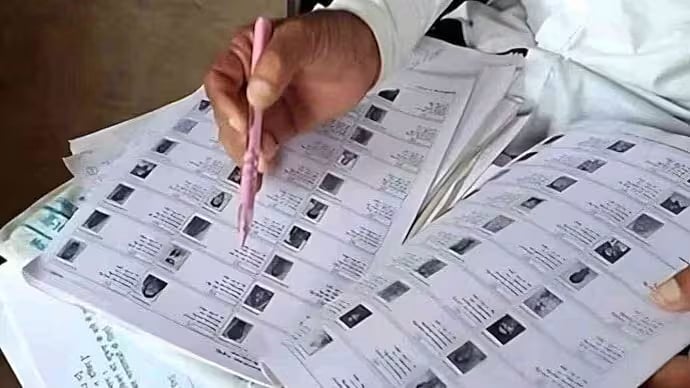
An Indian Express investigation has revealed that the Election Commission of India (ECI) deployed an unprecedented criterion — “logical discrepancy” — to delete voters from West Bengal’s electoral rolls ahead of the State Assembly elections on April 23 and 29, 2026. 1.36 crore names were flagged; 60.06 lakh placed under adjudication; 27.10 lakh deleted. Former Chief Election Commissioners Ashok Lavasa and O P Rawat have publicly called the criterion illegal and without basis in the Representation of People Act 1950 or the Registration of Electors Rules 1960. The Supreme Court, observing that ECI “deviated” from the SIR process followed in other States, has directed that affected voters be given one last chance through supplementary lists cleared by April 21 or 27.
Why it matters for CLAT: This is the textbook collision of Article 324 (ECI’s plenary power) with Article 326 (universal adult franchise). Mass deletions on algorithm-generated flags — without individualised hearings — fail both statutory (Rule 22, Registration of Electors Rules 1960) and constitutional (Arts 14, 21, 326) tests. Cases cited by the public record — Sukla Hazra (age gap), Subarna Mondal (source unknown), Hidaytulla SK (parent “mapped” to six other families), MD Mossior Rahaman (name mismatch following a change of name) — show how process-driven mistakes crystallise into disenfranchisement.
Constitutional & Statutory Framework
- Article 324 — ECI has plenary power of superintendence, direction and control of elections
- Article 325 — no person to be excluded from the electoral roll on grounds of religion, race, caste or sex
- Article 326 — elections on the basis of adult suffrage (universal adult franchise)
- Article 327 — Parliament’s power to make laws on elections to Parliament and State Legislatures
- Representation of People Act 1950 — preparation and revision of electoral rolls; Sec 22 (deletion), Sec 24 (appeals)
- Registration of Electors Rules 1960 — Forms 6, 7, 8, 8A — inclusion, objection, correction, shifting
- Lily Thomas v UoI (2013) — SC struck down RPA 1951 Sec 8(4); sitting MPs/MLAs no longer shielded from immediate disqualification on conviction
- Mohinder Singh Gill v CEC (1978) — Art 324 is a reservoir of power but bounded by natural justice and judicial review
- ECI as quasi-judicial body — deletions/inclusions require audi alteram partem and reasoned orders
CLAT Angle — How This Gets Tested
- Passage-style question trap: SIR is not named in the RPA 1950 — it is an administrative intensification of the Sec 21 annual revision, NOT a statutory category. Always go back to the parent provision.
- The SC’s observation that ECI deviated from its own SIR process by inserting a ‘logical discrepancy’ category is a textbook example of Mohinder Singh Gill — power under Art 324 is not unfettered.
- Natural justice hook: where a voter’s name is proposed for deletion, Rule 22 of Registration of Electors Rules 1960 mandates hearing + reasoned order. Mass deletions on algorithm-generated “discrepancies” are facially infirm.
- Expect a Legal Reasoning set pairing Art 326 (universal adult franchise) with the proposition that procedural failures that disenfranchise eligible voters violate a basic-structure feature.
Key Facts at a Glance
| Names flagged under SIR | 1.36 crore |
| Under adjudication | 60.06 lakh |
| Deleted / excluded | ~27.10 lakh (45% of those scrutinised) |
| WB voters: Dec 2025 → 2026 final roll | 7.66 cr → 6.77 cr (~11.6% drop) |
| Former CECs critical of ‘logical discrepancy’ | Ashok Lavasa, O P Rawat |
| Poll dates | Bengal Assembly — 23 April & 29 April 2026 |
| SC deadline for supplementary rolls | April 21 / 27, 2026 (Form-6 cleared names) |
The legal heart of the controversy. The SIR (Special Intensive Revision) is an intensification of the annual-revision cycle under Sec 21 RPA 1950. In earlier SIRs, discrepancies between the 2002 “mother roll” and the current database were treated as clerical flags — corrected, not weaponised. In Bengal, they were categorised and used as grounds for scrutiny, shifting the burden of proof onto the citizen to re-prove eligibility. The SC’s observation that this was a “deviation” — combined with instances of lawyers barred from appellate tribunals — brings the matter squarely within the Mohinder Singh Gill (1978) rule that Art 324 power is large but not lawless.
Mnemonic — SIR-LRA
Remember — 3-2-4-6: 324 (ECI power) · 26 (adult franchise) · RP Act 1950 for rolls, 1951 for conduct · Form 6 (inclusion) / 7 (objection) / 8 (correction). Real-world cases (Sukla Hazra, Subarna Mondal, Hidaytulla SK, MD Mossior Rahaman) show how algorithmic “discrepancy” becomes de-facto disenfranchisement.
Likely exam questions. (1) Which Article vests plenary electoral powers in the ECI? (2) Universal adult franchise is guaranteed by which Article? (3) In Lily Thomas v UoI the SC struck down which sub-section? (4) Which Form is used to apply for inclusion of a new name? (5) Legal reasoning passage — ECI action that disenfranchises without hearing violates which constitutional provisions?
Test Yourself — 10 MCQs
Click each option to reveal the answer and explanation.
Practice Quiz — 10 CLAT-Style Questions
Click an option to reveal the answer and explanation.