
CURRENT AFFAIRS | 21 APRIL 2026
CLAT GK + CONSTITUTIONAL LAW & RELEVANT AREA
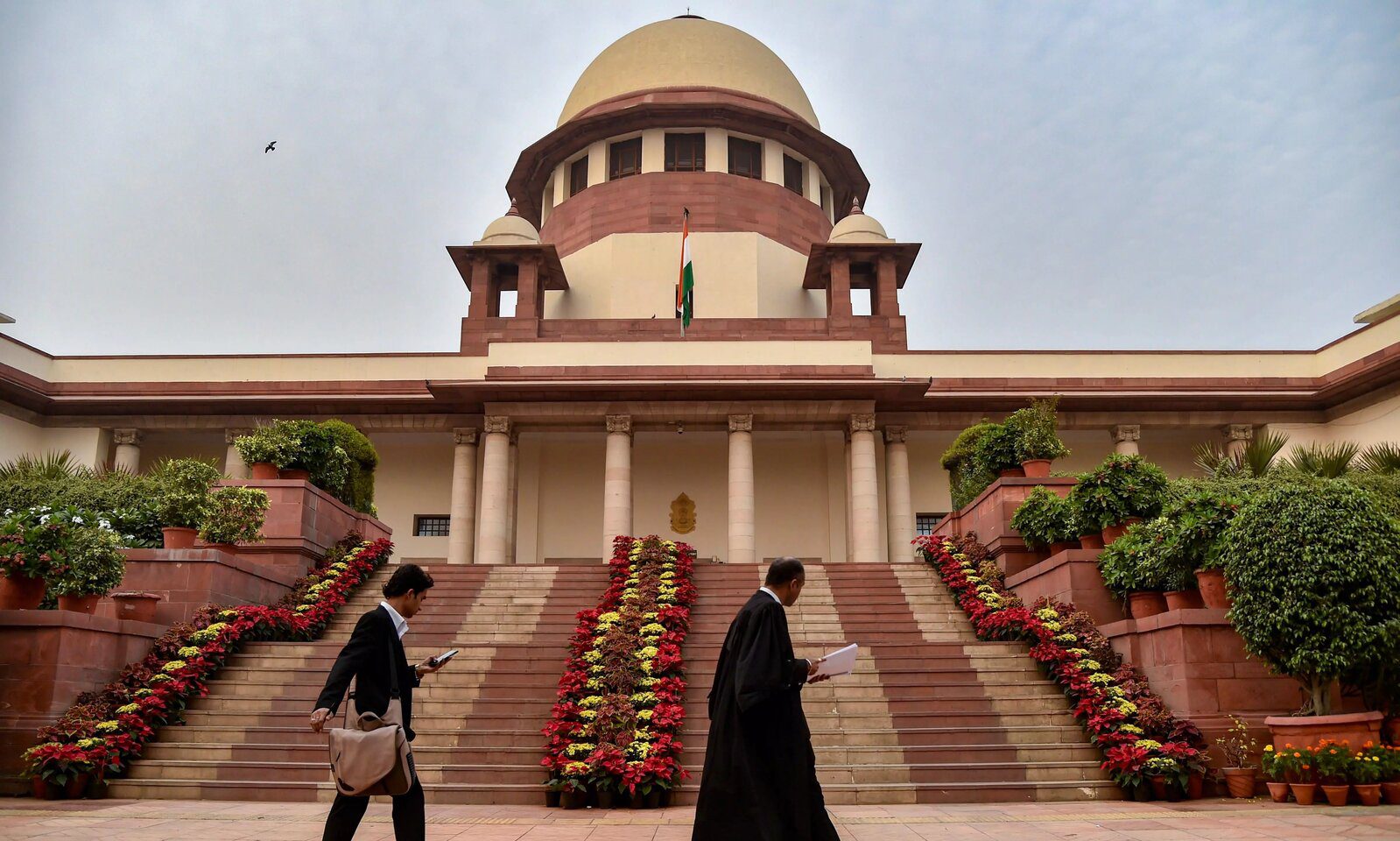
On April 20, 2026, a Supreme Court bench of Chief Justice Surya Kant and Justice Joymalya Bagchi sought an urgent report from the Chief Justice of the Calcutta High Court on the functioning of Appellate Tribunals constituted to hear appeals against voter deletions made under the Special Intensive Revision (SIR). Senior Advocate Devadatt Kamat submitted that the 19 tribunals — each headed by a retired Calcutta HC judge — were “not functioning”: they accepted only internet-based applications, barred lawyers at hearings and were inaccessible to voters living hundreds of kilometres away. The CJI, expressing displeasure at the repeated mentions, nonetheless agreed to call for the report “today itself” and refused an oral prayer by Senior Advocate Menaka Guruswamy for new voters cleared through Form 6, insisting on a proper written application.
Why it matters for CLAT: The controversy lies at the intersection of three constitutional ideas — Article 323B (tribunalisation of elections), the basic-structure floor of judicial review under L. Chandra Kumar (1997), and the natural-justice guarantee of fair hearing, including representation by counsel. The SC’s insistence on a written application before invoking Article 142 also illustrates procedural discipline in a constitutional court.
Constitutional & Statutory Framework
- Article 323A — Parliament may establish administrative tribunals (e.g., CAT) for service disputes
- Article 323B — ‘appropriate Legislature’ may establish tribunals for specified matters including elections
- Article 142 — Supreme Court’s power to pass any decree/order for ‘complete justice’
- Article 226 / 227 — High Court’s writ and superintending jurisdiction (part of basic structure)
- L. Chandra Kumar v UoI (1997) — judicial review by HCs under Art 226/227 forms basic structure; tribunals are supplemental not substitutional
- Madras Bar Association v UoI (2010, 2014, 2021) — tribunal independence and judicial character must mirror the court whose jurisdiction is substituted
- S P Sampath Kumar v UoI (1987) — foundational decision on validity of tribunals under Art 323A/323B
- Rojer Mathew v South Indian Bank (2019) — struck down Tribunal Rules 2017 for impairing independence
- Natural Justice — Audi alteram partem — refusing physical applications and barring counsel attacks this pillar
CLAT Angle — How This Gets Tested
- Classic CLAT trap: Art 323A vs Art 323B. 323A → service matters only (Parliament). 323B → elections, taxation, land reforms, industrial disputes etc. (Parliament OR State Legislature).
- L. Chandra Kumar sweet-spot: tribunals CAN be created, but their decisions are always subject to HC judicial review under Art 226/227 — basic structure. Questions often test this proposition.
- The right to be represented by counsel at quasi-judicial proceedings is not absolute but is strongly protected when serious civil consequences follow (Sec 30 Advocates Act 1961 + Art 21).
- The CJI’s refusal of the oral prayer is a soft tutorial on Art 142 — the ‘complete justice’ jurisdiction is not invoked by mention but by a proper application.
Key Facts at a Glance
| Bench | CJI Surya Kant & Justice Joymalya Bagchi |
| Report sought from | Chief Justice, Calcutta High Court |
| No. of Appellate Tribunals in WB | 19 (each headed by a retired HC judge) |
| Alleged defects | Internet-only applications; no lawyer representation; non-functioning despite earlier SC orders |
| SC’s deadline for supplementary rolls | 21 / 27 April 2026 |
| Advocates in court | Sr Adv Devadatt Kamat; Sr Adv Menaka Guruswamy |
A quasi-judicial body that doesn’t act judicially is a contradiction in terms — and that is the heart of Kamat’s grievance. The Supreme Court in Madras Bar Association has consistently held that when a body takes over a judicial function, it must retain the judicial character: independent selection, security of tenure, a reasoned-order jurisprudence, and, critically, the right of the litigant to be heard — including by counsel. Refusing physical filings and barring lawyers does not merely inconvenience litigants; it transforms an appellate forum into an executive interface. Where the consequence is disenfranchisement, Art 21’s guarantee of procedure “fair, just and reasonable” (Maneka Gandhi v UoI, 1978) kicks in.
Mnemonic — Tribunal Test
Remember — “CJ-LM-AR-NJ”: Chandra Kumar (basic structure) · Judicial review intact · L. Chandra Kumar + Madras Bar Association + Art 323A/B + Rojer Mathew · Natural Justice (audi + right to counsel). If asked about tribunals, cite 323A/B → Chandra Kumar → Madras Bar Association → Art 226/227 intact.
Likely exam questions. (1) Which Article allows the ‘appropriate Legislature’ to set up tribunals? (2) L. Chandra Kumar (1997) held what about tribunals and judicial review? (3) The Madras Bar Association line of cases emphasises what principle? (4) Under which Article can the SC pass orders for ‘complete justice’? (5) Is the right to counsel in a quasi-judicial hearing absolute?
Test Yourself — 10 MCQs
Click each option to reveal the answer and explanation.
Practice Quiz — 10 CLAT-Style Questions
Click an option to reveal the answer and explanation.