
CURRENT AFFAIRS | MARCH 23, 2026 | CLAT GK + INTERNATIONAL RELATIONS
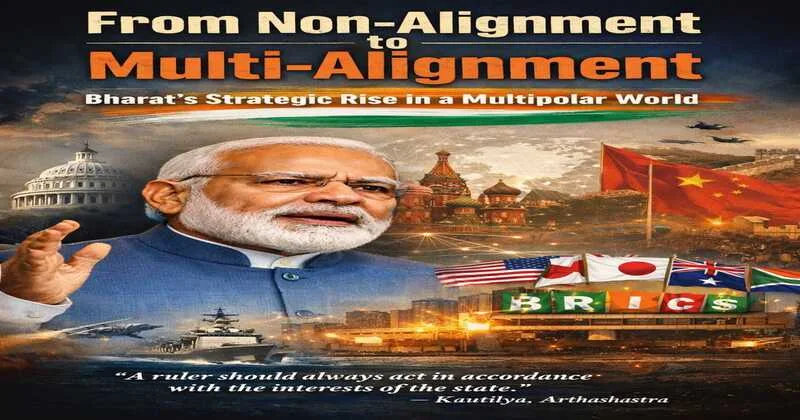
An Indian Express Ideas Page analysis argues that India’s foreign policy, which long held a difficult balance through strategic autonomy, is now “abandoning its voice” — becoming reactive rather than proactive, and drifting toward alignment that could cost India its historic credibility as an independent voice in global affairs. With the Iran-US standoff, Gaza war, and Russia-Ukraine conflict all demanding India take positions, the stakes have never been higher.
Why CLAT 2027 Aspirants Must Know This
India’s foreign policy doctrine — NAM, Strategic Autonomy, Multi-Alignment, Panchsheel — is a recurring CLAT GK topic. International relations passages test knowledge of India’s UNGA voting patterns, UNSC membership ambitions, founding of NAM, and Constitutional provisions on foreign policy (Article 51). This editorial connects the current geopolitical moment to India’s foundational foreign policy philosophy.
Key Facts at a Glance
- India historically followed Non-Alignment — not aligning with any power bloc during Cold War
- Under PM Modi, India’s doctrine shifted to Multi-Alignment / Strategic Autonomy — engaging all powers simultaneously
- India abstained on 2022 UNGA resolution condemning Russia’s invasion of Ukraine
- India abstained on multiple UNSC/UNGA resolutions on Gaza conflict
- Editorial argues India is “losing its voice” — abstaining instead of leading
- NAM founded in 1961 (Belgrade) — India, Egypt, Yugoslavia, Indonesia among founders
- Panchsheel (1954) — Five Principles of Peaceful Coexistence — first in Sino-Indian Tibet Treaty
- India’s G20 Presidency (2023): “Vasudhaiva Kutumbakam” (The World is One Family) — from Maha Upanishad
- India has been pushing for permanent UNSC membership (with veto power) through G4 group
- S. Jaishankar’s book “The India Way” articulates calibrated multi-engagement as India’s foreign policy doctrine
Key Terms and Definitions
| Term | Definition |
|---|---|
| Non-Alignment | Cold War-era policy of not joining either the US-led NATO or Soviet-led Warsaw Pact blocs; maintaining independent foreign policy |
| Strategic Autonomy | Post-Cold War concept — India engages with all major powers without being bound by any alliance; preserves freedom to act in national interest |
| Panchsheel | Five Principles of Peaceful Coexistence (1954): mutual respect for sovereignty, non-aggression, non-interference, equality, peaceful coexistence |
| NAM | Non-Aligned Movement — founded 1961 at Belgrade; India, Egypt, Yugoslavia, Indonesia, Ghana among founders; currently 120+ members |
| Vasudhaiva Kutumbakam | Sanskrit phrase from Maha Upanishad meaning “The world is one family” — India’s G20 2023 Presidency theme |
Constitutional and Legal Framework
- Article 51 (DPSP): Directs the state to promote international peace, maintain just relations among nations, respect international law and treaty obligations, and encourage settlement of disputes by arbitration
- Article 253: Parliament may make laws implementing international treaties (enables India to domestically implement its foreign commitments)
- Article 73: Executive power of the Union extends to matters upon which Parliament has power to make laws — includes conducting foreign affairs
- UNGA Resolutions: Non-binding; advisory/recommendatory in nature — India’s abstentions don’t violate any treaty
- UNSC Chapter VII: Binding resolutions; India as non-permanent UNSC member must implement them
Quick Takeaways for CLAT 2027
- NAM founded 1961, Belgrade; India among 5 founding nations
- Panchsheel (1954) = 5 principles; first in Sino-Indian Tibet treaty; NOT NAM founding document
- UNGA resolutions = non-binding; advisory only; India can abstain without legal consequence
- Article 51 = DPSP on international peace — not enforceable but guides state policy
- Vasudhaiva Kutumbakam = from Maha Upanishad — NOT Vedas, Arthashastra, or Rig Veda
- G4 group = India, Japan, Germany, Brazil — all seeking permanent UNSC seats
- India’s current approach: Multi-Alignment — engaging US, Russia, China, EU simultaneously
Practice Quiz — 10 CLAT-Style Questions
Click an option to reveal the answer and explanation.