
CURRENT AFFAIRS | MARCH 30, 2026
CLAT GK + ECONOMIC POLICY & ENERGY LAW
The effective closure of the Strait of Hormuz following the escalation of the West Asia conflict has triggered the most severe energy supply disruption India has faced in decades. With approximately 90% of India’s LPG imports and over 50% of crude oil imports transiting through this narrow waterway, the crisis has directly impacted 31 crore Indian households that depend on LPG for cooking. Brent crude prices have surged past $126 per barrel, and delivery times for LPG cylinders have stretched from same-day to over two weeks in many cities.
Understanding the Strait of Hormuz
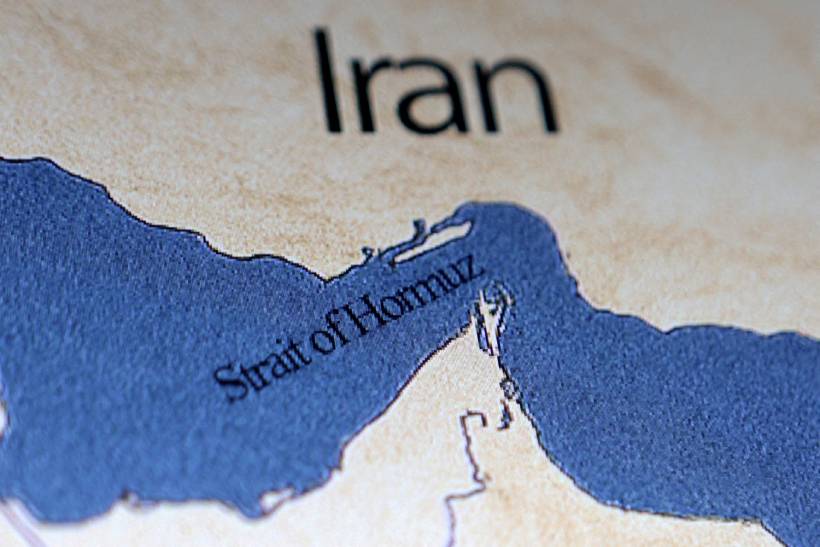
The Strait of Hormuz is a narrow waterway between Iran and Oman that connects the Persian Gulf to the Gulf of Oman. It is the world’s most important oil chokepoint — approximately 20-21 million barrels of oil pass through it daily, representing about one-fifth of global petroleum consumption. Around 80% of crude oil shipped through the strait is destined for Asia, and nearly 90% of LNG transiting it heads to Asian markets.
The joint US-Israeli military operations against Iran have led to intermittent closures and severe disruptions in shipping through the strait, with 320,000 tonnes of LPG stranded on 22 vessels during peak tensions in mid-March 2026.
India’s Energy Vulnerability
India’s dependence on the Strait of Hormuz is stark:
- LPG: India imports about 60% of its LPG needs, with 90% of these imports passing through the strait. LPG is used by 31 crore households for cooking — making it a matter of basic livelihood and food security.
- Crude Oil: About 53% of India’s oil imports come from the Middle East via the strait.
- LNG: 40-47% of India’s LNG imports come from the region, with Qatar being a major supplier.
- Strategic Reserves: India holds only about 25 days of crude reserves plus 25 days of petroleum products — the smallest cushion among major oil importers.
Constitutional Framework
Article 39(b) — DPSP: Directs the State to ensure that “the ownership and control of the material resources of the community are so distributed as best to subserve the common good.” Energy resources fall squarely within this principle, requiring the State to ensure equitable access to essential energy supplies.
Essential Commodities Act, 1955: Empowers the Central Government to control production, supply, and distribution of essential commodities. LPG and petroleum products are listed as essential commodities, allowing the government to regulate prices, impose rationing, and prevent hoarding.
Petroleum and Natural Gas Regulatory Board Act, 2006: Established the PNGRB to regulate refining, processing, storage, transportation, distribution, and marketing of petroleum products and natural gas. The Board plays a crucial role in ensuring downstream sector efficiency.
Government Response: Operation Sankalp and Beyond
The Indian government has taken several emergency measures:
- Operation Sankalp: Between March 14-24, the Indian Navy evacuated 5 Indian-flagged LPG carriers from the Strait of Hormuz on three occasions, escorting them through the Gulf of Oman.
- Commercial LPG Rationing: The government slashed commercial LPG allocations by up to 80%, forcing thousands of restaurants and hotels to switch to firewood or shut down.
- Refinery Optimization: Refineries directed to maximise LPG output, boosting domestic production by 25-40%.
- Diplomatic Breakthrough: On March 26, Iran announced that ships from India, China, Russia, Iraq, and Pakistan would be allowed to transit the strait — leading to two LPG carriers with 94,000 tonnes safely reaching India.
PM-KUSUM 2.0 and Energy Diversification
The crisis has accelerated discussions around energy diversification. The government is considering a revamped PM-KUSUM 2.0 scheme with battery storage for solar energy to address the supply-demand mismatch. India has also diversified energy imports from 27 to 41 countries over the past decade and is working to expand strategic petroleum reserves beyond 6.5 million metric tonnes.
CLAT Angle
Energy security intersects with multiple CLAT-relevant legal and constitutional areas:
- Essential Commodities: Can the government impose rationing under ECA 1955? What are the limits of executive power in emergencies?
- International Law: Freedom of navigation in international straits (UNCLOS), blockade as an act of war
- Article 39(b) vs Market Freedom: How far can the State intervene in energy markets to serve “common good”?
- Consumer Rights: Black marketing of LPG cylinders — penalties under ECA and relevant criminal provisions
- Environmental Law: Energy crisis accelerating renewable energy transition — Paris Agreement commitments
Key Facts at a Glance
| Strait of Hormuz | Connects Persian Gulf to Gulf of Oman |
| India LPG Import Dependence | 60% of total needs from imports |
| Hormuz LPG Transit | 90% of India’s LPG imports |
| LPG Households | 31 crore (310 million) |
| India’s LPG Rank | 6th largest consumer globally |
| India’s LNG Rank | 3rd largest consumer globally |
| Strategic Oil Reserves | ~25 days crude + 25 days products |
| Brent Crude Peak | $126/barrel (March 2026) |
Mnemonic: “HELP” for India’s Energy Legislation
H — Hydrocarbon Exploration Licensing Policy (HELP/OALP)
E — Essential Commodities Act, 1955 (LPG regulation)
L — LPG subsidy via DBT (PAHAL scheme)
P — PNGRB Act, 2006 (downstream regulation)
This crisis underscores India’s acute energy vulnerability and the urgent need for strategic diversification. For CLAT 2027 aspirants, it provides a rich intersection of international law, economic policy, constitutional provisions, and essential commodity regulation — all areas frequently tested in the examination.
Practice Quiz — 10 CLAT-Style Questions
Click an option to reveal the answer and explanation.