
CURRENT AFFAIRS | 14 APRIL 2026
CLAT GK + INTERNATIONAL LAW & GEOPOLITICS
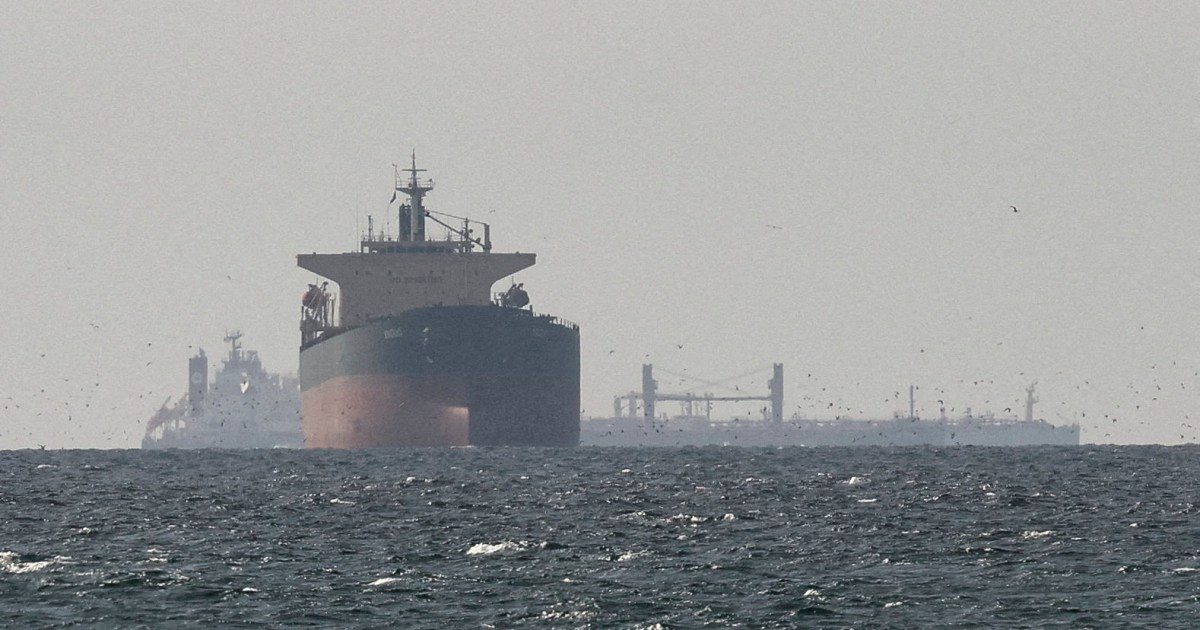
The United States military has begun enforcing a naval blockade of ships leaving Iran’s ports, marking a dramatic escalation in the ongoing US-Iran standoff after peace talks in Islamabad collapsed on April 11-12. President Trump announced the blockade following Vice President JD Vance’s declaration that Iran’s refusal to abandon its nuclear weapons program was a “deal-breaker.” The move has sent shockwaves through global markets, with oil prices surging past $100 per barrel.
The US Navy’s Central Command (CENTCOM) clarified that the blockade targets all ships entering or leaving Iranian ports and coastal areas but “will not impede freedom of navigation for vessels transiting the Strait of Hormuz to and from non-Iranian ports.” However, the practical distinction is fraught with tension, as the narrow strait — just 33 km wide at its chokepoint — carries approximately 21% of the world’s daily oil consumption.
The Strategic Significance of the Strait of Hormuz
The Strait of Hormuz connects the Persian Gulf to the Gulf of Oman and the Arabian Sea. It is the world’s most important oil chokepoint. Every day, roughly 21 million barrels of oil — nearly one-fifth of global consumption — transit through this narrow waterway. Iran, Iraq, Saudi Arabia, Kuwait, the UAE, Qatar, and Bahrain all depend on it for their oil exports. Any disruption here directly impacts global energy prices, supply chains, and the economic stability of oil-importing nations like India, China, Japan, and South Korea.
Impact on Global Oil Markets
Brent crude oil surged 7% to $102 per barrel, while US benchmark WTI crude climbed 7.8% to $104 per barrel — more than 50% higher than pre-crisis levels. Analysts warn that a prolonged blockade could push oil prices to $150 per barrel, triggering a global energy crisis not seen since the 1973 Arab oil embargo. For India, which imports over 85% of its crude oil, the implications are severe — higher fuel prices, widening current account deficit, and inflationary pressures across the economy.
UNCLOS Article 87: Freedom of the high seas, including freedom of navigation — a naval blockade potentially violates this principle.
UNCLOS Article 38: Right of transit passage through straits used for international navigation — ships of all states enjoy this right.
UNCLOS Article 90: Right of navigation — every state has the right to sail ships flying its flag on the high seas.
UN Charter Article 2(4): Prohibits the threat or use of force against the territorial integrity or political independence of any state.
UN Charter Articles 41 & 42: Only the Security Council can authorize sanctions (Art. 41) and military action (Art. 42) — unilateral blockades lack this authority.
Article 51 DPSP (Indian Constitution): Directs the State to promote international peace and security and foster respect for international law.
India’s Position and Concerns
India and Iran are in active contact regarding the safe passage of Indian ships through the Strait of Hormuz. India’s dependence on oil imports through this waterway makes any disruption an economic emergency. The Iranian embassy in Delhi has facilitated the shipment of 20,000 kg of medicine from India — a humanitarian gesture that highlights the complex diplomatic balancing act India must perform between its energy needs, its relationship with Iran, and its strategic partnership with the United States.
Historical Precedent: The Cuban Missile Crisis
The closest historical parallel is President Kennedy’s naval “quarantine” of Cuba during the 1962 Cuban Missile Crisis. Kennedy deliberately avoided the term “blockade” because under international law, a blockade constitutes an act of war. The current situation echoes that crisis but with potentially greater economic consequences given the global economy’s dependence on Hormuz oil transit.
Legal Reasoning: Questions on UNCLOS provisions, freedom of navigation vs. blockade legality, UN Charter on use of force. Expect principle-application Qs on whether a unilateral blockade violates international law.
Current Affairs/GK: Strait of Hormuz geography, oil transit data, US-Iran relations timeline, India’s energy security.
Logical Reasoning: Cause-and-effect chains — blockade leads to supply disruption leads to price surge leads to inflation leads to social unrest (connects to Topic 3 on worker protests).
Key Distinction: Blockade (act of war) vs. Sanctions (non-military) vs. Embargo (trade restriction) — all three are distinct under international law.
Iran’s Response and Escalation Risks
Iran has threatened to retaliate against the ports of Gulf neighbors, raising the specter of a wider regional conflict. Tehran has warned that it will “deal with severity” against any interference with its sovereignty. NATO allies have been placed on alert. The crisis raises fundamental questions about the limits of unilateral military action under international law and the effectiveness of the UN Security Council framework in preventing armed conflict.
| Strait Width | 33 km at narrowest point |
| Daily Oil Transit | ~21 million barrels (21% of global) |
| Brent Crude Price | $102/barrel (+7%) |
| WTI Crude Price | $104/barrel (+7.8%) |
| Failed Talks Location | Islamabad (April 11-12) |
| India’s Oil Import Dependence | Over 85% of crude oil imported |
H — Hormuz Strait (21% of global oil)
O — Oil prices surpass $100/barrel
R — Right of transit passage (UNCLOS Art. 38)
M — Military blockade = act of war
U — UN Charter Art. 2(4) — no unilateral force
Z — Zero progress at Islamabad peace talks
B — Brent crude at $102
L — Legal framework — UNCLOS governs
O — Oil-importing nations (India, China, Japan) hit
C — Cuban Missile Crisis precedent (1962)
K — Kennedy’s “quarantine” avoided “blockade” term
What Lies Ahead
The blockade represents the most significant challenge to freedom of navigation since World War II. Whether it escalates into a broader military conflict or leads to renewed diplomatic engagement depends on multiple actors — the US, Iran, the UN Security Council, and regional powers. For India, the priority remains securing energy supplies while advocating for a diplomatic resolution consistent with international law.
Practice Quiz — 10 CLAT-Style Questions
Click an option to reveal the answer and explanation.